Listen for experience, not just a timeline
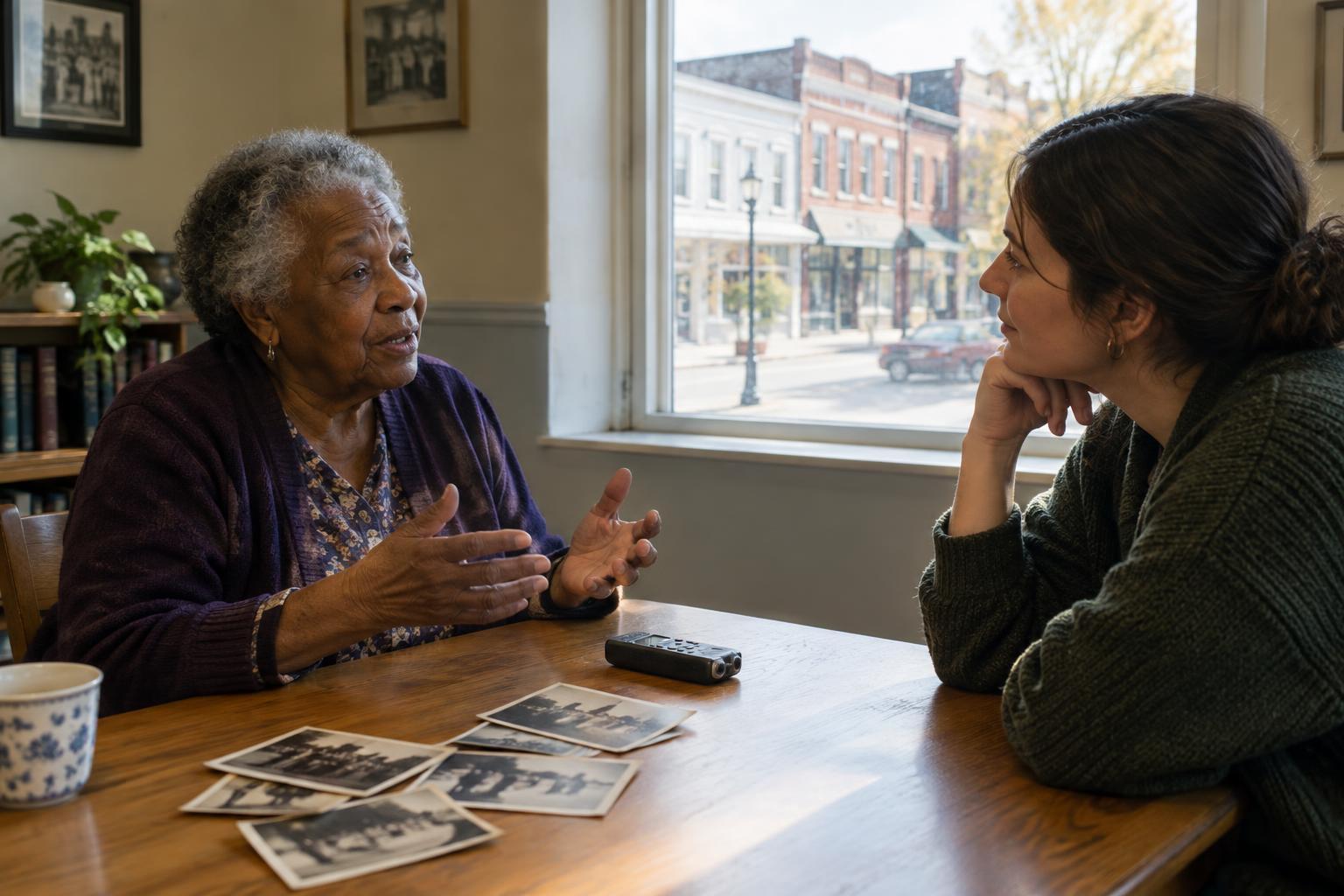
A recorded conversation with a longtime resident can make a familiar street look different. A shopfront becomes a place where neighbors exchanged news; an empty lot recalls a garden, a shortcut or a gathering place. These details are valuable even when a speaker cannot remember exactly which year something happened. Oral history offers an account of how someone experienced a place, not a flawless inventory of events.
Begin by noticing what the speaker chooses to describe. Which sounds, routines or relationships remain vivid? Where do they pause, laugh or revise a thought? Such moments can tell you what a place meant to them. They do not, by themselves, establish that everyone else experienced it the same way. One person’s account is a view from a particular life, not the voice of an entire neighborhood.
Make room for the way memory works
People remember from the present, drawing on later knowledge as well as earlier experience. Similar events may blend together, and a familiar story may become more polished each time it is told. None of this makes a narrator dishonest or their account useless. It means that dates, sequences and explanations deserve different kinds of attention.
If you hear a precise detail that matters to your understanding, hold it lightly until you can check it. A remembered building use might be compared with an old map, a photograph or another interview, if those materials are available. When accounts differ, avoid rushing to declare a winner. The difference may point to distinct vantage points, changes over time or a question that remains open.
It can help to keep two notes: what the speaker says happened, and what the account reveals about how they understood it. A remembered boundary between neighborhoods, for example, might not match an official map. Yet that boundary may still have shaped where someone felt welcome, where they shopped or which route they took home.
Pay attention to who is speaking—and who is missing
Before listening, read any available description of the recording. When and why was the interview made? Who asked the questions? A conversation arranged around a building campaign may emphasize different memories from one about family life. The interviewer’s prompts, the setting and the time available can all affect what enters the record.
Then consider whose accounts you can find. A local collection may preserve the voices of people who had the time, confidence or opportunity to participate, while others remain absent. Seek out a range of perspectives where possible: residents of different ages, workers as well as proprietors, and people who arrived or left at different times. Variety does not guarantee a complete history, but it makes a single, tidy narrative less tempting.
Be especially cautious with phrases such as “the community remembers.” Communities do not remember in unison. A place associated with celebration for one person may carry a history of exclusion for another. Both accounts can be important to understanding its heritage.
Treat the narrator as a person, not a source to mine
For a visitor, an oral history can feel like a shortcut to an authentic local story. Resist that impulse. If a recording is held by a museum, library or community group, check its stated conditions for listening, quotation and reuse. Public access does not always mean every personal detail should be repeated in a travel post or conversation.
When listening to someone in person, ask whether they want to talk rather than assuming that age or long residence makes them available for an interview. Explain how you hope to use what they share, and respect a refusal or a request to leave something out. Questions such as “What was this street like when you first knew it?” invite a story without demanding that someone perform nostalgia or speak for their neighbors.
If you share an account, identify it as that person’s recollection and preserve any uncertainty they expressed. Avoid turning a painful or intimate memory into colorful atmosphere for a destination. Careful attribution lets the narrator remain visible while giving readers a clearer sense of what they are hearing.
Let uncertainty deepen your visit
You do not need to resolve every contradiction before an oral history changes how you see a place. Take a walk with a question in mind: Where might a former gathering spot have been? What remains of a route someone described? Look closely, but do not assume that present-day buildings can confirm every remembered scene.
The most rewarding approach is neither unquestioning belief nor relentless correction. Listen for lived experience, check factual details when they matter, and leave room for what you cannot know. Local heritage becomes richer when people’s memories are heard alongside other traces of the past, without asking any one voice to carry the whole story.