Start with the encounters you are likely to have
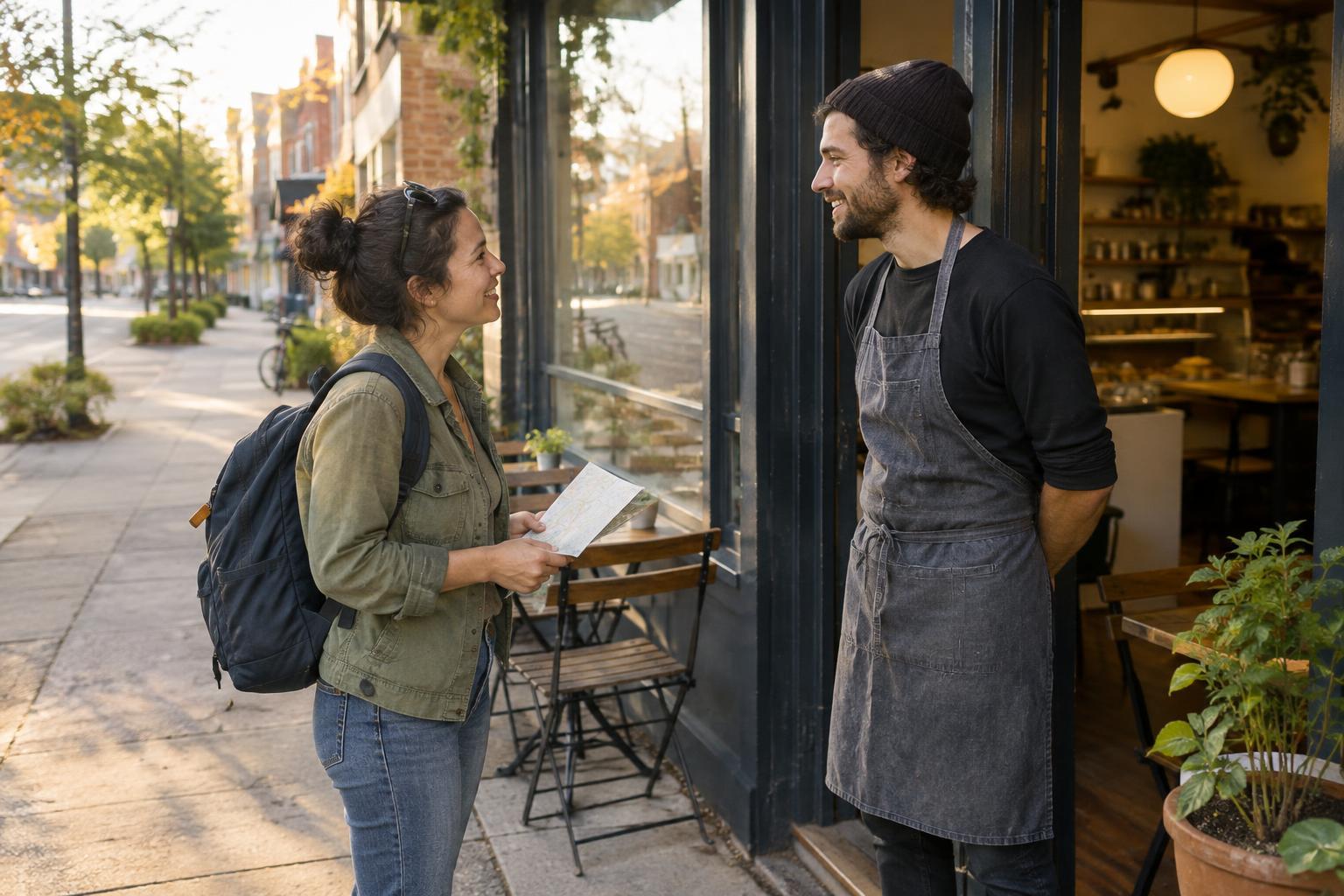
Language preparation works best when it follows your itinerary rather than a generic list of travel phrases. If you hope to explore a neighborhood on foot, think about the moments when you may speak to someone: buying a snack, checking an opening time, asking whether a courtyard is public, or finding the right bus stop. These situations call for short, specific questions more often than elaborate conversation.
Make a compact list you can keep on your phone or a small card. Include a greeting, “please,” “thank you,” “excuse me,” “I’m sorry,” and a polite way to ask whether someone speaks a language you know. Add the questions you will actually need, along with words such as entrance, exit, ticket, cash, card, and bathroom where relevant. If the destination uses a different writing system, keep both the local spelling and a pronunciation guide. The aim is not to deliver a perfect speech; it is to begin an exchange with care.
Practice sounds, not just spellings
A phrase saved in a notes app may be hard to use if you cannot recognize it when spoken back to you. Before leaving, listen to a few examples of common words and say them aloud. Pay particular attention to greetings, numbers, and the names of places you expect to visit. A recognizable attempt can be more useful than a long memorized sentence you cannot adjust.
Learn to say a neighborhood name or museum name as well as you can, while keeping the written version ready to show if needed. Avoid insisting on your own pronunciation after someone gently corrects it. At the same time, do not turn a quick exchange at a counter into an impromptu lesson. A brief correction may be welcome; repeated requests for feedback can make extra work for a person who is busy.
Keep requests clear and easy to decline
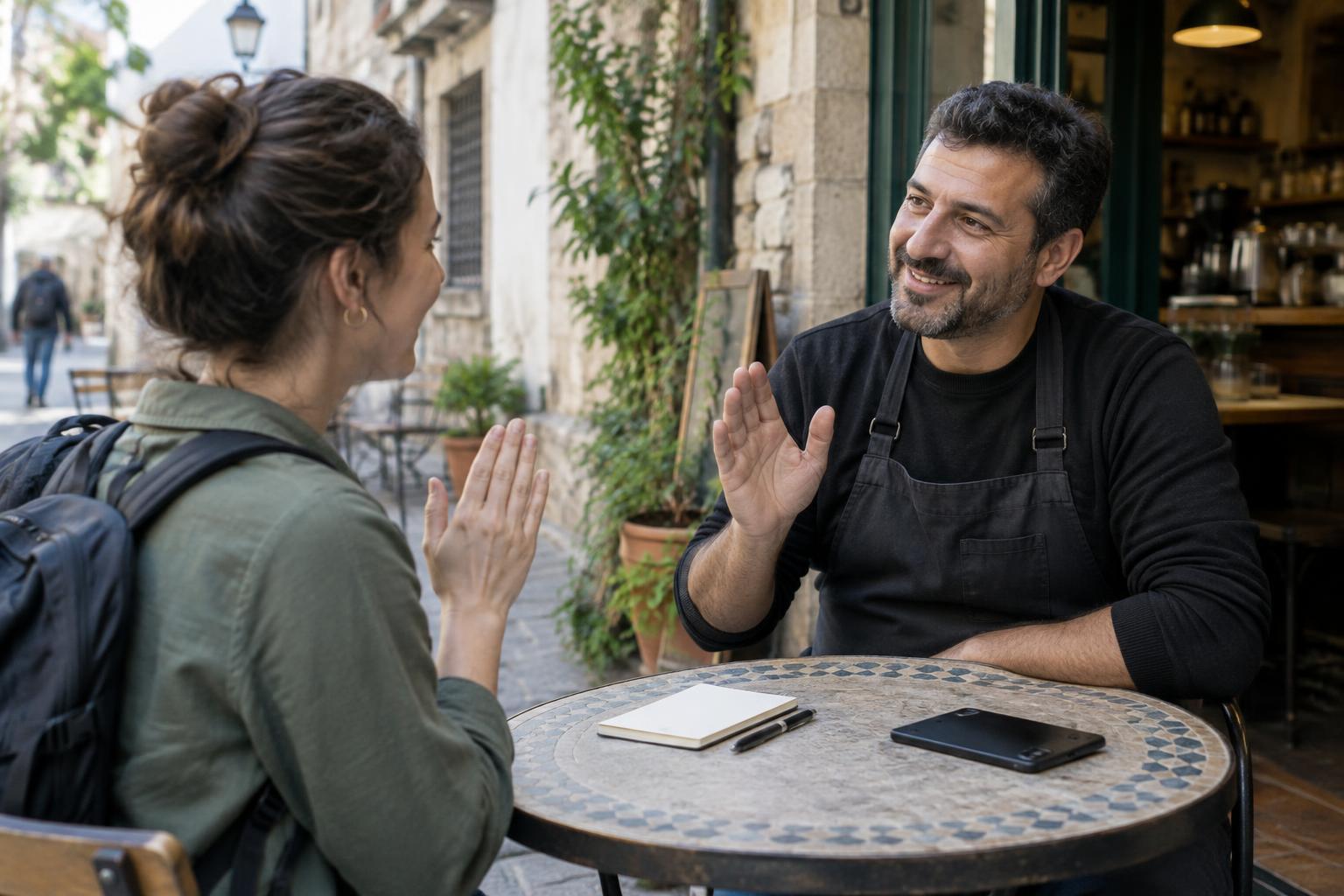
In an everyday encounter, clarity is a form of courtesy. Ask one short question at a time, pause for the answer, and avoid raising your voice when you are not understood. You can point to a written address or a map, but check that the person has time to help before launching into an explanation. A smile or gesture may help, though gestures do not mean the same thing everywhere.
Prepare a graceful exit as well as an opening. Knowing how to say “no problem” or “thank you anyway” lets you move on without pressing a stranger to solve your travel difficulty. This matters especially when visiting residential streets, working markets, and small cultural spaces. People you meet there are going about their day, not serving as guides simply because a place interests you.
Use translation tools as a backup, not a script
A translation app can help with an unfamiliar sign or a more detailed question. Before your trip, save essential words and addresses so you can reach them without relying entirely on a connection. Keep translated messages brief and literal; jokes, idioms, and complicated requests may not travel well between languages. For a question about visiting hours, a simple “Is this open to visitors today?” is easier to check than a long explanation of your plans.
Be considerate when using a phone with another person. Show the text rather than unexpectedly turning on a microphone or camera, and ask before recording speech or photographing written material in a private setting. Machine translation can make mistakes, so confirm important details such as a time, price, or destination instead of assuming the first result is exact. If an answer remains unclear, seek another appropriate source rather than asking someone to repeat themselves indefinitely.
Let the other person set the pace
Some people may respond in the local language; others may switch to a language you share. Neither response is a test of your preparation. If someone switches, follow their lead unless they seem interested in helping you practice. Listen for signs that an exchange should end: a line forming, a worker returning to a task, or an answer becoming very brief.
Language is also part of how you notice a place. Reading a street sign, recognizing a word on a shopfront, or learning the name of a local dish can add context without requiring a conversation. Keep a note of words you encounter and look them up later rather than demanding an explanation on the spot. A small, flexible vocabulary will not remove every misunderstanding, but it can help you ask better questions, accept help graciously, and leave everyday spaces as respectfully as you found them.