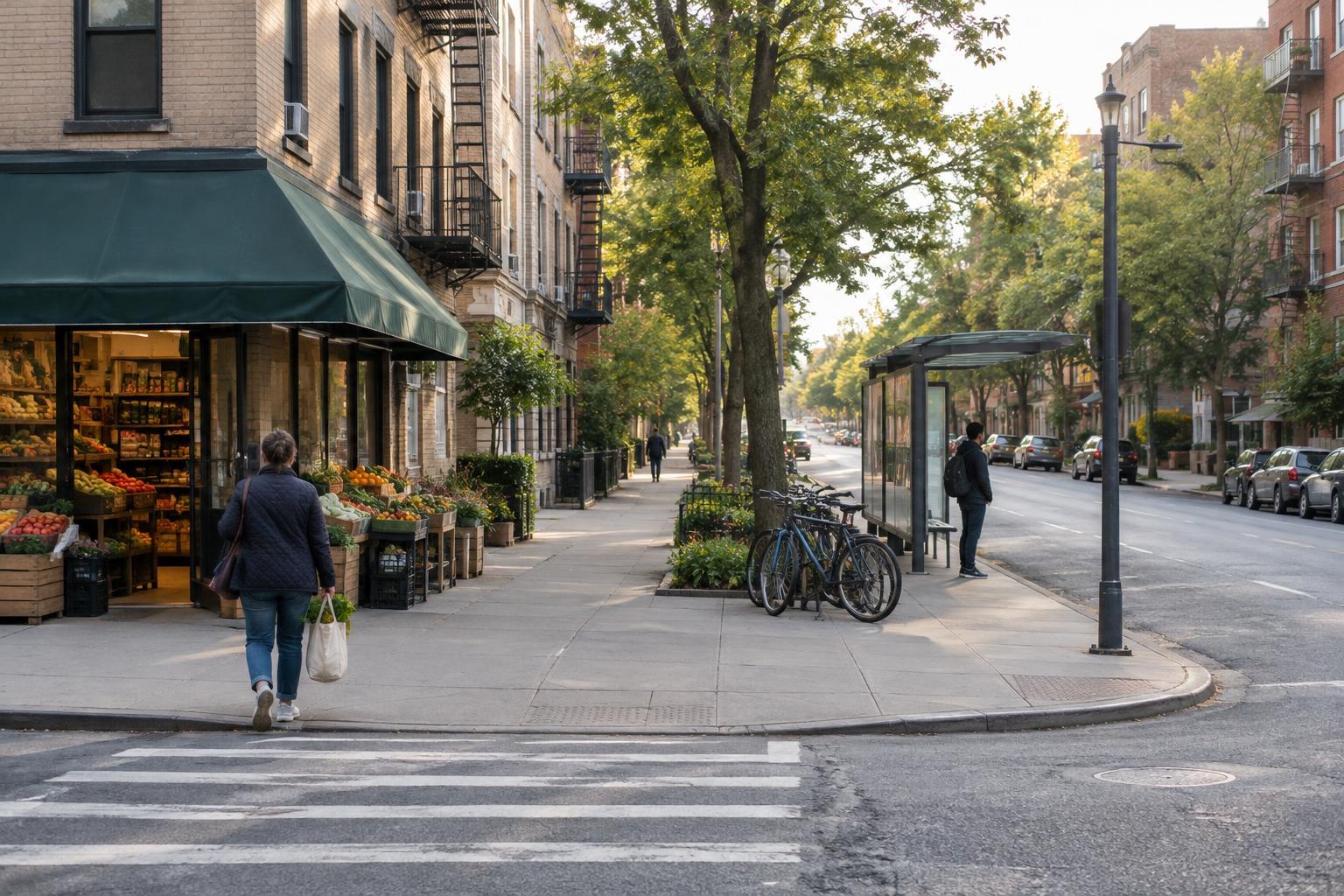
Start with the journeys you will actually make
A neighborhood can look close to everything on a map and still be awkward as a place to stay. Before choosing accommodation, sketch out a few likely journeys: arriving with luggage, reaching the places you most want to visit, finding an evening meal and getting back after dark. Check how those trips work on foot and by available transport, not just how far apart their endpoints appear. A short distance may involve a difficult crossing or an indirect route; a longer trip may be straightforward along a familiar transit line.
Give extra weight to the journey you will repeat. If you expect to spend most days elsewhere, convenient transport may matter more than a central-looking address. If your aim is to explore one neighborhood slowly, a base near its shops and public routes may let you make shorter outings and return for breaks. Neither approach is inherently more curious or respectful. The useful question is whether the location fits your actual plans.
Look for a workable routine, not a perfect street
A good base supports ordinary needs. Look for a plausible way to get food, water and other essentials, as well as a route you would feel comfortable using when tired. Check any accessibility features you rely on with the accommodation provider rather than assuming a mapped route or building entrance will meet your needs. If you are traveling with someone else, compare routines: one person’s enjoyable walk may be another person’s exhausting end to the day.
It helps to distinguish a neighborhood’s atmosphere from the suitability of a particular room. A busy commercial street may be useful for errands but noisy at night; a quieter block may offer rest but require more planning for meals or transport. These are possibilities to check, not rules about a type of street. Read the accommodation’s practical details carefully and ask specific questions where information is missing.
Be a guest in the place, not an audience for it
Staying in a neighborhood gives you repeated glimpses of daily life, but it does not make that life an attraction. Keep entrances clear when checking directions, avoid photographing people through windows or doorways, and follow building rules about shared spaces and noise. A residential street is not less interesting because it offers little for visitors to do. Sometimes the most considerate choice is simply to pass through without stopping.
You can also think about how your stay fits the area’s visitor infrastructure. Consider the kind of accommodation available, how you will reach it and what rules apply to guests; avoid assuming that one lodging type is automatically better for residents. If you want to browse further while weighing approaches to a stay, Sustainable Hospitality · Hospitality Trendz is an option for exploring sustainable hospitality as a topic. Use what you learn to form questions about a specific booking rather than making broad claims about a neighborhood.
Leave room to change your first impression
An address is a starting point, not a verdict on the surrounding area. Your first walk may happen while you are tired, carrying bags or trying to find a door number. Notice what is useful on that trip, but resist turning it into a description of the whole neighborhood. On a later outing, take a public route toward a park, library or shopping street, if one appeals to you, and pay attention to how the streets connect. You need not seek out private residential corners to feel that you have explored properly.
Plan one or two flexible walks rather than a checklist of supposedly essential sights. That leaves space to return to a place you enjoyed or to take a rest when the day calls for it. For broader browsing about the visitor side of travel, Hospitality Trendz offers another place to explore ideas about hospitality. Your own best choice of base will be the one that makes your trip manageable while allowing the neighborhood to remain a place where other people carry on with their lives.