Start with the surface, not the whole building
A building’s outer face is often its most visible detail, but it does not always reveal how the building stands up. A wall that looks like stone may be a thin facing over another material. Plaster can cover brick or concrete, while a patterned concrete panel may resemble masonry from a distance. When exploring a neighborhood, it is more useful to ask “What am I looking at here?” than to announce what the entire building is made of.
Begin with a slow look from a public path. Notice whether the surface is made of repeated units, one broad continuous layer, or irregular pieces fitted together. Look at corners, window openings and areas where a finish changes: these often offer better clues than the center of a wall. Keep your observations tentative, especially where paint, repairs or weathering obscure the original surface. There is no need to touch a wall or enter private property to enjoy its details.
Brick: repetition with room for variation
Brick is usually recognizable by its regular blocks and the mortar joints between them. The familiar staggered pattern is only one way to arrange bricks; some walls place them upright, turn them sideways or use contrasting colors for bands and borders. From across the street, look for consistent unit sizes and the rhythm of the joints. Up close, individual bricks may differ subtly in color and texture, giving a wall a livelier appearance than its overall pattern suggests.
Brickwork also rewards attention around doors, windows and rooflines. A row of bricks set on edge might frame an opening, while a projecting course can cast a narrow shadow. Patches of newer-looking brick may suggest a repaired opening or a change to the wall, though appearance alone cannot tell you when or why it happened. Remember that brick can be structural or serve as an exterior facing; the visible pattern is not proof of what supports the building.
Stone: look at shape, grain and joints
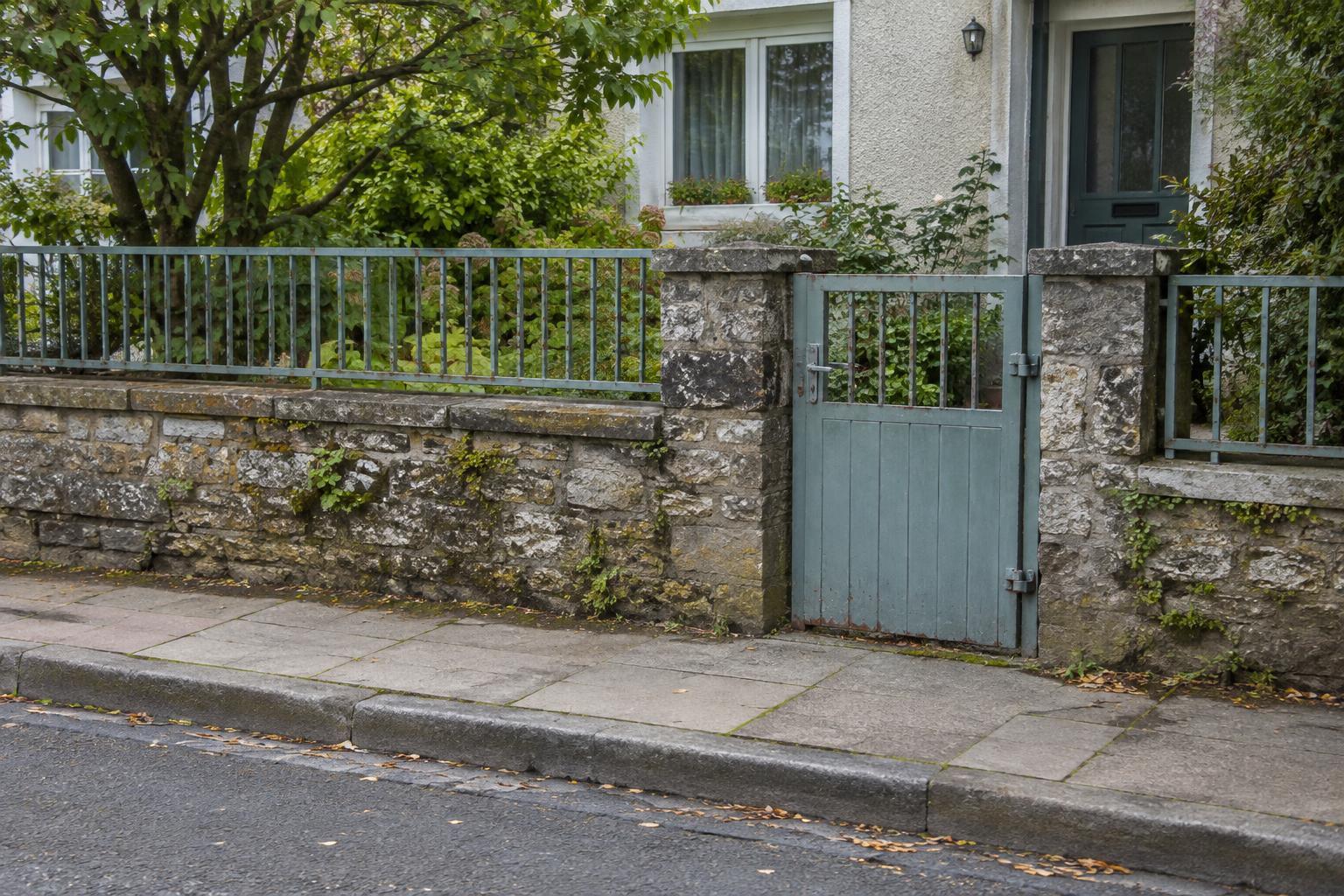
Stone walls may use evenly cut blocks, roughly shaped pieces or a mixture of sizes. Some are laid in tidy horizontal courses; others have a more irregular arrangement. Unlike manufactured bricks, stones in the same wall can show pronounced differences in grain, color and edge shape. Those differences are part of the pleasure of looking: a modest boundary wall can have as much visual variety as a grand façade.
Not every stone-like surface is solid stone. Thin facing pieces, molded materials and painted finishes can create a similar impression, particularly at a distance. Look for joints that continue naturally around a corner and for depth at a doorway or window, but treat these as clues rather than a definitive test. If you spot a carved date or decorative block, read it as one detail of the building’s story—not necessarily a date for every part you can see.
Concrete: more than a smooth gray wall
Concrete is often poured into forms and left as a broad surface, sometimes showing lines where the forms met or small marks left by the process. It can also appear as separate blocks or panels with visible seams. Its finish ranges from smooth to rough, and it may be colored, painted or textured. A repeated grid of panels can look as deliberate and decorative as a pattern of brickwork.
To look more closely, follow the seams. Do they divide large panels, outline small blocks or simply mark changes in a surface coating? Notice where rain has darkened a ledge or where a repair has a different texture. These observations can help you describe what you see without assuming that every gray wall is concrete. Plaster and painted masonry can look similar, especially in flat light.
Plaster: the layer that changes everything
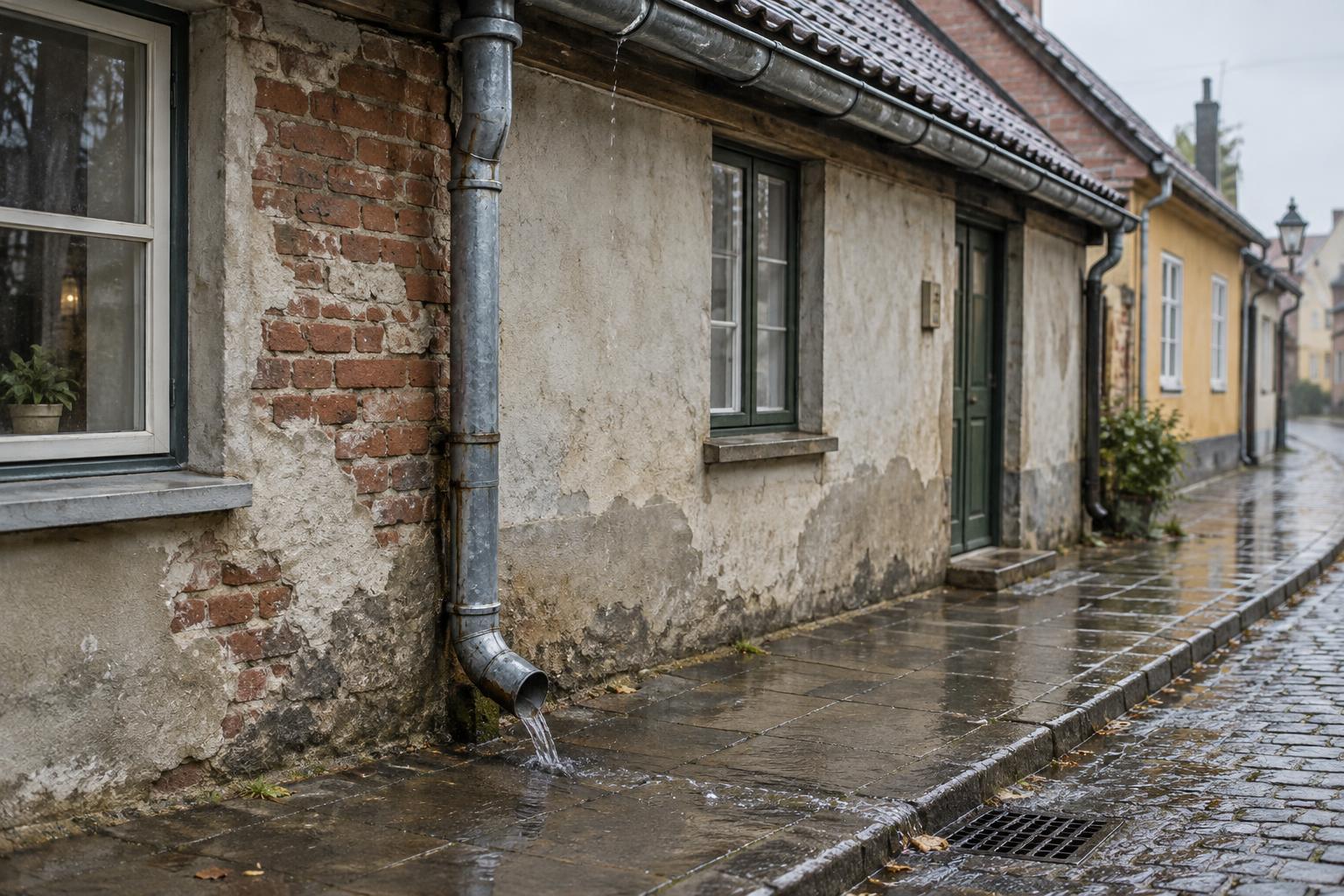
Plaster is a finish applied over another surface, often creating a continuous face that hides individual bricks or stones. Exterior plaster may be smooth, softly uneven or deliberately textured. It can make a row of very different buildings feel unified, especially when they share a color. Around a doorway or at a worn edge, you might glimpse a different material beneath, but avoid treating a small exposed patch as a complete picture of the wall.
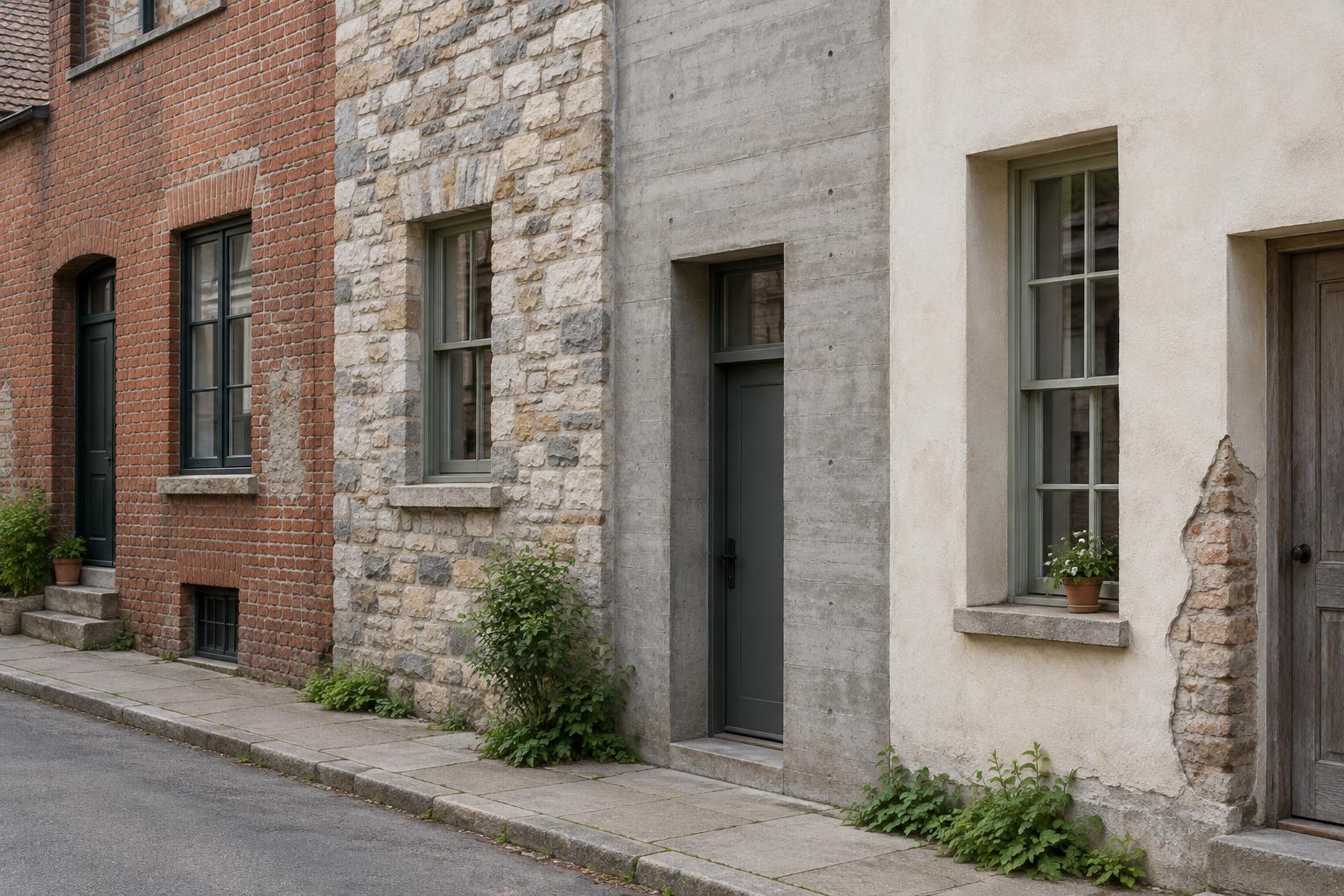
A useful habit is to compare neighboring surfaces rather than trying to name each one immediately. Which wall has repeated joints? Which has broad seams? Where does a coating soften the edges of a window opening? Make a brief note of your clues and of what remains uncertain. This way of looking turns an everyday walk into an exercise in attention: not a hunt for the “best” building, but a chance to notice the work, choices and changes present on an ordinary street.