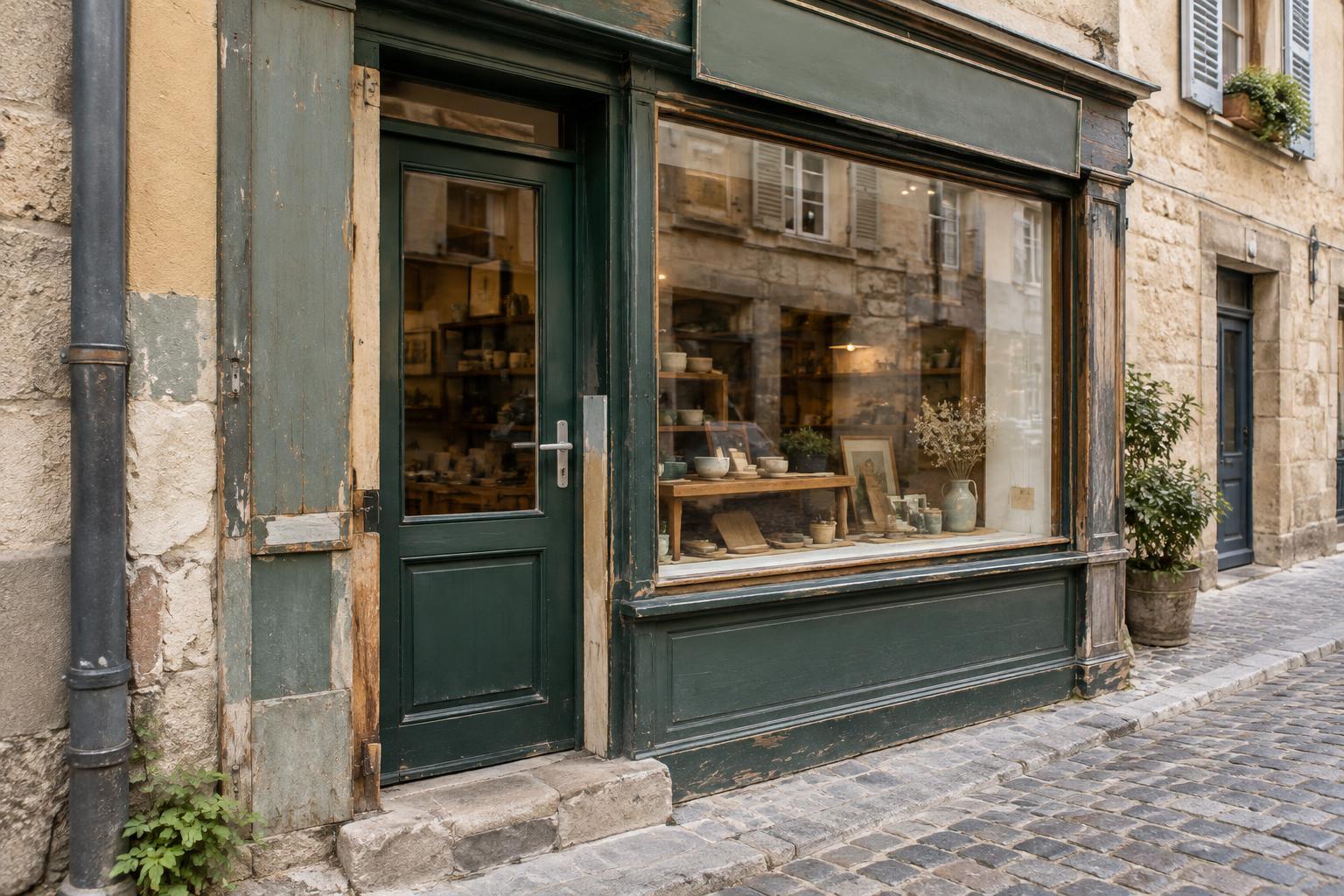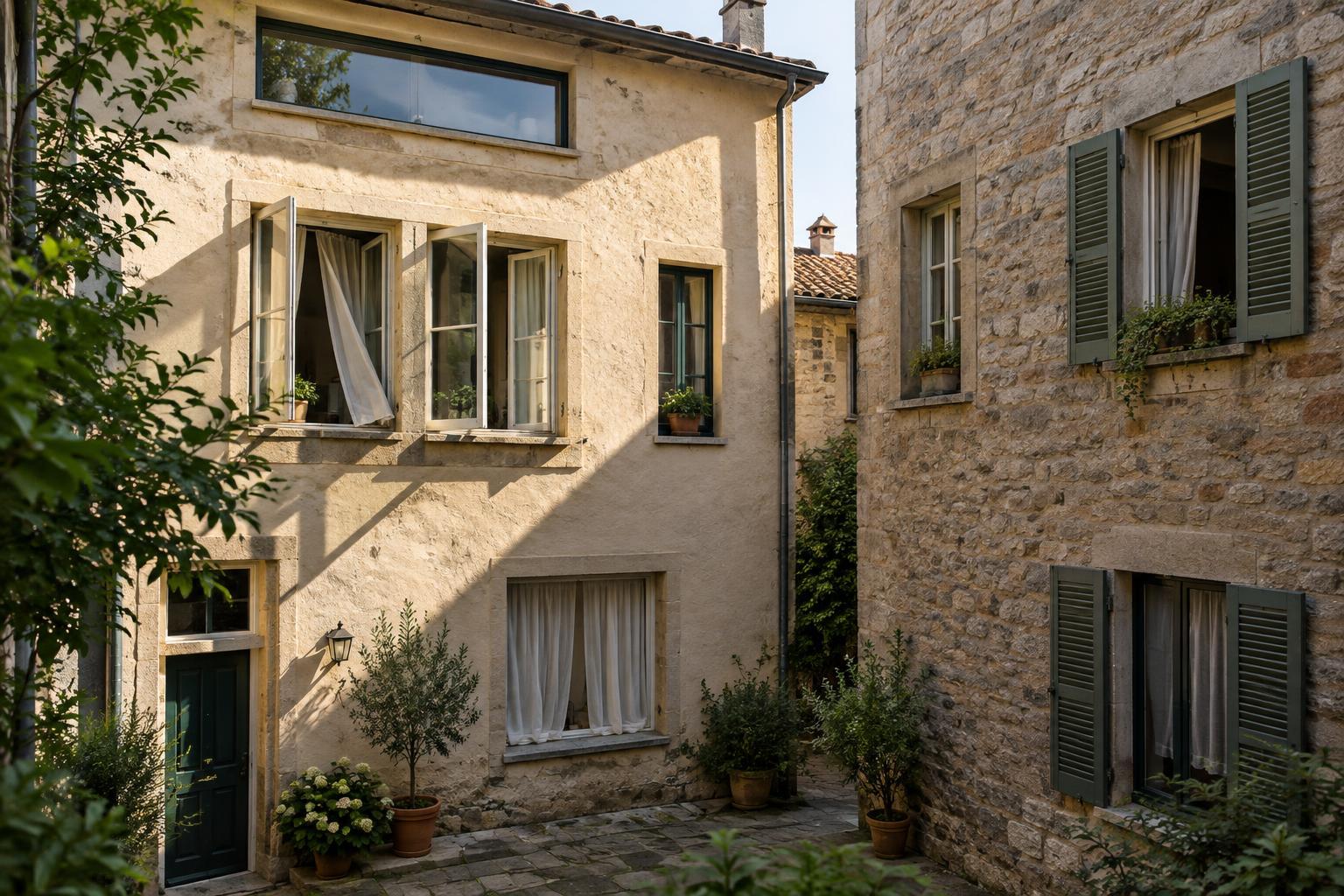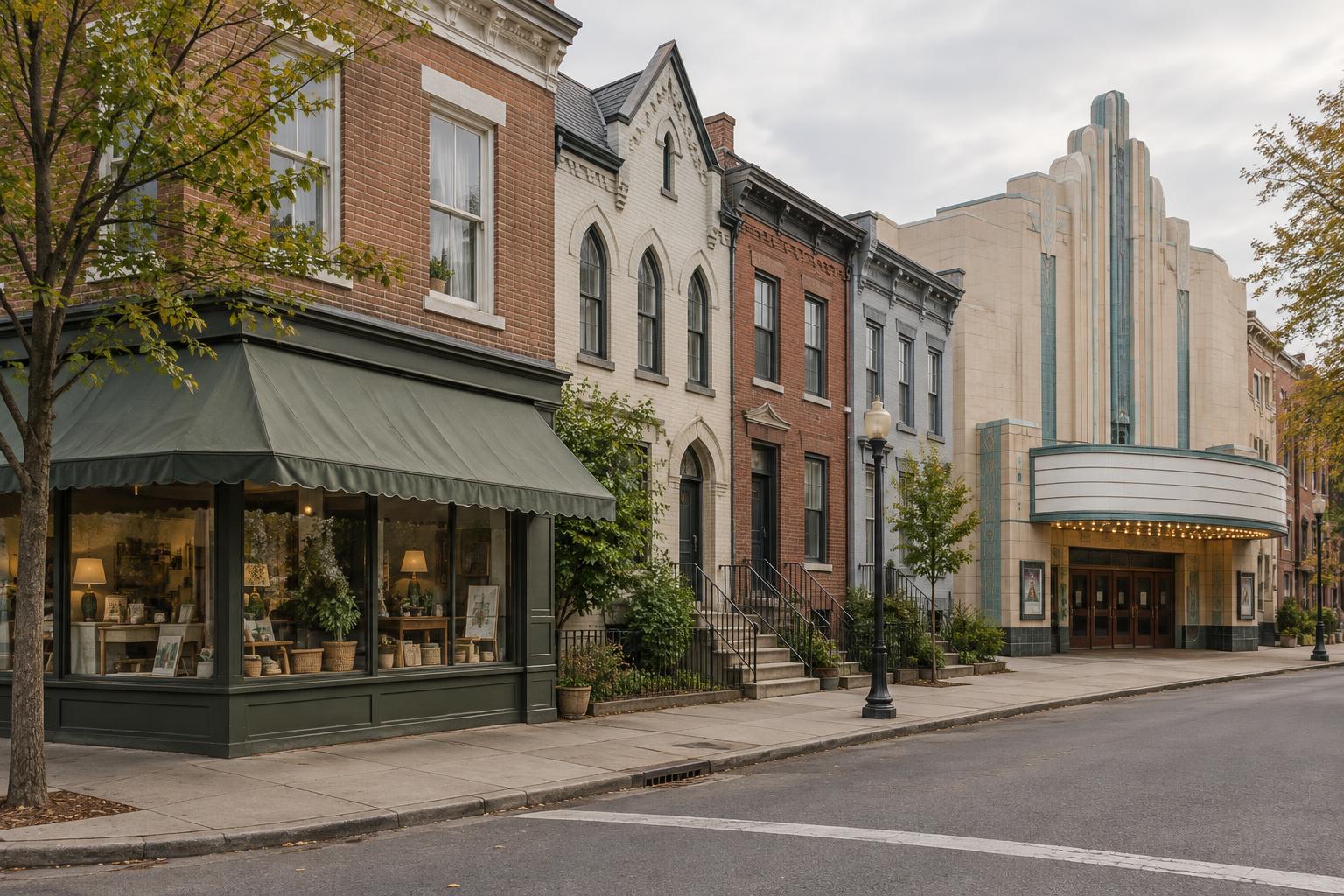
Two questions, not one
When you notice an unfamiliar building, you might ask, “What is it?” and “Why does it look like that?” Those questions point toward building type and building style. Type generally describes a building’s purpose or basic arrangement: a school, a warehouse, a row house or a market hall. Style describes a recognizable approach to its appearance, often expressed through shape, materials, ornament and proportions.
The distinction is useful because a building can answer both questions at once. A cinema is a type; Art Deco is a style. An Art Deco cinema has a purpose and a visual character. Neither label tells the whole story, but keeping them separate gives you a clearer starting point for looking closely.
What building type tells you
Types often arise from everyday needs. A row house shares side walls with its neighbors and belongs to a pattern of closely spaced homes. A warehouse commonly needs room for storing and moving goods. A corner shop is shaped, in part, by its position at an intersection and its relationship to the sidewalk. These descriptions concern use, layout or how a building fits into a block more than its decoration.
Type can also reveal clues about daily life. Repeated front doors may suggest multiple homes; a broad entrance might have accommodated deliveries or crowds. Such clues are not proof. A former shop may now be a home, and a warehouse may have become studios. If you can, distinguish the building’s apparent original type from its present use rather than assuming they are the same.
What building style tells you
Style is a way of describing visual choices and conventions. You might notice a strongly symmetrical front, pointed arches, bold geometric ornament or an emphasis on plain, unadorned surfaces. These features can help you discuss a building’s design, but a single feature rarely settles its style. A pointed arch, for example, is worth noticing; it is not enough on its own to name an entire building Gothic Revival.
The same type can take many stylistic forms. Two libraries might have very different entrances, rooflines and window patterns. Likewise, a style can appear across types: homes, shops and public buildings may share similar decorative ideas. Materials complicate the picture further. Brick tells you what part of a building is made of, not automatically what style it belongs to. Look at how details work together before reaching for a label.
Why the labels sometimes blur
Real streets do not sort buildings into tidy categories. A ground-floor shop with apartments above combines uses. A house may gain a new storefront; a public building may receive a later facade. Repairs, extensions and changes of ownership can leave several periods visible at once. In those cases, a precise-sounding style label may conceal more than it explains.
Local building traditions deserve attention, too. A familiar arrangement of porches, shutters or courtyard entrances may respond to climate, available materials or neighborhood habits without fitting neatly into a named style. You do not need to classify every building to appreciate it. “Three-story building with shops below and homes above, with decorative brick around the windows” is often a more useful observation than a confident but uncertain label.
Try the distinction on your next walk
Choose one block and begin with type. What activities does each building seem designed to support? Notice entrances, ground-floor openings, repeated units and the way buildings meet the street. Then ask about style: What shapes, proportions, surfaces and details give each building its character? Compare two buildings of the same apparent type, or look for a shared visual feature across different types.
Keep your conclusions provisional. You can observe a facade from a public sidewalk without knowing the building’s full history or current occupants. Avoid treating a changed entrance or an unusual detail as evidence of neglect; it may reflect adaptation or a practical repair. The reward of separating type from style is not simply learning more names. It is seeing how ordinary buildings hold both practical decisions and expressive ones—and how a neighborhood becomes more interesting when you make room for both.