Start with the errand, not the attraction
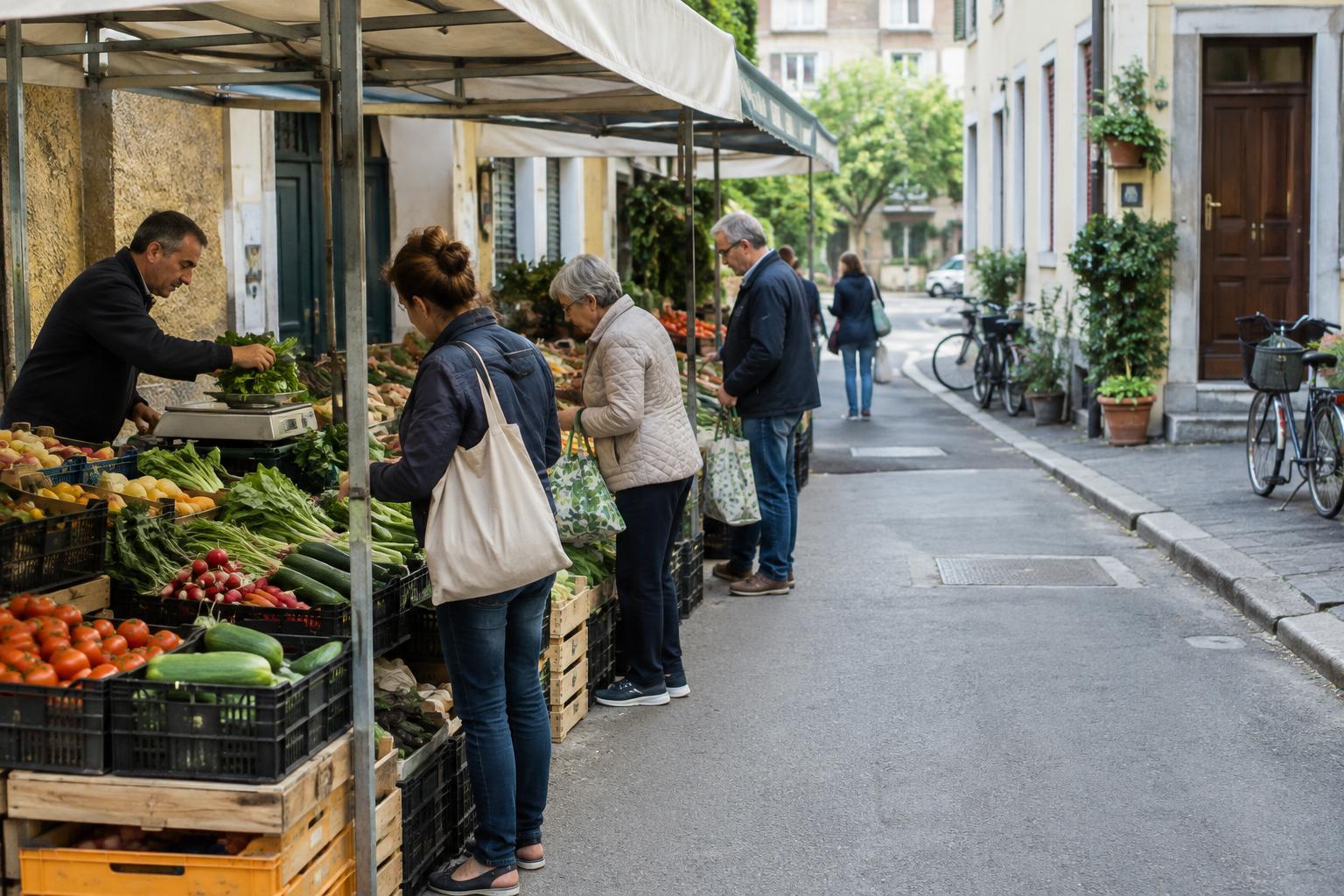
A local market can be easy to frame as a destination: colorful produce, a busy entrance, perhaps a snack to try. For nearby residents, though, it may first be a practical stop between home, work, school and other errands. Someone might buy only what they can carry, return for an ingredient forgotten at breakfast or pick up a prepared meal on the way home. Looking at those small trips makes the market part of a neighborhood rather than a scene set apart from it.
Markets vary widely. Some occupy permanent halls; others appear on certain days or use a stretch of street for a few hours. Their role depends on what else is nearby, what they sell and when people have time to visit. Rather than assuming every market is the neighborhood’s social center, ask a simpler question as you walk: what everyday task does this place make easier?
Notice the rhythm of the day
A market has its own working day, which may begin well before a visitor arrives. Deliveries, stall setup, cleaning and restocking all take space and time. Later, shoppers may arrive in waves that reflect local routines. A quiet aisle at one hour and a crowded one at another do not tell the whole story; they show different moments in the same cycle.
If you can return at more than one time, compare the edges of the market as well as the stalls. Are people moving quickly with lists, lingering over a purchase or stopping briefly on a familiar route? Does the street outside become easier or harder to cross as activity changes? These observations can help you understand how the market fits into the day without pretending to know anyone’s private circumstances.
Read the surrounding streets
The market’s relationship with nearby buildings often explains why it works where it does. A broad doorway can accommodate carts and queues. A shaded edge may offer a place to pause. Small shops on the approach might serve needs the market does not, while a bus stop or a useful pedestrian crossing can make a quick visit possible for people coming from farther away. Even a narrow pavement matters when shoppers, workers and passersby need to share it.
Look, too, at the less picturesque details: where boxes wait to be collected, how signs guide people through the space and where shoppers can step aside to check a bag. These are parts of everyday architecture. They show how a place handles repeated use, not just how it looks in a photograph. If a route feels busy, keep moving rather than stopping in a doorway to study it.
Recognize familiar exchanges without romanticizing them
Markets can support brief, repeated interactions. A seller may recognize a regular customer’s usual order; neighbors may exchange a greeting while waiting their turn. Such moments can give a place a sense of familiarity, but they are also part of someone’s working day. Not every conversation is an invitation to join in, and not every shopper wants to be observed.
It helps to pay attention to the ordinary work behind a welcoming stall: answering questions, weighing goods, handling payments and keeping a line moving. If you want to ask about an item, choose a moment when the seller is not serving several people at once. A short, specific question is easier to answer than a request for a full story about the neighborhood. Buying something you can use, when appropriate, is a more considerate response than treating the stall as a free exhibit.
Visit as a customer and a guest
Before taking photographs, check for posted rules and ask permission when a person or stall would be recognizable. A market may be a public-facing place, but shoppers are still doing personal errands. Keep bags close, leave room for people carrying goods and avoid blocking entrances, counters or delivery paths. If you are unsure how a queue works, watch for a moment and follow the local pattern.
A curious visit does not require covering every aisle or collecting dramatic images. Try following one practical thread instead: how someone can arrive, find a staple, pay and continue with the rest of the day. Notice what the market provides and what the surrounding streets contribute. You may leave with a modest purchase and a clearer understanding of the neighborhood’s routine—the sort of detail that is easy to overlook precisely because it works so well for the people who use it.