Start with the visit you want to have
Accessibility means different things to different visitors. Before looking up a museum, make a short list of what would help you enjoy its collection. You might need a step-free route, somewhere to sit, information in a readable format, a quieter time to visit or a restroom you can use. If you are visiting with someone else, include their needs too. A specific list makes it easier to find useful answers than a general question such as “Is the museum accessible?”
Think about the whole visit, not just the exhibition rooms. Getting from the pavement to the entrance, buying a ticket, moving between floors and leaving when you need a break are all part of the experience. A museum may have an accessible main gallery but a separate room reached only by stairs. Knowing which parts matter most to you will help you decide whether that arrangement works.
Look for details, not just an accessibility label
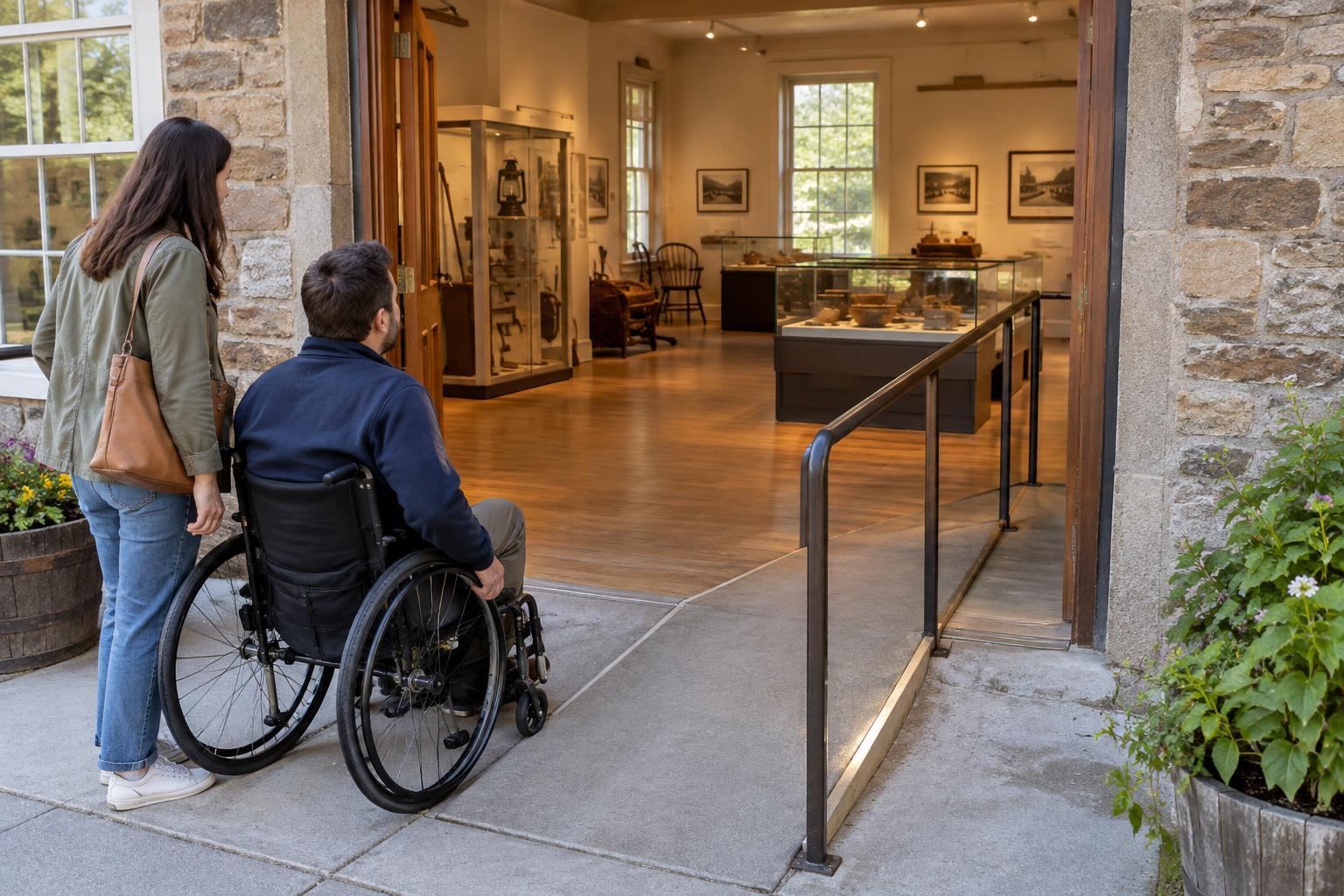
Start with the museum’s own visitor information. Look for an access page, a floor plan and photographs of the entrance or galleries. Check whether it describes the route from the street, the width or type of doorway, steps, ramps, lifts and places to rest. If you use a wheelchair or another mobility aid, the presence of a lift alone may not answer whether you can reach every display. A description of the route is more useful than a single “accessible” symbol.
Check how exhibits are presented as well. Are labels available in large print or a digital format? Is there audio with a transcript, or video with captions? Are objects behind glass at heights you can comfortably view? For sensory planning, look for mentions of sound, flashing images, low light or crowded rooms. If the website does not cover these points, that is a reason to ask rather than an answer in itself.
Ask focused questions before you travel
Small museums may have limited space, changing displays or few staff members available to answer enquiries. A short email or call with specific questions can be more effective than asking for a broad assurance. You could ask, “Is there a step-free route from the entrance to the room with the main collection?” or “Does the accessible restroom require a key?” If a detail is essential to your visit, ask whether it will be available on the day you plan to go.
Other useful questions concern seating, admission queues, assistance animals, companion admission and whether staff can provide information in another format. Ask how to arrange any support that needs advance notice. If you find phone calls difficult, email may give you time to set out your questions and keep the answers for reference. Leave room for clarification: terms such as “level access” may describe one doorway without explaining the full route through the building.
You do not have to explain a diagnosis to ask about a feature. Describe the practical requirement instead: a lift that fits your mobility aid, a quiet place to step away from an exhibit or written information in place of audio. Clear questions help staff give clear answers while letting you share only what you choose.
Check the journey and likely conditions
A workable museum visit begins before the front door. Check the route from your transport stop or parking place, including crossings, surfaces and any steps. If the museum has more than one entrance, confirm which one you should use and whether it is open during your planned visit. It is also worth checking opening hours and whether admission requires a booking, especially if your schedule depends on a particular arrival time.
Consider what the visit might feel like once you are inside. A small room can become difficult to navigate or concentrate in when it is busy. Staff may be able to suggest a generally quieter period, though they cannot promise how many other people will arrive. If you need regular breaks, ask whether you can leave and re-enter, and whether there is a place to sit away from displays. Nearby places to pause can be part of your plan too.
Keep a flexible plan without lowering your expectations
Before setting out, save the museum’s contact details and the answers to any questions you sent. If a particular feature is essential, consider confirming it again shortly before your visit, especially when it depends on equipment or a specific entrance being available. Make a simple alternative plan in case the route or space does not work for you. That might mean visiting only part of the collection, choosing another day or going somewhere else.
Planning is not about accepting barriers as inevitable. It is a way to decide where your time and energy will be well spent. Specific information lets you approach a small museum with curiosity rather than uncertainty—and gives you a better chance to notice the objects, stories and local details you came to see.