Let curiosity guide you, not decide access
Walking is a good way to notice the parts of a place that a quick visit can miss: a row of modest shopfronts, a change in paving, or the way a neighborhood connects to a waterfront. Those discoveries often happen near back lanes, courtyards, and passages. An inviting view, however, is not proof that you can walk through. A route may serve residents, deliveries, or a business even when it has no gate.
Access arrangements vary by place, and appearances can be misleading. Some publicly usable paths cross land that looks private; some streets shown on maps are private drives or have restricted hours. You do not need to settle every question before setting out. A better habit is to keep your route flexible, pay attention at each entrance, and be willing to choose another way.
Plan a walk with alternatives
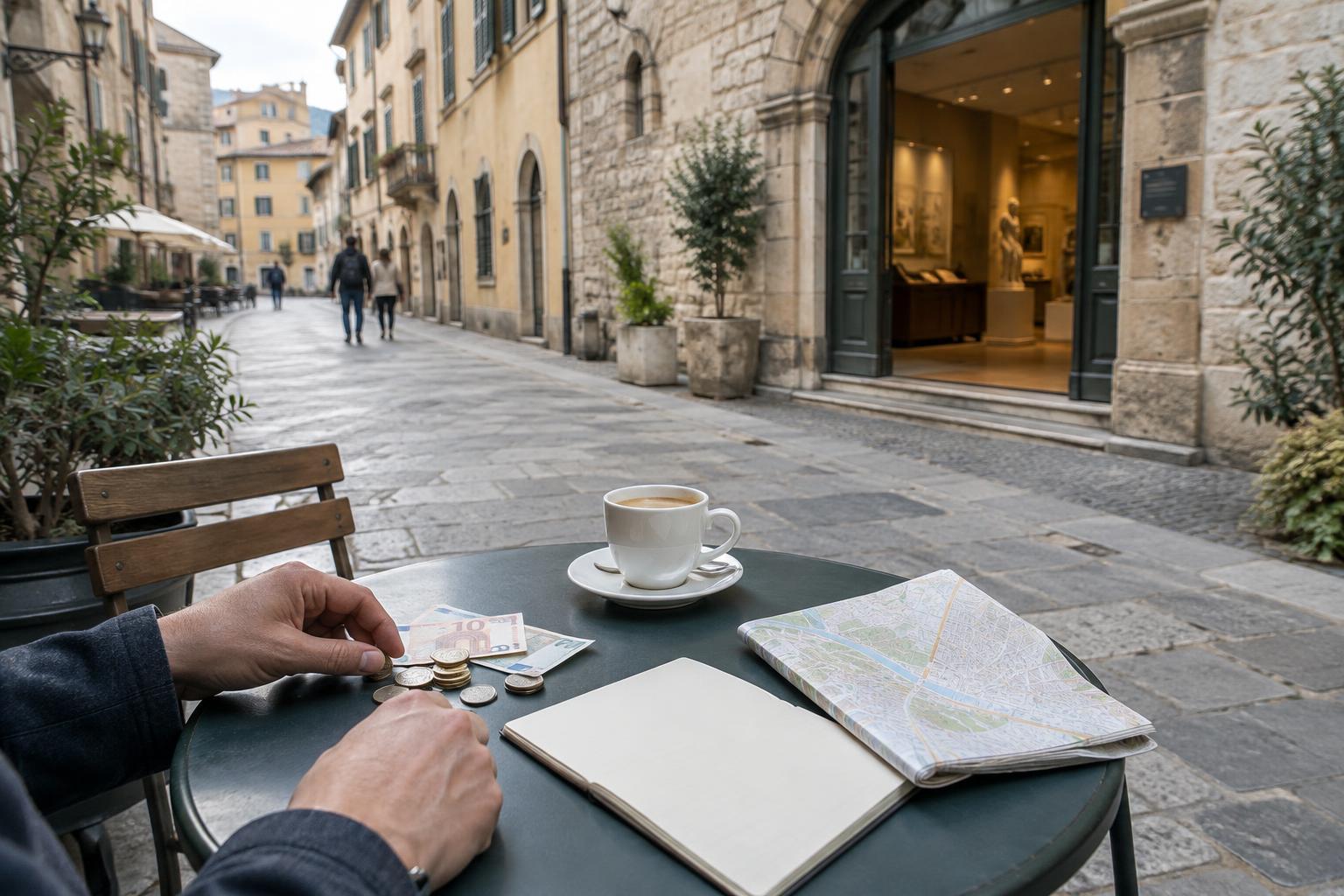
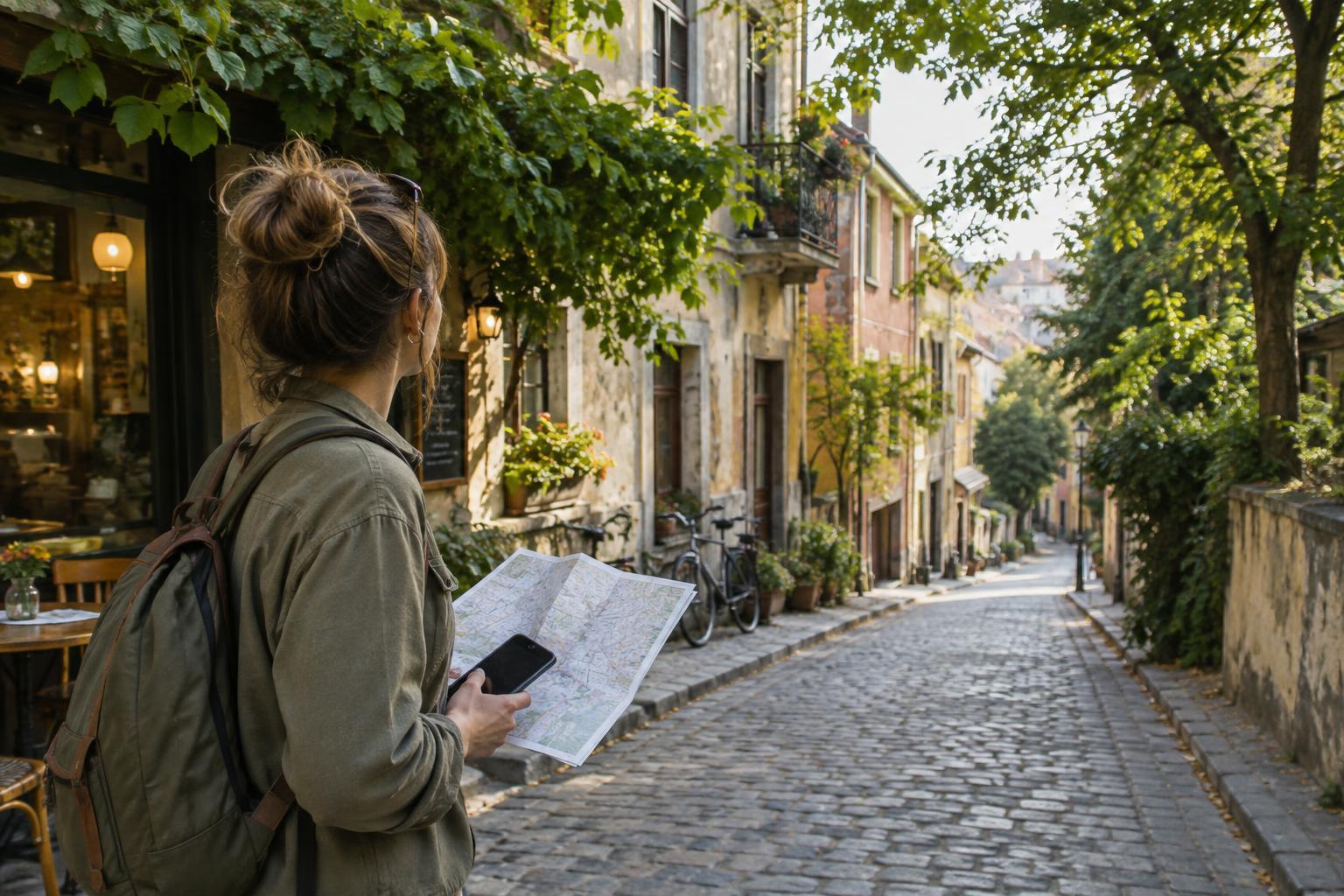
Begin with streets, paths, and public spaces that are clearly meant for visitors. A local walking map or information posted by a park, museum, or transit service can help you identify likely connections, but treat any map as a planning aid rather than permission to enter. A mapped line may be outdated, incomplete, or unclear about conditions on the ground.
Before leaving, look for a second way around any shortcut your walk depends on. This is especially useful if you are walking near housing complexes, campuses, industrial areas, or working waterfronts, where access may change from one entrance to the next. Check that your alternative suits your mobility needs; a route that looks short on a screen may involve steps, uneven surfaces, or a difficult crossing. Leave enough time to turn back without feeling pressured to push through.
Pause at thresholds and read the whole scene
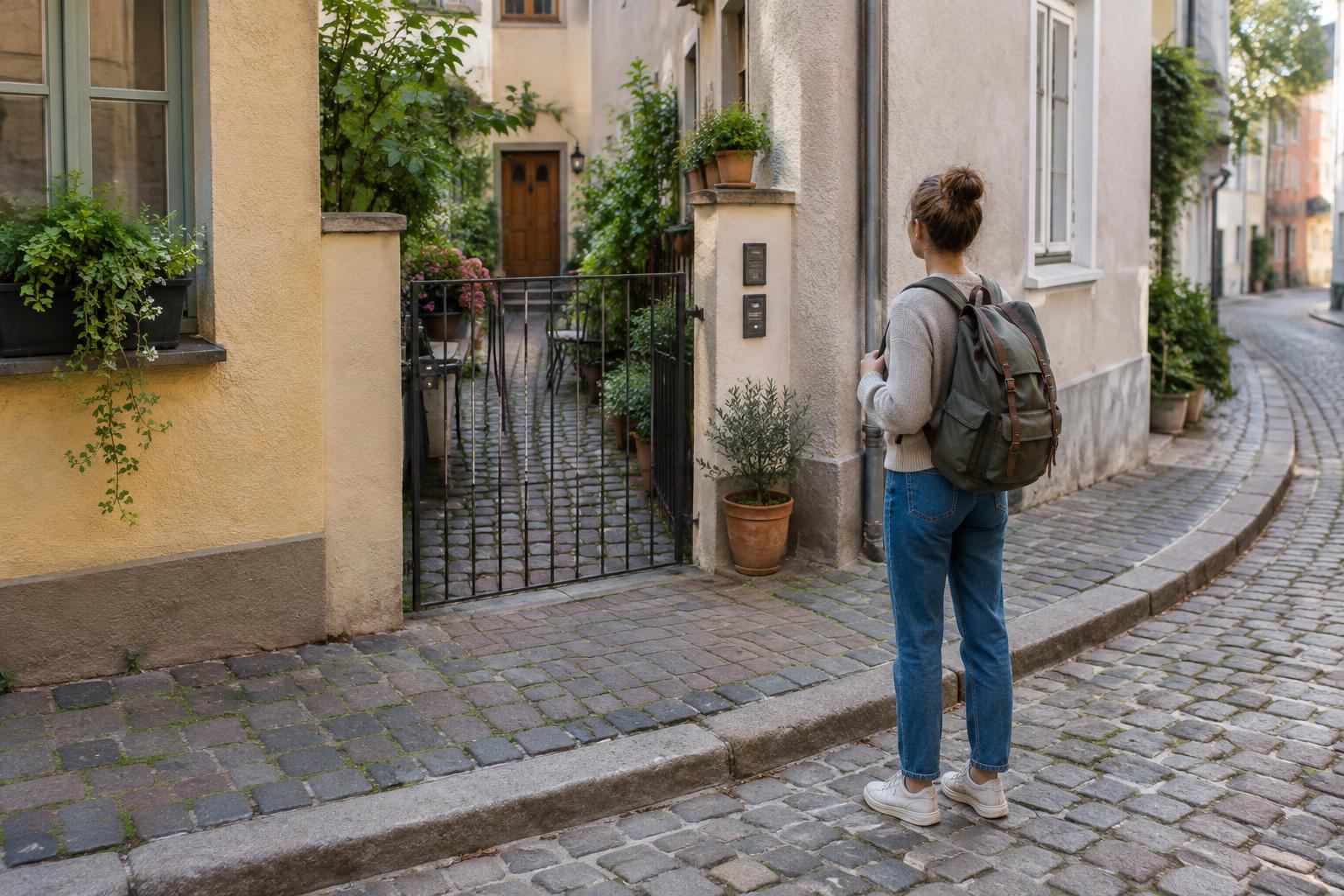
When you reach an unfamiliar entrance, slow down. Notice signs, gates, opening hours, barriers, and the way the space is being used. A name on a street sign does not necessarily mean a road is public, and an open gate does not necessarily invite visitors. A courtyard lined with apartment doors may be a shared residential space rather than a sightseeing route. If the cues conflict or remain unclear, use a more obvious public path.
Keep the distinction between looking and entering in mind. You can often appreciate a building’s details from a sidewalk without stepping into its driveway or passage. If a route appears open to visitors, stay on the apparent path and follow any posted conditions. Do not move barriers, test locked doors, or follow someone through a controlled entrance. Those actions turn a moment of uncertainty into an intrusion.
Share space without making people part of the attraction
Respectful walking is about more than where your feet go. In narrow lanes and mixed-use areas, leave room for residents, workers, and vehicles. Avoid blocking doorways to study a facade or stopping in the middle of a passage to check a map. Keep noise down near homes, particularly in enclosed courtyards where sound carries. If you are walking with others, a small group is easier to move aside than a crowd spread across the route.
Treat photography with similar care. An interesting doorway may also be someone’s front door, and a window or garden may be part of their everyday private life. Consider framing a wider street scene instead of photographing directly into a home. If someone asks for space or tells you an area is not for visitors, respond politely and leave by the route you came. There is little value in winning an argument over a shortcut.
Make turning back part of the walk
A dead end is not a failed exploration. It may show you how a neighborhood is organized: where a public street gives way to a service lane, or where a quiet passage belongs to the people who live beside it. Step back to a clear public route, reorient yourself, and choose the next connection. If it is safe and appropriate to ask, a staffed visitor desk or local information point may be able to suggest an accessible way through.
Pay attention to your own safety as well as access. Choose well-lit routes when visibility matters, watch for traffic in spaces without sidewalks, and avoid squeezing past loading activity or construction barriers. If you feel unsure of your surroundings, head toward a busier, clearly public area. The most rewarding walks leave room for small surprises, but they also leave room to say, “Not this way,” and keep exploring.