Notice patterns, not just landmarks
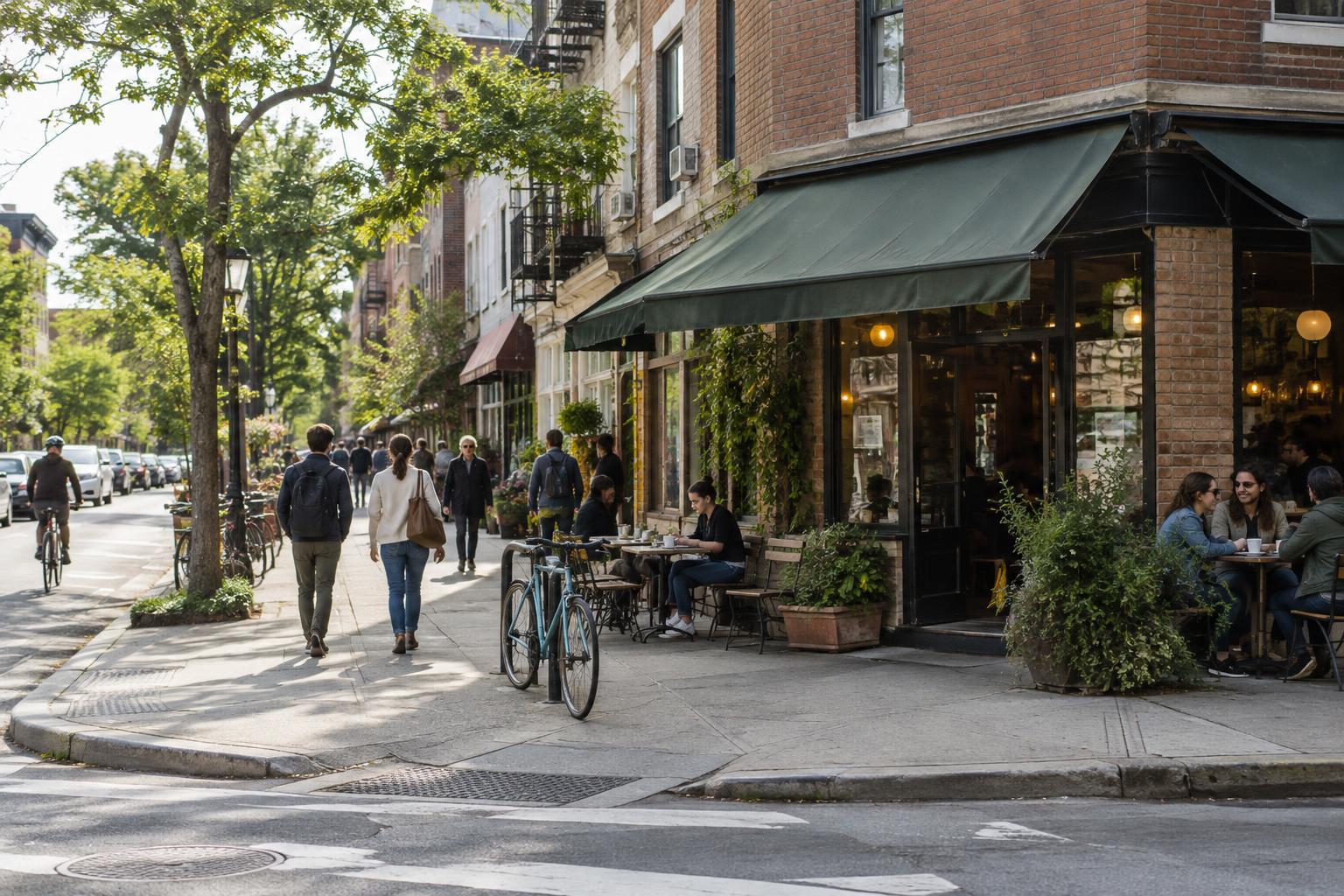
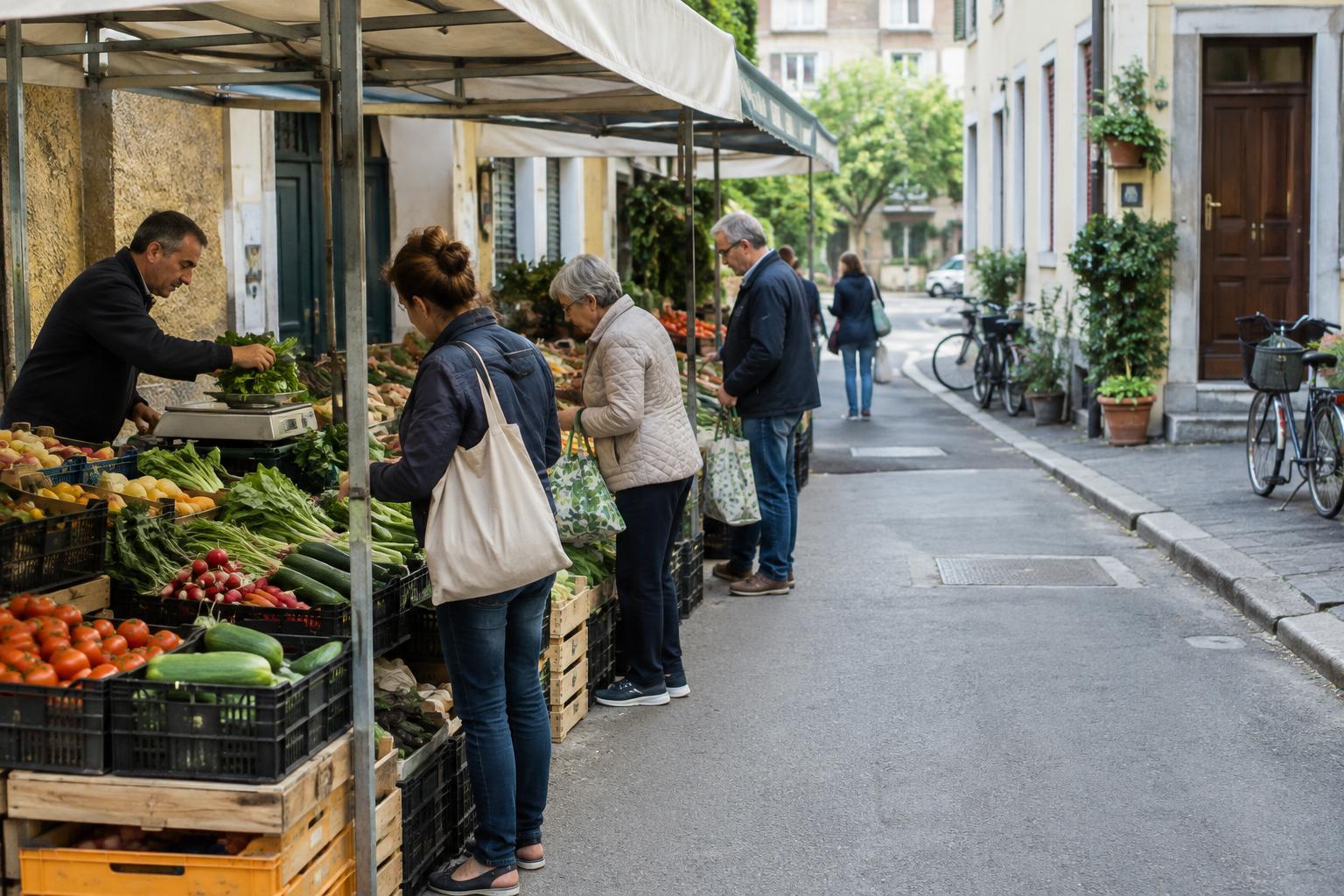
A neighborhood’s social life does not always announce itself with a plaza or a sign. It may gather around a bus stop, a corner shop, a shaded stretch of sidewalk or a bench outside a community building. These places can be easy to miss when you are looking only for destinations. Slow down and notice where people pause, greet one another or return at different times of day.
Treat what you see as a clue, not a conclusion. Several people chatting outside a storefront may be waiting for an appointment, taking a break from work or attending a private event. A quiet square might become lively at another hour. You can learn a great deal by observing the relationship between a place and its surroundings without trying to identify everyone’s purpose there.
Separate visibility from permission
A space can be visible from the street without being open to visitors. Courtyards, apartment stoops, school grounds and the seating outside some businesses may look inviting, but each has its own expectations. Even a place that is publicly accessible may serve as someone’s regular meeting spot, workplace or route home. Your ability to enter is not the same as an invitation to linger.
Look for ordinary boundary cues before approaching: gates, changes in paving, posted hours, a host at an entrance, or seating that clearly belongs to a café. If the status of a place is unclear, stay on the public route rather than testing the boundary. A view from the sidewalk is often enough to appreciate how a courtyard or doorway fits into the neighborhood. When you do enter a business, follow its usual customer expectations rather than treating it as an observation deck.
Read the setting without reading into people
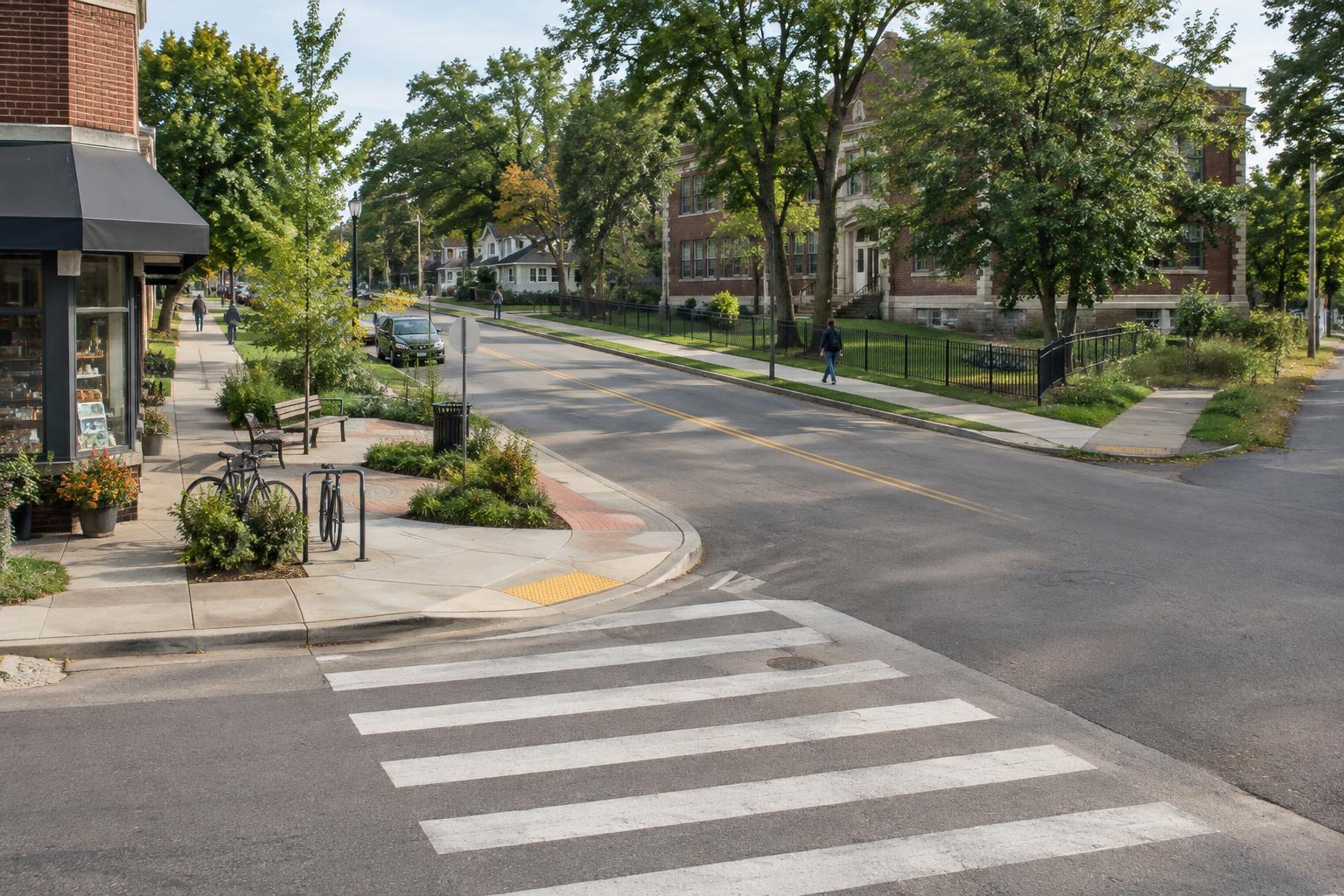
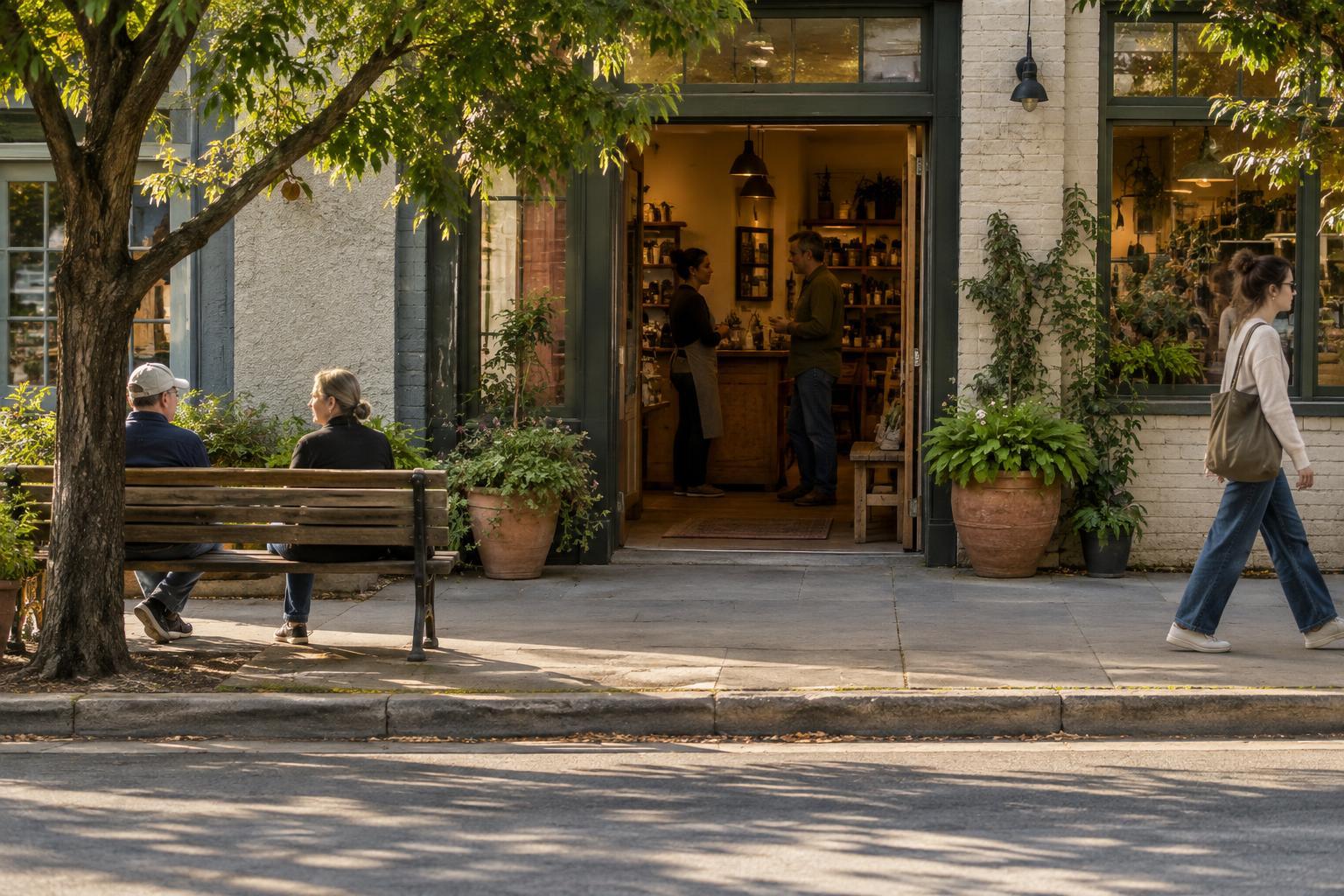
The physical details of a gathering place can tell you more than a guess about the people using it. Shade, shelter, wide steps, movable chairs and a safe crossing can make stopping convenient. A bakery near a transit stop might draw brief conversations; a bench near a library might support a slower rhythm. Notice these practical features and how they connect to nearby streets and services.
Avoid turning people into evidence for a story you have already decided to tell. A group outside a small museum is not necessarily a neighborhood committee; people on a porch are not automatically eager to discuss local history. If you want context, try information intended for visitors, such as signs or a museum’s exhibits. A brief question to staff at a business you are patronizing may also be appropriate when they are not busy. Accept a short answer, or no answer, without pressing.
Be a considerate passerby
You can explore attentively without occupying a place. Keep doorways, ramps and narrow sidewalks clear. Give people room to continue their routines, and avoid hovering near windows, fences or conversations. If you sit on a public bench, use it as a bench, not as a vantage point for watching particular people. Small choices like these help keep your curiosity from becoming someone else’s inconvenience.
Take similar care with photographs. A building detail or streetscape may be what caught your eye, but a close image can also expose residents, children or the interior of a home. Check what is in the frame, avoid photographing into private spaces, and put the camera away if it seems intrusive. There is no need to capture every interesting interaction. Some impressions are better kept as notes about the place rather than images of the people who use it.
Let uncertainty shape the visit
The most useful question is not always “What happens here?” It may be “What can I appreciate from where I am welcome?” That shift leaves room for a neighborhood to remain more complex than a visitor’s quick interpretation. A closed gate, an unmarked room or a gathering that does not include you is not a missed opportunity; it is part of the place’s everyday boundaries.
If a gathering spot is clearly open to visitors, participate in the ordinary way: buy something if it is a shop, follow the posted guidance if it is a cultural venue, and make room for regular users. Otherwise, continue your walk. You may leave with a stronger sense of the neighborhood precisely because you noticed where people come together without assuming their space was yours to enter.