Start with what the museum actually shows
A small museum invites close looking. With fewer rooms to cover, you can notice not only individual objects but also the story their arrangement tells. Which activities, places, and people appear repeatedly? Which materials are preserved: photographs, household goods, tools, letters, or official records? Begin by describing those patterns to yourself rather than deciding immediately what the museum has overlooked.
Pay attention to the difference between an object and the words around it. A label may identify who made or used something, how it entered the collection, and why it matters. Or it may provide only a name and a date. That difference is worth noticing, but it does not explain itself. Sparse information might reflect limited records, a short label format, or research still to be done.
Take in the museum’s stated scope, too. A museum devoted to a particular trade or period cannot tell every story about its town. Its title, introductory panels, and room headings can help you understand what it set out to collect or display before you assess what falls outside that frame.
Separate an absence from its possible causes
Once you recognize a pattern, try putting it into a precise question. “I saw many photographs of shopfronts but few of the homes behind them” is more useful than “The museum ignores everyday life.” The first describes a visit; the second assigns a motive you cannot establish from the galleries alone. An absence in the exhibition is not necessarily an absence from the collection.
Objects may be in storage, too fragile to display, difficult to identify, or outside the focus of a current exhibition. Some kinds of experience also leave fewer objects behind. Informal work, rented homes, and ordinary routines may be harder to represent through surviving material than ceremonies or institutions that kept records. These are possibilities to consider, not explanations to apply automatically to a particular museum.
It helps to keep three categories in mind: what you saw, what the museum says, and what you wonder. For example, you may have seen few accounts in residents’ own words; a panel may explain that the display draws on a donated archive; you may then wonder whether other kinds of accounts exist. Keeping those categories separate lets your curiosity become more specific without turning a guess into a claim.
Look at how objects reached the collection
Collections are shaped by what survives, what people choose to give, and what a museum has been able to accept and care for. Where labels provide that information, notice whether objects came from individuals, families, workplaces, or civic bodies. A display built largely from one source may offer a rich view of that source’s world while leaving other perspectives harder to see.
Also notice how much is known about an object’s earlier life. “Donated by” tells you who transferred it to the museum, but not necessarily who made it, used it, or valued it before then. A name attached to a photograph may identify its photographer rather than everyone pictured. Reading these distinctions carefully can bring overlooked people into your questions without inventing biographies for them.
If the museum explains limits in its records, take that explanation seriously. An uncertain identification is not a flaw a visitor needs to repair on the spot. It may be the most accurate account the museum can currently give.
Ask questions that leave room for an answer
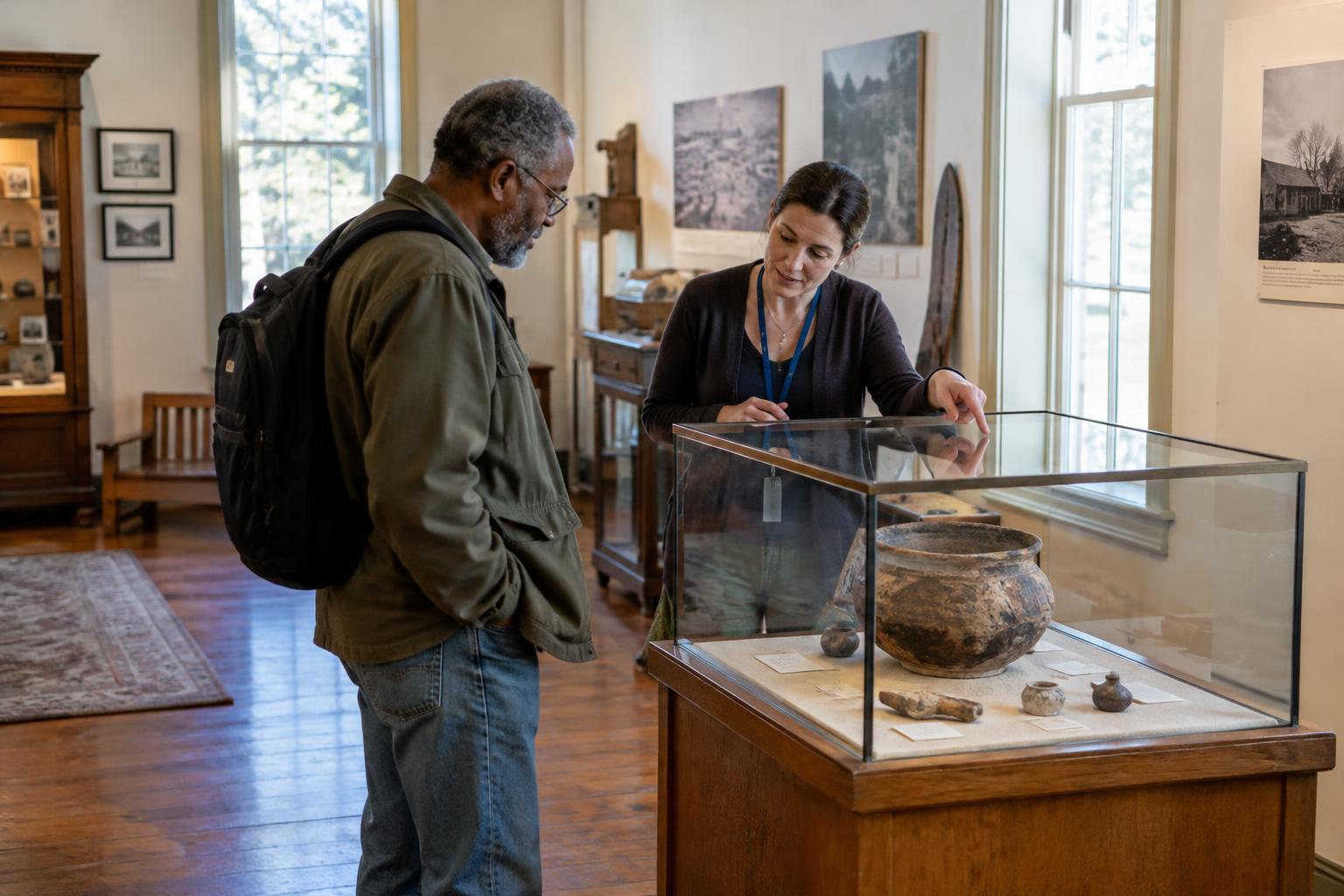
If a staff member or volunteer is available, ask a focused, open question: “Are there more accounts of this neighborhood in the collection than are shown here?” or “Do you know how these objects were selected for this display?” Such questions invite information without demanding that someone defend every gap. The person you meet may not have the answer, particularly in a small institution where roles and time are limited.
Written guides, collection descriptions, and exhibition notes may answer some questions without a conversation. If you do speak with someone, listen for the limits of what they know and avoid treating an informal answer as the museum’s complete position. You can also share a specific observation as feedback: which label helped you understand an object, or which question you carried out of the gallery.
Leave with a better question, not a finished story
A gap can be an opening for curiosity rather than evidence of neglect. Before you leave, consider writing down one thing you learned, one thing the museum explicitly left uncertain, and one question you would like to pursue. That small exercise protects the difference between knowledge and inference.
Small museums work with finite space and collections that have histories of their own. Looking thoughtfully at their limits can deepen your understanding of both the museum and the place it represents. The goal is not to complete the story on the museum’s behalf. It is to notice where the story becomes less clear—and remain honest about what you do not yet know.