Start with something you genuinely wonder about
A must-see list tells you where to go. A question gives you a reason to look. Before planning each hour of a trip, write down something you would enjoy investigating: How do people use the waterfront? What happens to old shopfronts when businesses change? Where does a neighborhood make room for everyday gathering? The question does not need an important answer. It needs to make you curious enough to slow down.
Choose a question you can explore in public places without asking strangers to explain their lives. “What kinds of signs help people find their way?” is more workable than “What do locals really think about this city?” You can begin with one broad question and two smaller ones. A curiosity about shared space, for example, might lead you to notice benches, shaded corners and the routes people take around a square.
Build a route that supports the question
Look for a few places that might offer different views of your subject. If you are interested in everyday architecture, you could pair a residential street with a market building and a small local museum. These are starting points, not stops you must complete. Group nearby places together so you spend less of the day crossing town and more of it paying attention.
Give the route a practical frame: a starting point, a likely lunch break and an easy way back. Check opening hours, admission details and transport options before you leave, especially if one stop matters to you. Consider how far you can comfortably walk and what you will do if the weather changes. A question-led plan works best when it has enough structure to keep you moving, but not so much that an interesting side street feels like a delay.
Let ordinary details become evidence
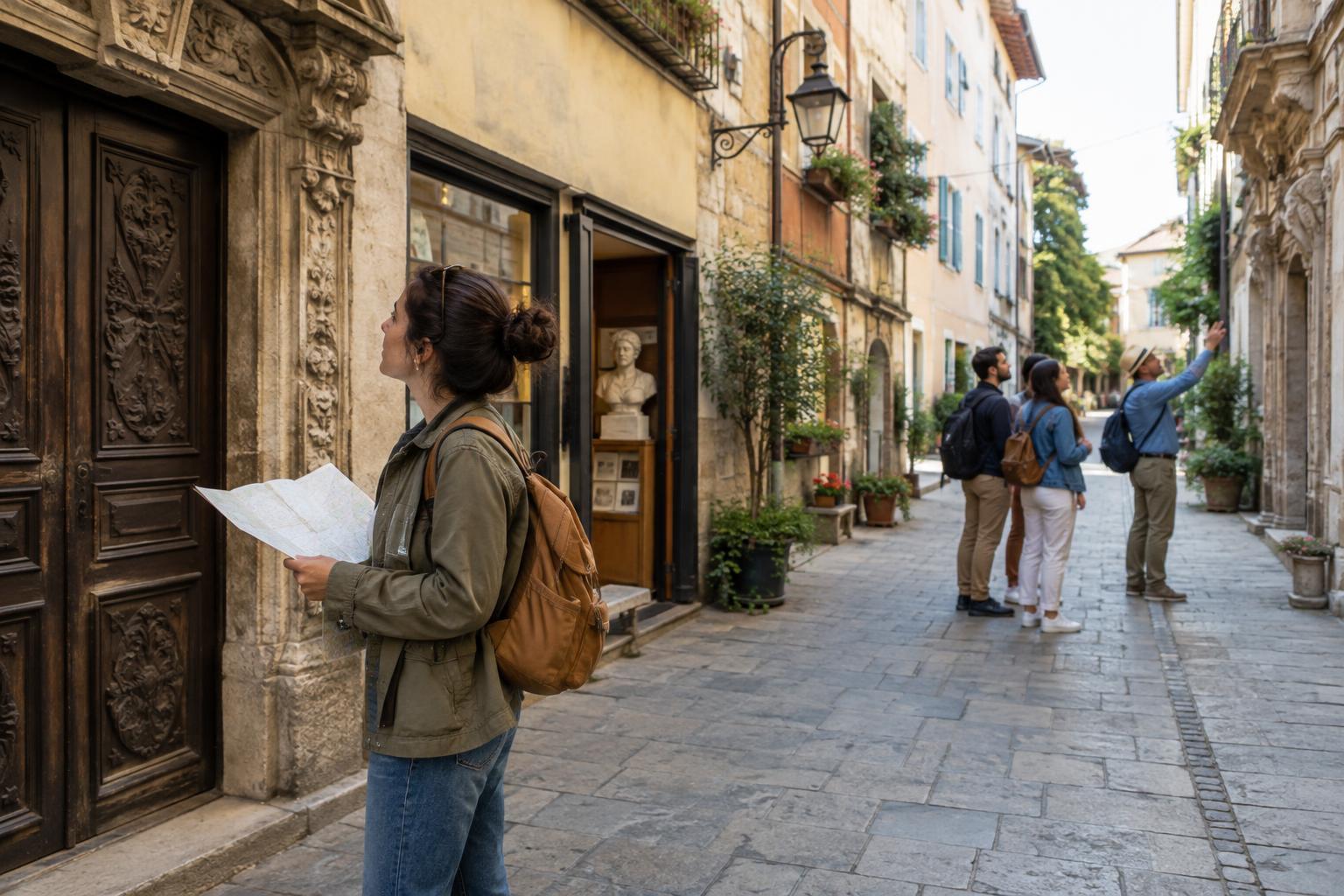
Once you arrive, pause before reaching for a map or camera. What can you notice from where you are? Look at how entrances face the street, where people wait, which buildings have been adapted and what a public noticeboard is used for. Such details may help you form a richer picture, but they rarely tell a complete story on their own. Treat your observations as prompts for further questions rather than instant conclusions.
A small museum, community exhibition or local walking route can add context to what you see outside. Read labels closely and pay attention to whose experiences are represented. If you speak with someone, ask a specific, low-pressure question and accept that they may not have time to talk. People are not part of an exhibit. Follow rules about access and photography, and be especially considerate in residential spaces, places of worship and working businesses.
Make room to change your mind
A useful travel question can change during the day. You might set out looking at how an old district has been preserved, then notice newer repairs that tell a more interesting story about how it is used now. Follow that shift if it feels worthwhile. You do not need to finish your original route to have made good use of the day.
It also helps to carry more than one possible answer. An empty square might be quiet because of the time of day, the weather or a nearby event you know nothing about. Rather than deciding what the place means, note what you observed and what remains uncertain. This habit makes exploring more rewarding: it leaves room for a place to be complex, ordinary and surprising at the same time.
Keep a record you can return to
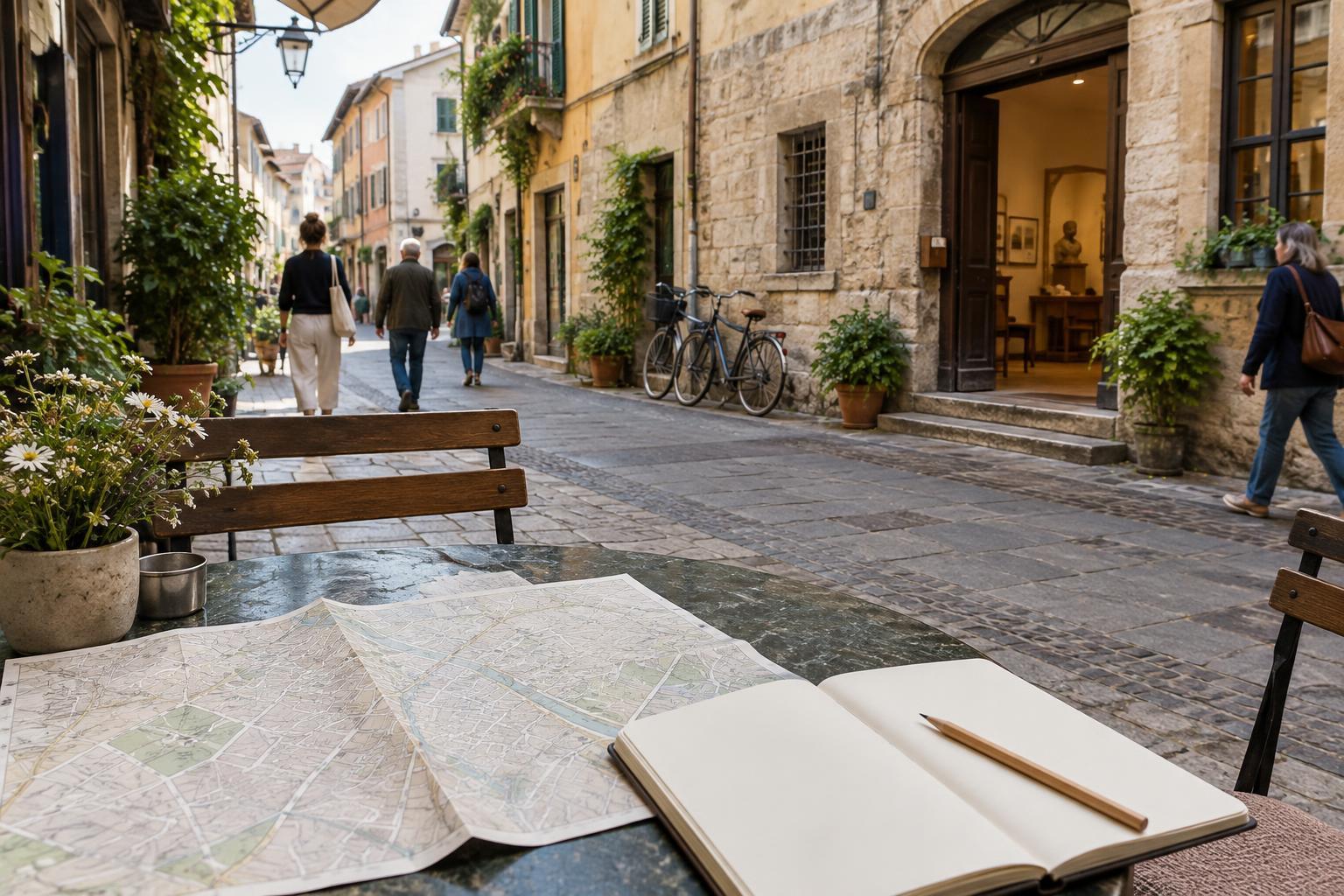
At the end of the day, write a few lines while details are fresh. Record your question, the places you visited, one thing you noticed and one thing you still do not understand. A quick sketch, a transit ticket or a description of a doorway may bring back the experience more vividly than dozens of similar photographs. Separate what you saw from what you inferred.
You can still visit a landmark or follow a recommendation. The point is not to reject popular places; it is to give your trip a focus that belongs to you. A good question may lead you to a famous building, a modest street corner or a return visit to somewhere you passed too quickly. Wherever it leads, it gives you a way to travel with attention instead of collecting stops.