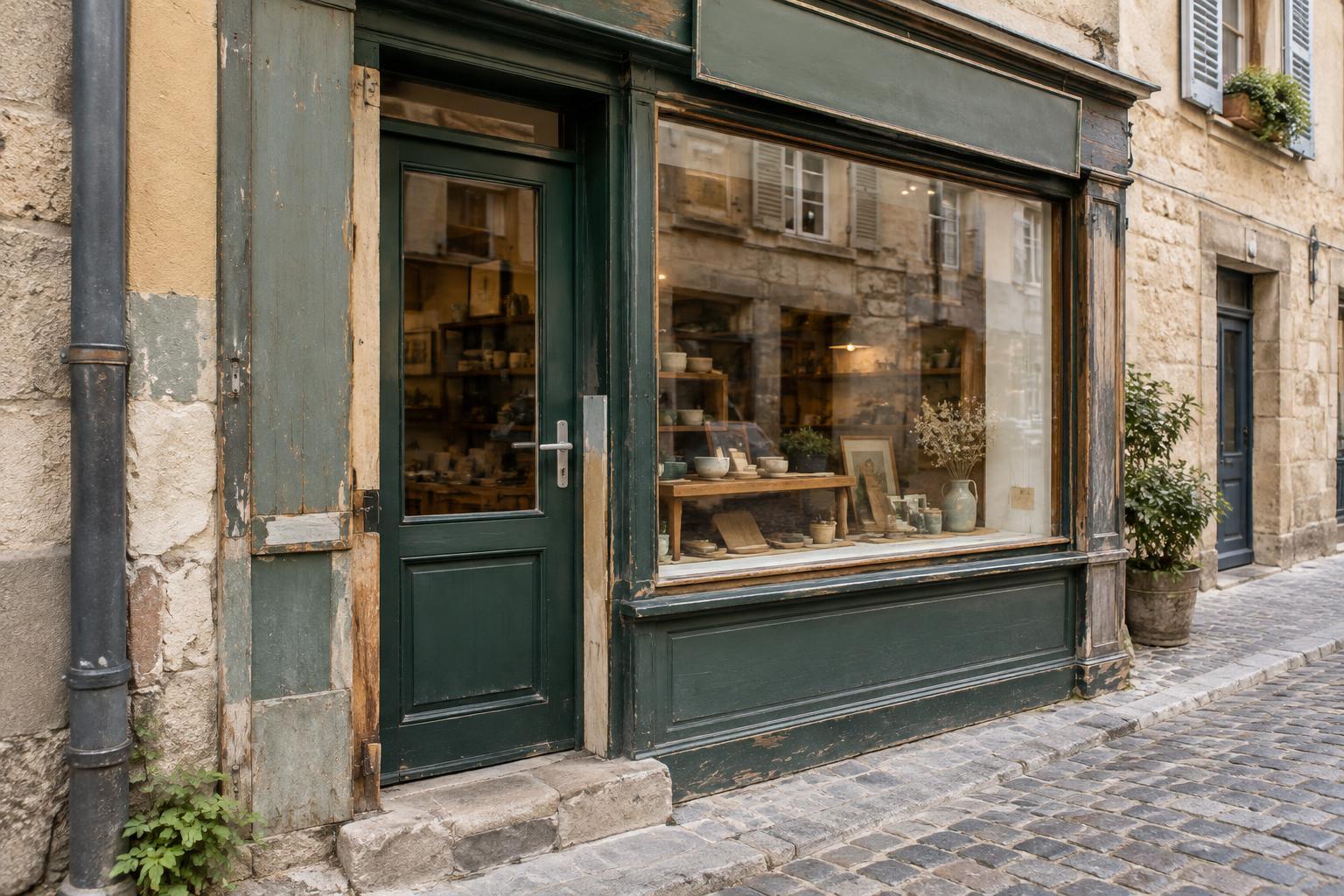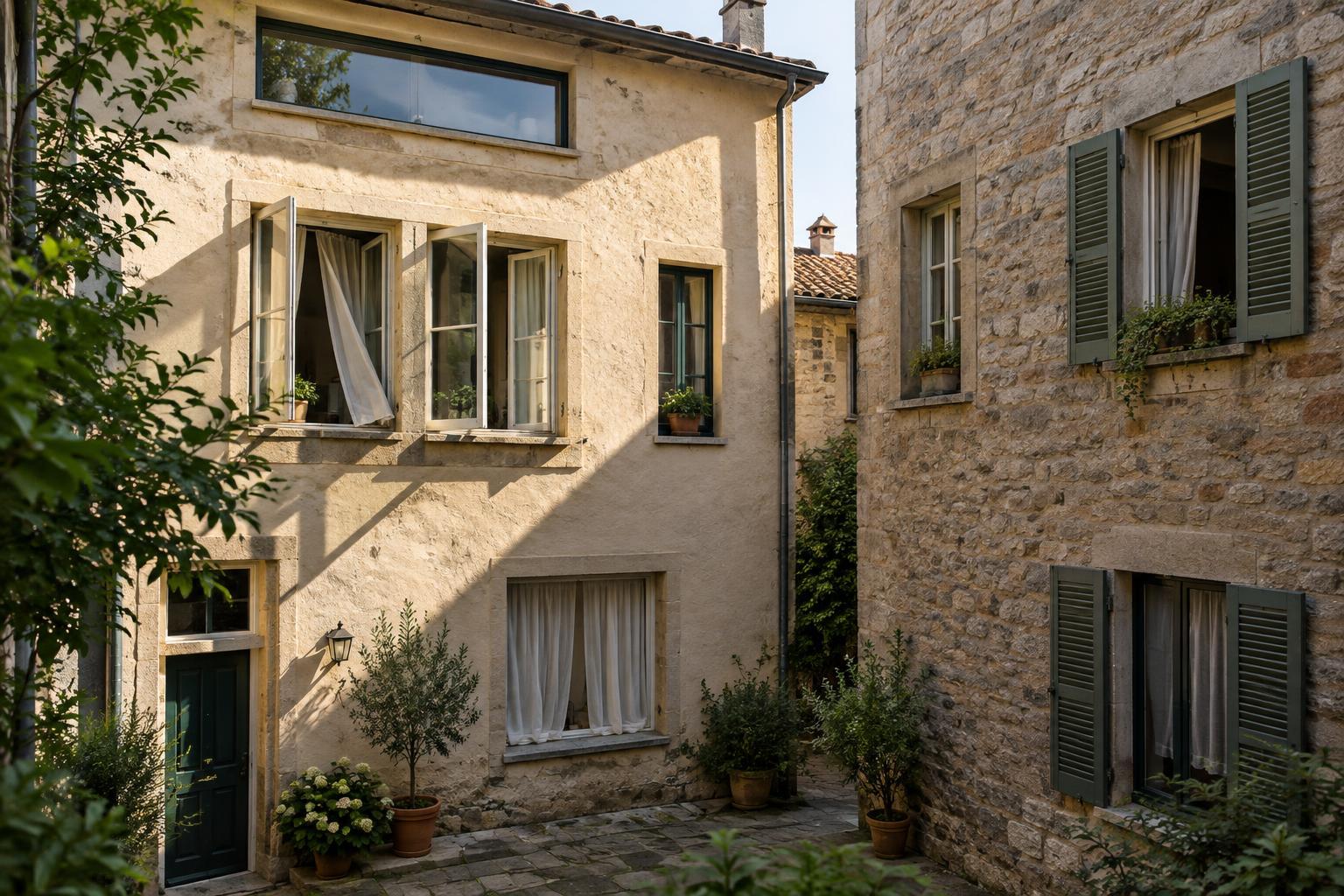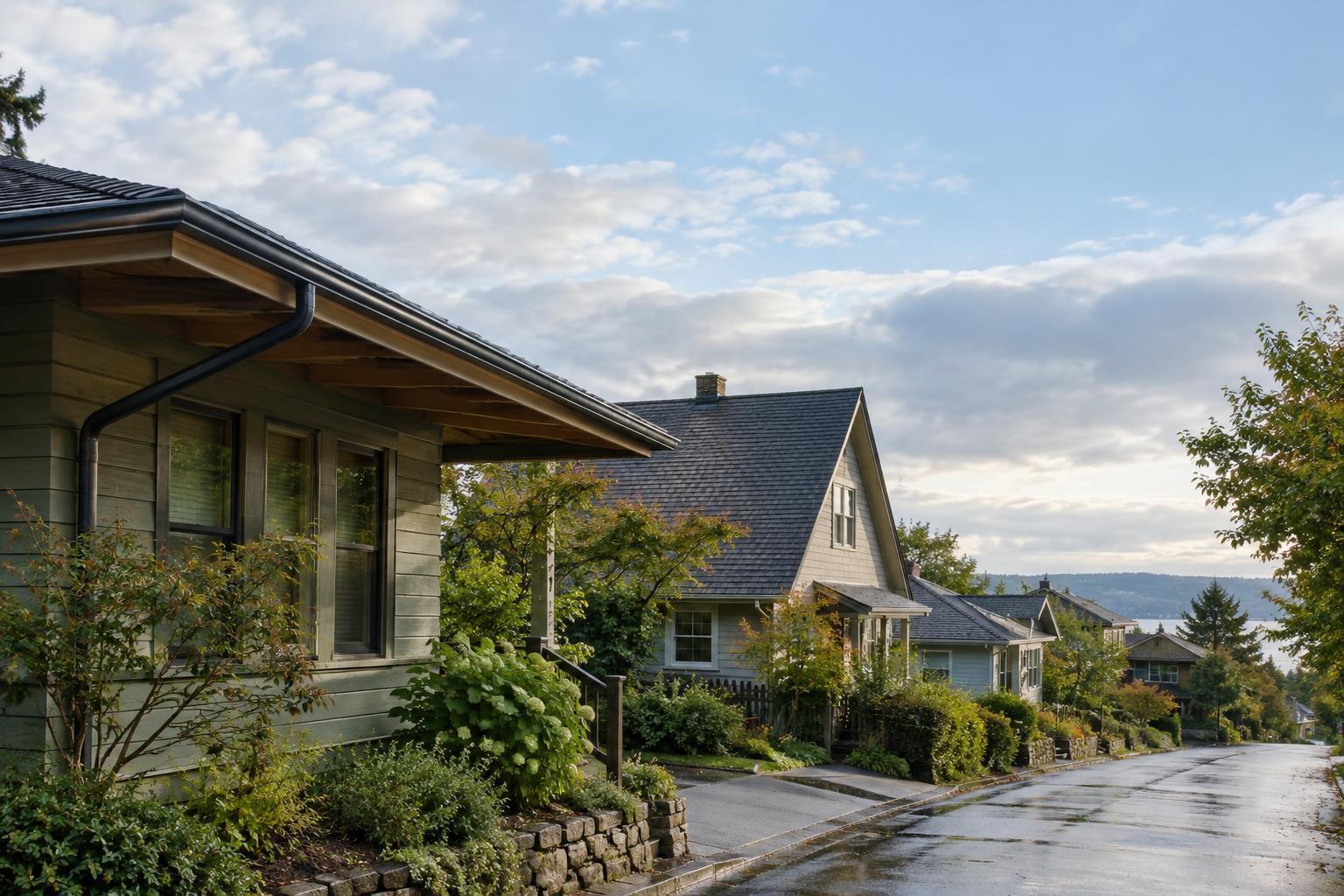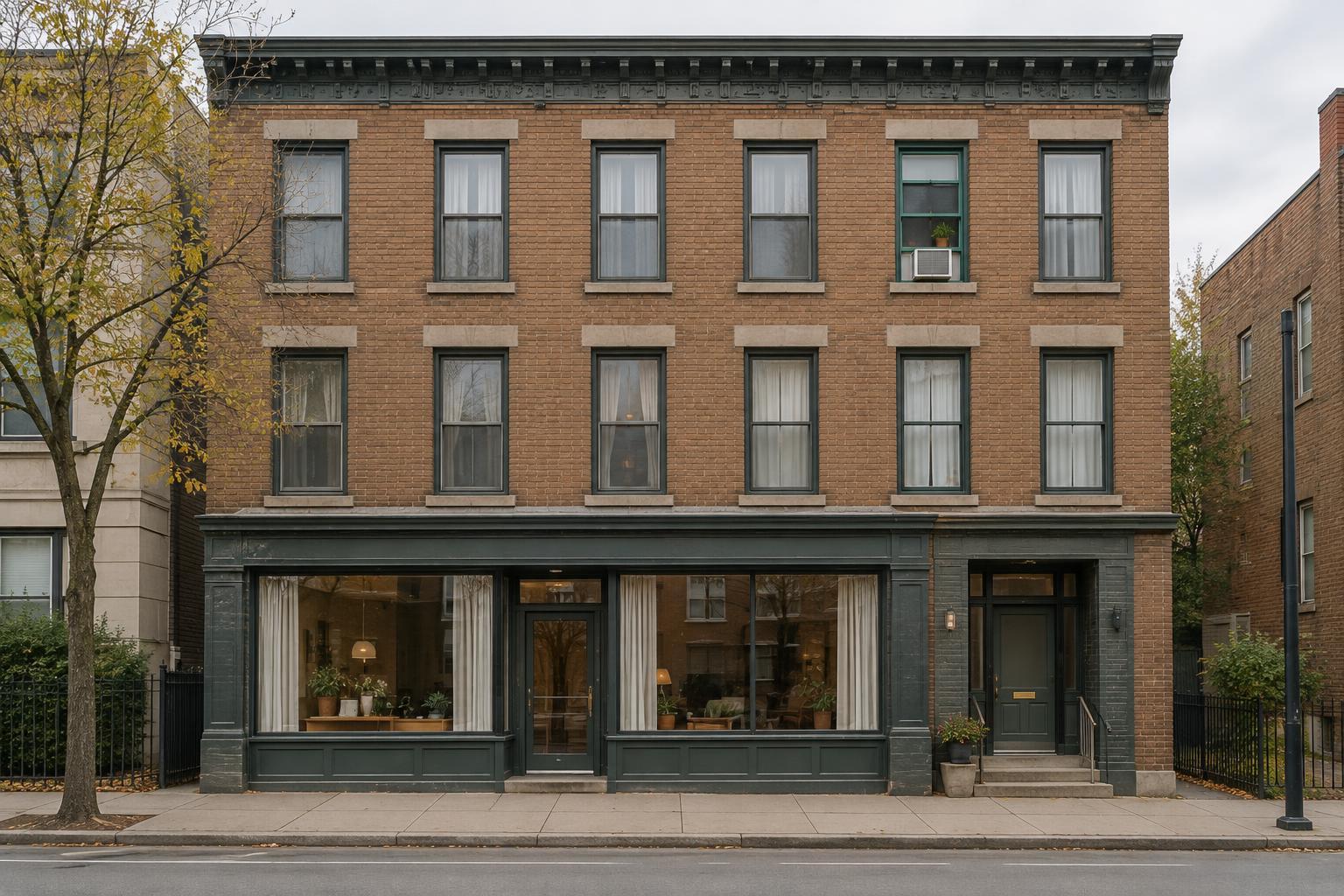
Start with the whole frontage
You do not need to know an architectural style to look closely at a building. Begin from a public place where you can see the whole frontage. Notice its width, height, and relationship to its neighbors. Does it line up with the buildings beside it, step back from the pavement, or turn a corner? A shop with windows at street level and apartments above may present several uses in one composition. A modest building can be just as rewarding to study as a landmark.
Before focusing on details, look for a pattern. Windows may form vertical stacks, horizontal rows, or an uneven arrangement. Materials or colors may change between the ground floor and the floors above. These choices help you divide a busy facade into parts. They do not, by themselves, tell you when the building was made or who lives inside. Treat what you see as evidence for questions, not a complete history.
Find the entrances and ask who they serve
Entrances reveal how a building addresses the street. Locate every visible door, including a recessed doorway that is easy to miss beside a wide shopfront. Is one entrance emphasized by steps, a canopy, or a larger opening? Is another tucked to the side? Separate doors may suggest that different parts of the building are reached independently, but you cannot always tell where a door leads from outside.
Look at the space around each entrance. A shallow recess can give someone room to pause outside the flow of pedestrians. A raised threshold can distinguish the interior from the pavement. A ramp, level entrance, or handrail may affect how easily different people can enter. These practical details often shape the experience of a building more than its ornament does.
Entrances also change. A former doorway might now be a window, or a broad opening might have been divided into a door and display glass. Differences in masonry, paving, or trim can suggest an alteration, though repairs can leave similar traces. Observe from the street rather than testing doors or peering into private spaces. Curiosity works best when the people using the building can go about their day undisturbed.
Read the floors from bottom to top
Next, trace the building upward. The ground floor often has a different job from the levels above: it may need to admit customers, provide privacy, or withstand frequent contact with the street. Larger panes, sturdier surfaces, or a taller-looking ground level can make that distinction visible. Above it, repeated windows may give the facade a steadier rhythm.
Look for horizontal clues to where one floor ends and the next begins. Window rows are the simplest guide, but ledges, bands of material, balconies, and changes in wall finish can help. If the windows become smaller near the roof, the top level may have a different layout or purpose. That is a possibility, not a certainty: ceiling heights and interior arrangements are not always legible from outside.
A facade may seem symmetrical until you follow these lines closely. One window could sit lower than its neighbors, or a shop sign could hide an older division between floors. Rather than deciding that an irregularity is a flaw, ask what it might accommodate. Buildings are adapted to daily needs, and their exteriors often show the results imperfectly.
Count the bays, then notice the exceptions
A bay is a repeated section of a facade, often marked by one vertical run of windows, doors, or wall space. Try counting from one side to the other: window, wall, window, wall. The number matters less than the rhythm. Are the sections evenly spaced? Is the center given special attention, or does one end differ because it meets a side street?
Once you have found the rhythm, look for where it breaks. A wider bay might make space for an entrance or a larger room. A blocked window might indicate a change, but it could also have been part of the design. Comparing the ground floor with the levels above can be particularly revealing: storefronts may span several bays that remain distinct upstairs. Repetition gives you a baseline; exceptions give you something to investigate.
Finish by looking at the whole frontage again. How do the entrances, floor divisions, and bays work together? You may leave with a clearer sense of how the building meets the street, even if its history remains unknown. That is enough for a worthwhile observation. An ordinary facade is not a puzzle you must solve; it is a useful place to practice noticing how everyday spaces are arranged.