Start with the route the museum offers
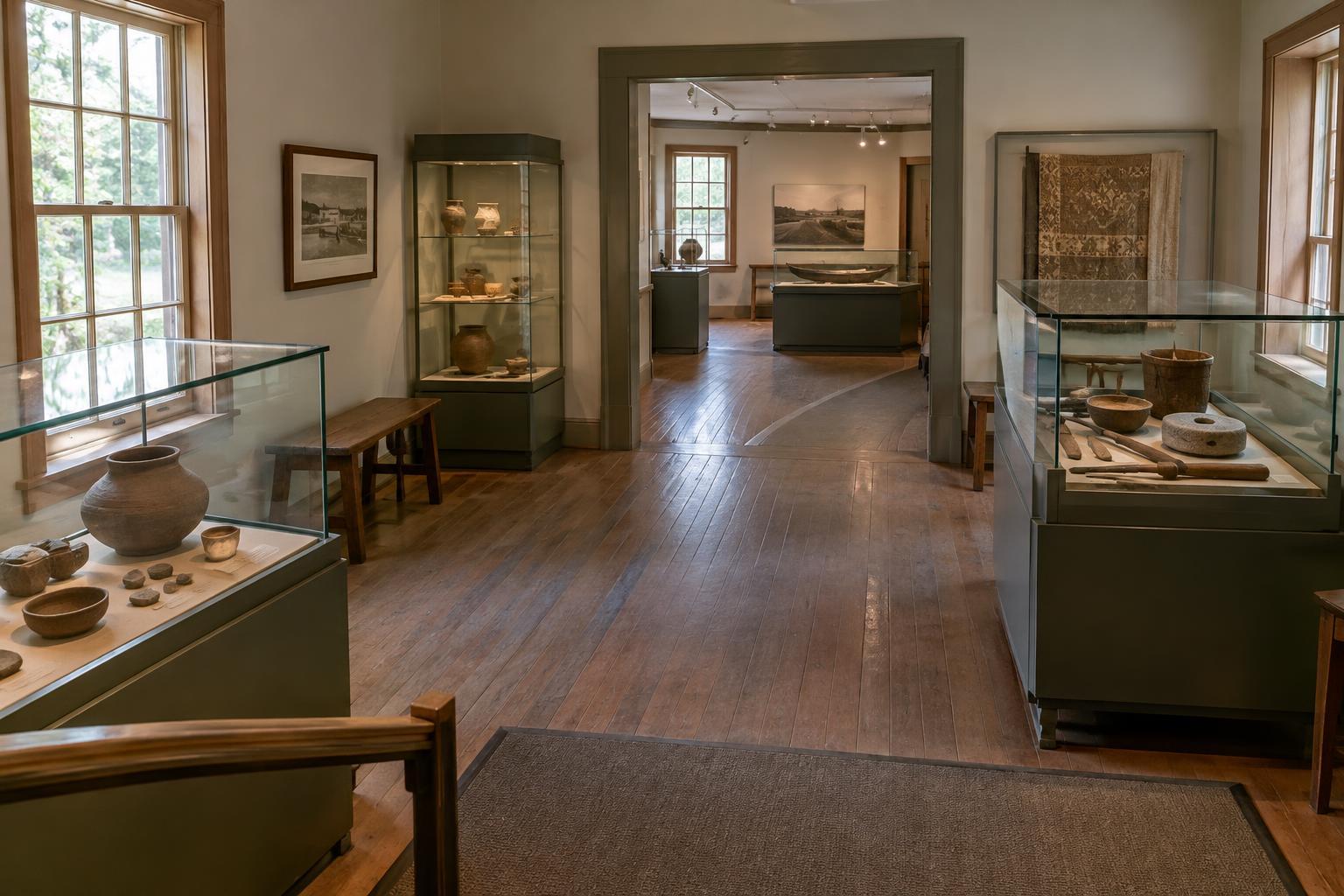
Before concentrating on individual objects, pause near the entrance and look at how the exhibition is arranged. Is there a numbered route, a timeline, a map, or a short introductory panel? These clues can tell you whether the museum intends visitors to follow a particular story or explore by theme. If there is no obvious route, that is useful to know too: you can choose one room to begin with rather than trying to see everything at once.
Notice what you encounter first. An opening display may introduce a place, a community, or a type of object that gives context to the rest of the visit. Equally, the first room may simply be the one nearest the entrance. Treat the layout as a guide to possible connections, not proof that every placement was designed to make a statement.
Look at what sits together
Objects placed in one case or room often share a theme, period, material, or use. A group of tools beside photographs of a workshop, for example, invites you to think about work as well as the tools themselves. Read the case heading before deciding what connects the items. Then check whether the labels reinforce that connection or introduce different stories about individual objects.
Pay attention to objects that appear in more than one context. A household item might be presented alongside others from the same era, while a similar item elsewhere helps explain a local trade. Neither grouping is necessarily the whole story. Asking yourself why an object belongs in this room can reveal the questions an exhibition is inviting you to consider, even when the answer is not explicit.
The space around an object matters as well. A single item in a case may draw attention to a particular detail; a crowded shelf may emphasize variety. Space and case size can also be practical constraints, especially in a small building. Use placement to prompt closer reading rather than assigning importance solely by how much room an object receives.
Notice where the story changes
Doorways, changes in lighting, and new panel headings can mark a shift in subject. As you move between rooms, try putting that shift into a sentence: “This room moves from how the town was built to how people lived in it.” Doing so helps you follow the exhibition’s structure without needing to remember every label. If the connection is unclear, look back at the last panel in the previous room or the first one in the next.
A small museum may occupy a former home, workplace, or other adapted building. Its route can reflect the building as much as the collection: narrow rooms, stairs, or limited wall space may dictate where displays fit. In a historic building, the rooms themselves may also be part of what you have come to see. Consider both possibilities before assuming an unexpected turn in the route signals a change in historical significance.
Make room for what the layout cannot tell you
An exhibition shows a selection, not an entire collection or a complete account of a place. A subject with little floor space may still matter greatly; the museum may have few suitable objects to display, or the relevant material may be elsewhere. Avoid reading absence as evidence that something did not happen. If a topic interests you, note what the displays do say and what questions remain open.
Before leaving, take one last look across the rooms you visited. Which themes received their own space, and which appeared through objects scattered across the museum? That quick review can help you distinguish the exhibition’s main route from the connections you made for yourself. If the layout leaves you curious, ask staff or volunteers whether there is a floor guide or another display you missed. A good visit does not require solving the museum like a puzzle; it means noticing how the space helped you look.