Start with the street that welcomes everyone
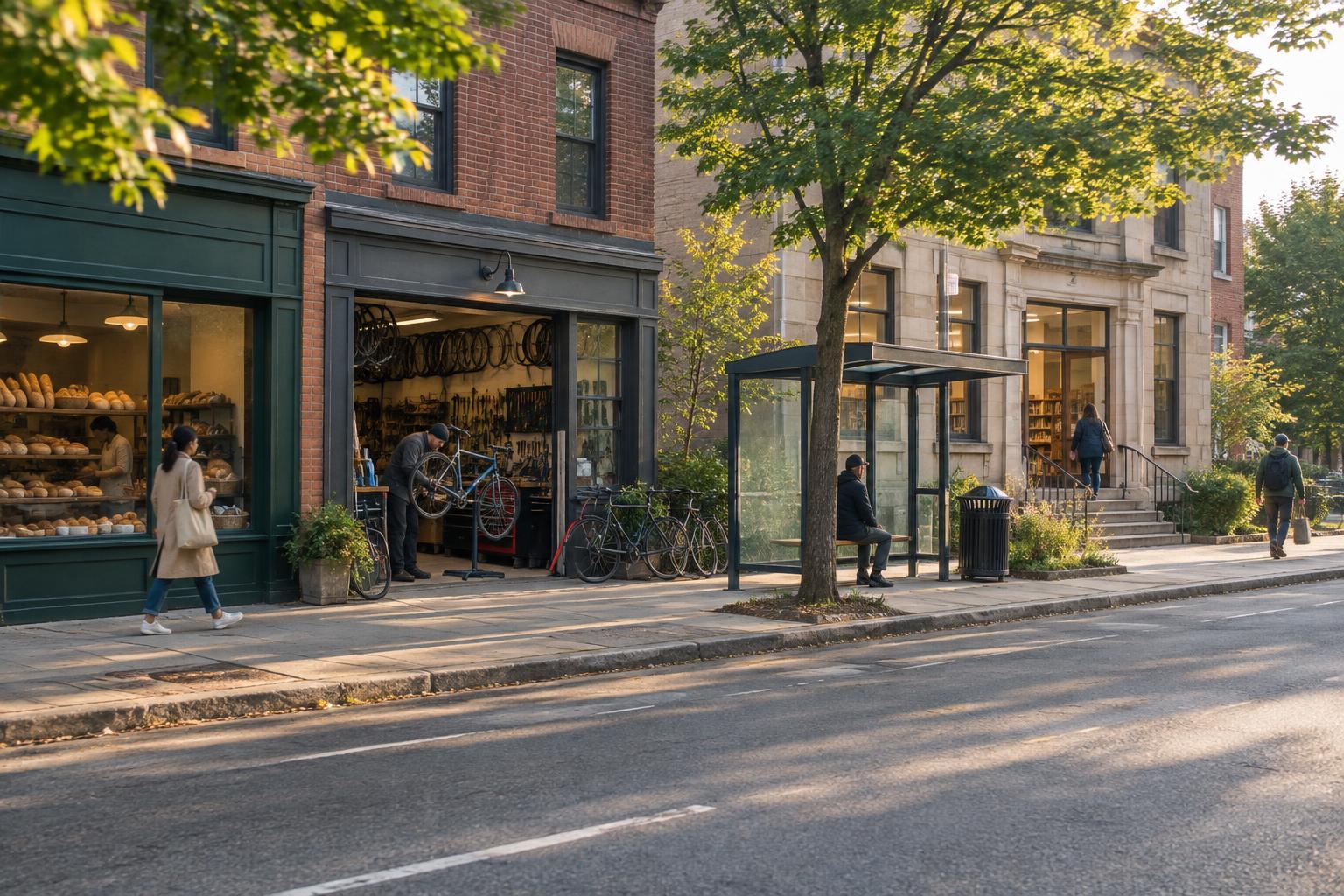
A main street often gives a visitor the easiest introduction to a neighborhood. Bus stops, crossings, shopfronts and signs make it relatively simple to find a route and get a sense of where people gather. Look beyond the most eye-catching businesses. A repair shop, pharmacy or small grocery may say as much about everyday needs as a café with a prominent window display.
Notice how the street works at walking speed. Are there places to sit, or does every pause require a purchase? Can people cross comfortably? Do entrances face the pavement, or do blank walls separate buildings from passersby? These details do not tell the whole story, but they show how public space invites, directs or discourages ordinary activity.
Turn the corner without expecting a secret
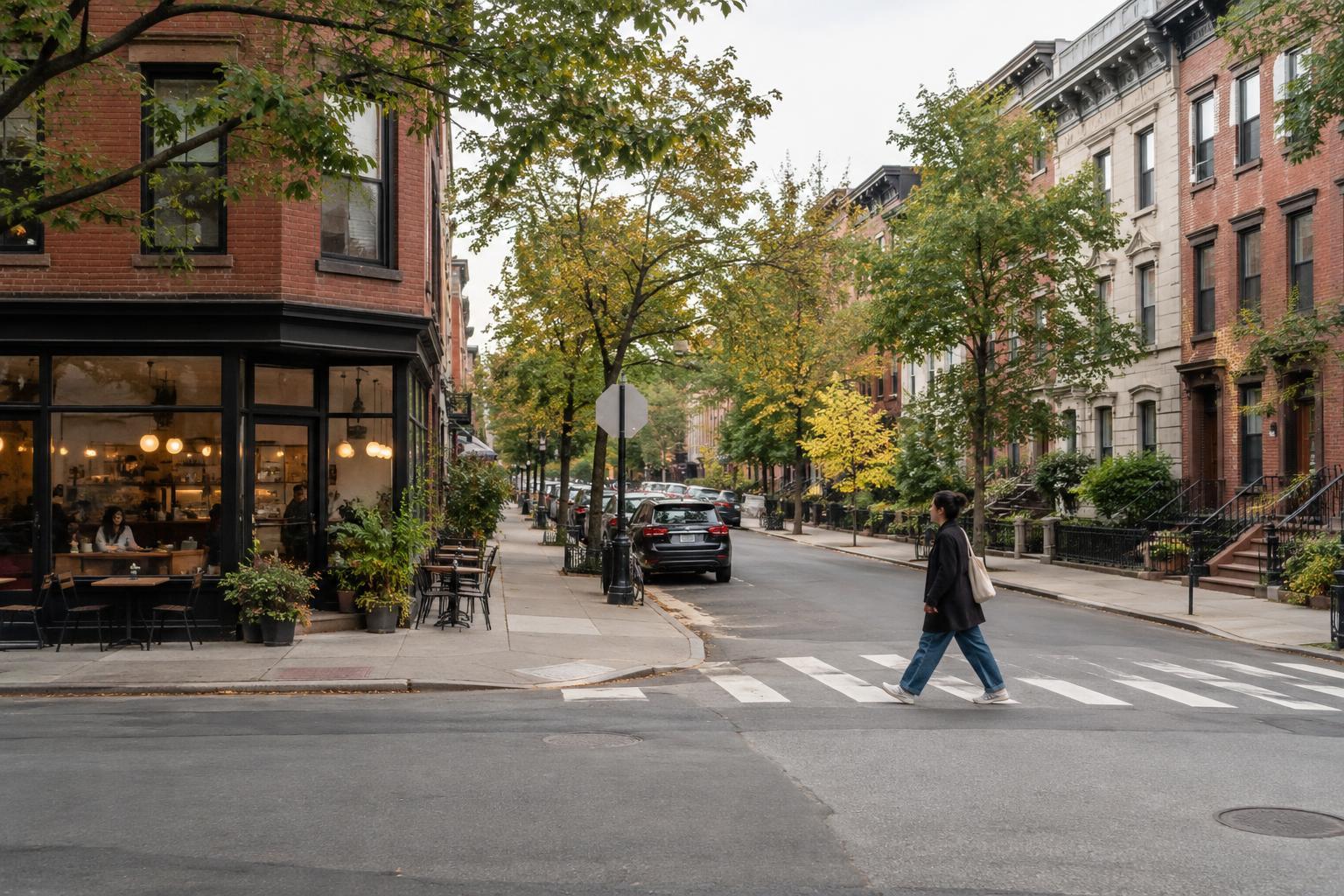
Side streets can reveal a different scale of neighborhood life. Homes may sit beside workshops, gardens, places of worship or buildings whose original uses have changed. The transition is often more interesting than a supposed discovery: a busy commercial block may give way to a quiet residential one in a few steps. That shift shows how closely different uses of a neighborhood can coexist.
Quieter does not mean more authentic. Residents may be walking to work, taking children home or enjoying time outdoors, not providing a scene for visitors. Stay on public routes, keep noise down and avoid photographing people or private spaces without permission. An attentive walk is not a search for access to everything; sometimes the right observation is that a place is not yours to enter.
Read buildings as clues, not conclusions
On both kinds of street, buildings offer clues about change. A narrow storefront might sit beneath apartments; a former shop may now have curtains across its front window. Different paving, altered doorways and additions at the back of buildings can suggest how spaces have been adapted. None of these details establishes a complete history on its own. Treat what you see as a question to explore, rather than proof of what happened.
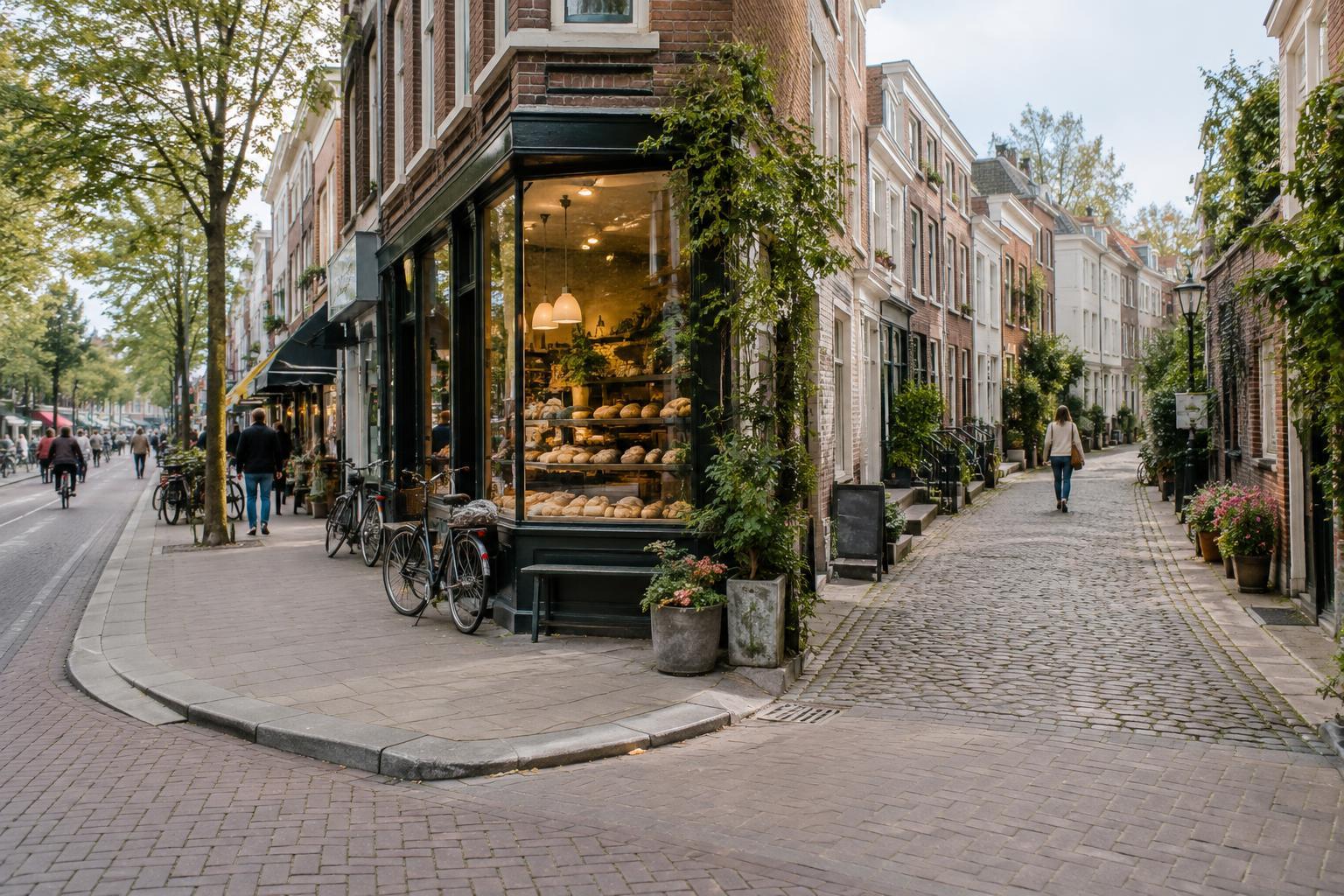
Compare how buildings meet the street. A main road may have large signs and frequent entrances, while a side street has low walls, shared steps or small front gardens. These edges shape how public and private life meet. Noticing them is more useful than judging which street looks better: each may be serving different needs for the people who use it.
Notice the connections between the two
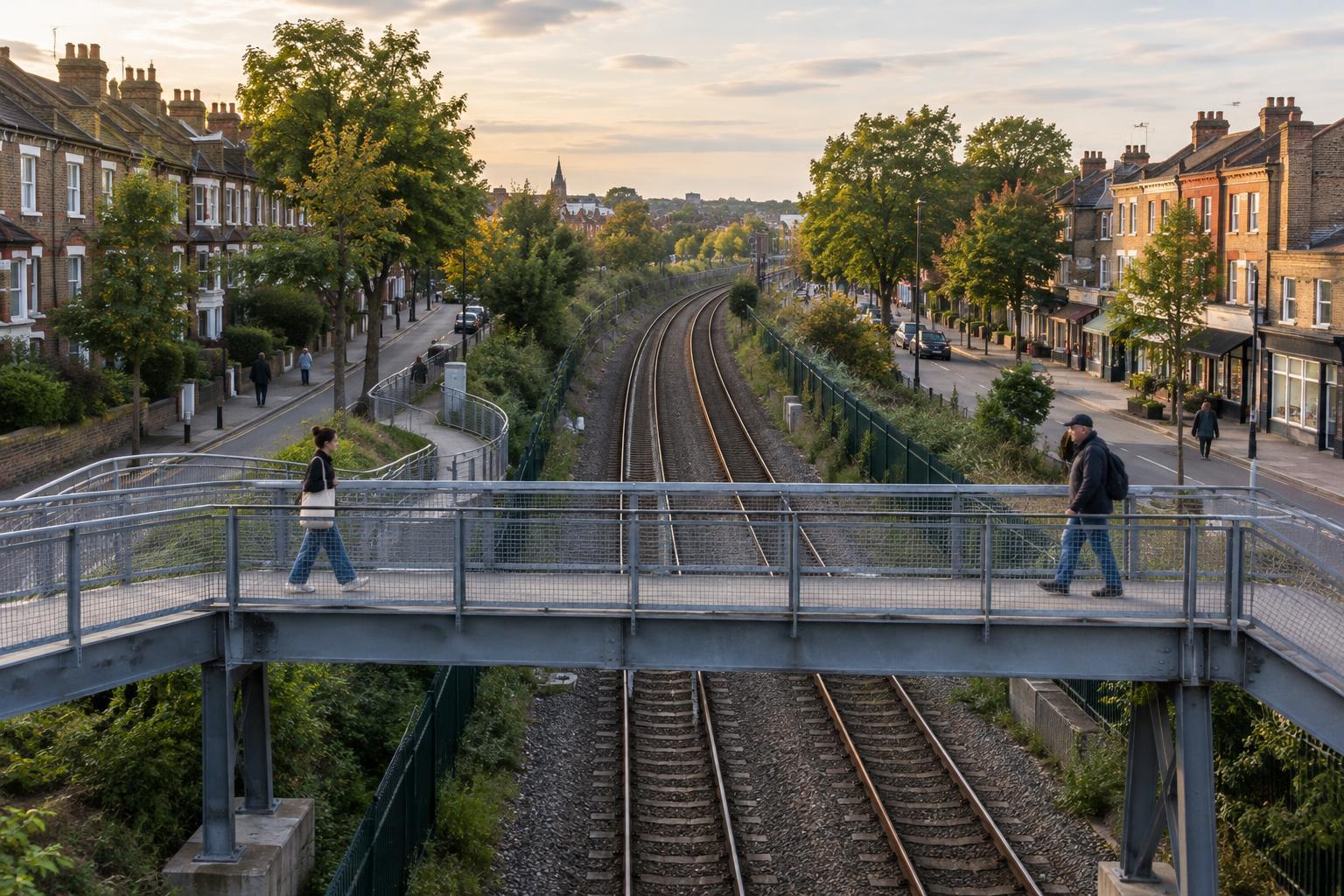
Main streets and side streets make more sense together. A corner shop may serve nearby households as well as passing commuters. A side-street path may offer the most direct way to a park, school or transit stop. Watch where crossings, shortcuts and entrances connect rather than treating the main road as the attraction and everything beyond it as a detour.
Time also changes what is visible. Deliveries, school journeys and evening meals can bring different rhythms to the same blocks. One visit provides only a partial view, so be cautious about broad claims such as “nothing happens here.” If a street seems empty, it may simply be quiet at that hour. The useful question is not which street is livelier, but how people move between them.
Make a walk that leaves room for everyday life
For a manageable route, choose a stretch of main street and one or two public side streets that connect back to it. Walk slowly enough to notice changes in building size, street noise, greenery and the places where people can stop. If you want to spend money locally, buy something you actually need or enjoy, and follow each business’s rules about browsing and photography.
Keep your notes grounded in what you observed: “several benches near the junction” is more useful than declaring a neighborhood welcoming to everyone. Ask whose experience you might be missing, including people moving with children, mobility aids or heavy bags. Main streets show how a neighborhood presents and organizes shared activity; side streets show other ways space is used. Together, they offer a richer view, provided you allow residents to remain people rather than characters in your travel story.