Start with a small area
A new place can feel as if it demands constant movement. Yet covering less ground often gives you more to remember. Choose a manageable area, such as one block, a public square or the stretch between two transit stops. Before reading a guide or taking photos, spend a few minutes looking around. What draws your eye first? What did you miss on that first glance?
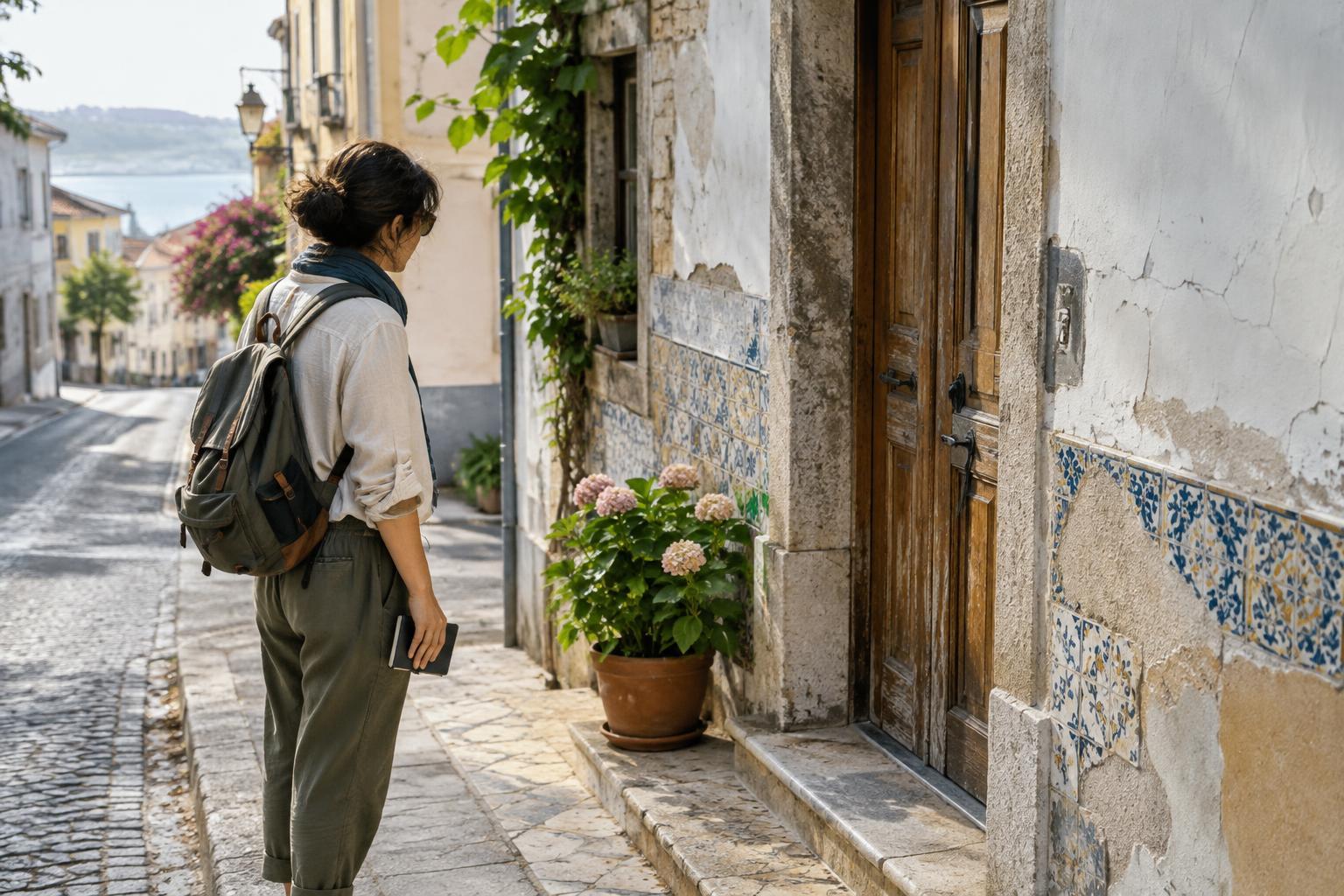
Try walking the same short route twice. On the first pass, travel at your usual pace. On the second, look for details that serve ordinary needs: a place to sit, a sheltered doorway, a repaired step or a sign that helps people find their way. You are not trying to decode an entire neighborhood. The exercise simply gives your attention somewhere to begin.
Follow one kind of detail
Pick a single feature to notice for ten minutes. It might be door handles, window shades, street trees, paving, hand-painted signs or the ways buildings meet the sidewalk. Following one thread makes a busy setting easier to take in. It can also reveal differences within a short distance: one storefront may offer shade while the next opens directly onto the street.
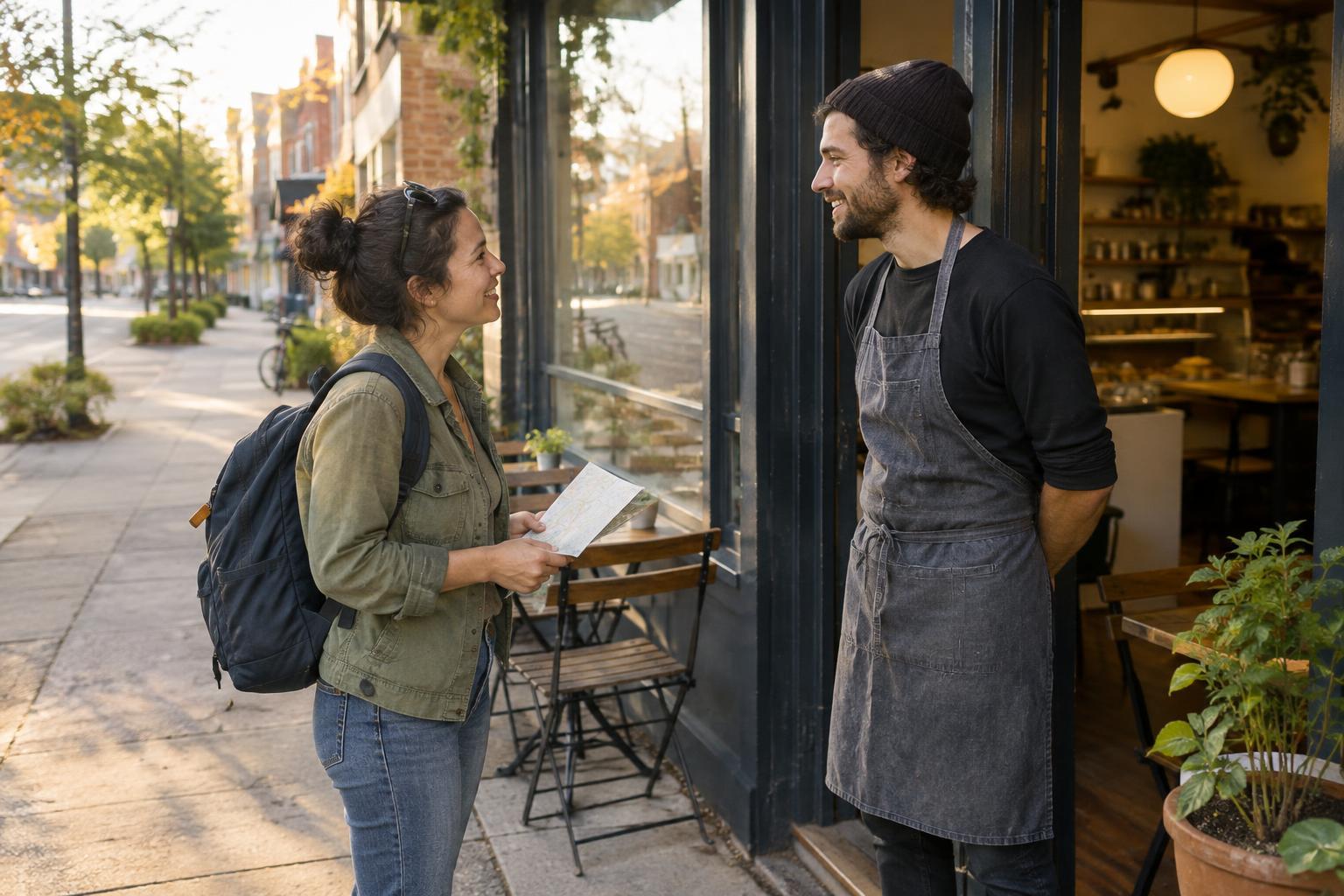
Describe what you can actually see before guessing why it is there. A narrow entrance is an observation; a story about who built it and why is an interpretation. If a detail makes you curious, note the question rather than filling the gap with an invented answer. This habit leaves room to learn from a museum label, a local history resource or a conversation when someone is willing to talk.
Pause and listen without eavesdropping
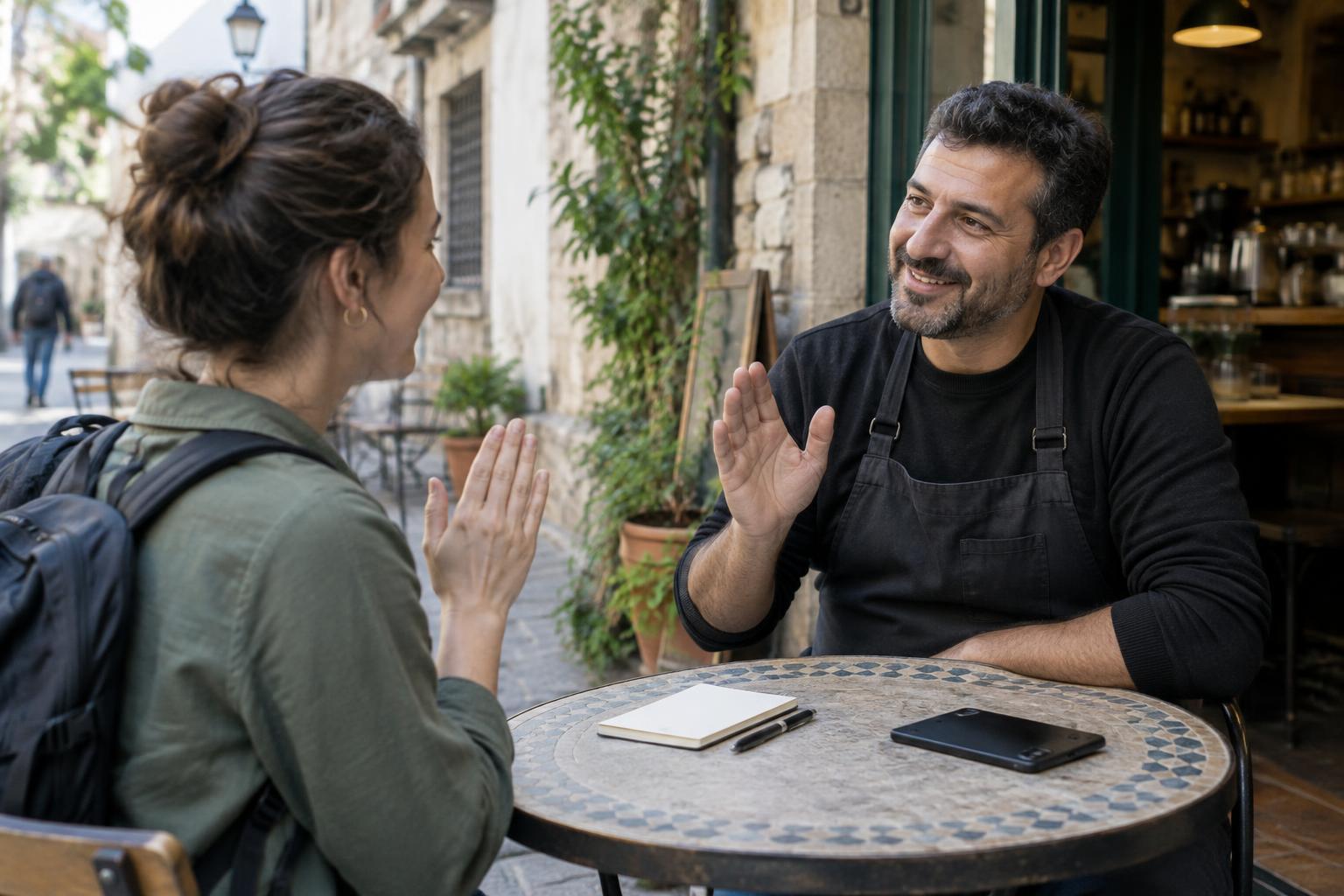
Sight usually leads a travel walk, but sound can help you understand how a public space is used. Sit where you are welcome to linger, or pause without blocking a path. For a minute, listen for layers: footsteps, traffic, a closing door, birds, a fountain or the changing volume of a nearby street. Which sounds stay constant, and which appear only briefly?
Keep the focus on the setting rather than other people’s private conversations. You can notice that a place grows louder near an intersection without trying to catch what anyone is saying. If sitting still is uncomfortable or impractical, do the exercise while moving at a comfortable pace. The aim is to widen your attention, not to follow a rigid method.
Look for signs of care and change
Places are maintained, adapted and used, not just designed. On a short walk, look for visible signs of upkeep or adjustment: a patched surface, a planter tended outside a shop, a ramp, fresh paint beside older material or a notice updated by hand. These details can prompt better questions than a quick judgment about whether a street looks attractive.
Be cautious about what you conclude. A repair does not, by itself, tell you who paid for it, how residents feel about it or what a neighborhood needs. Instead, ask how a feature changes your own experience of moving through the space. Does a bench invite a pause? Is a crossing easy to find? Notice who can use a place comfortably without assuming you know anyone else’s experience.
Make a small record, then put it away
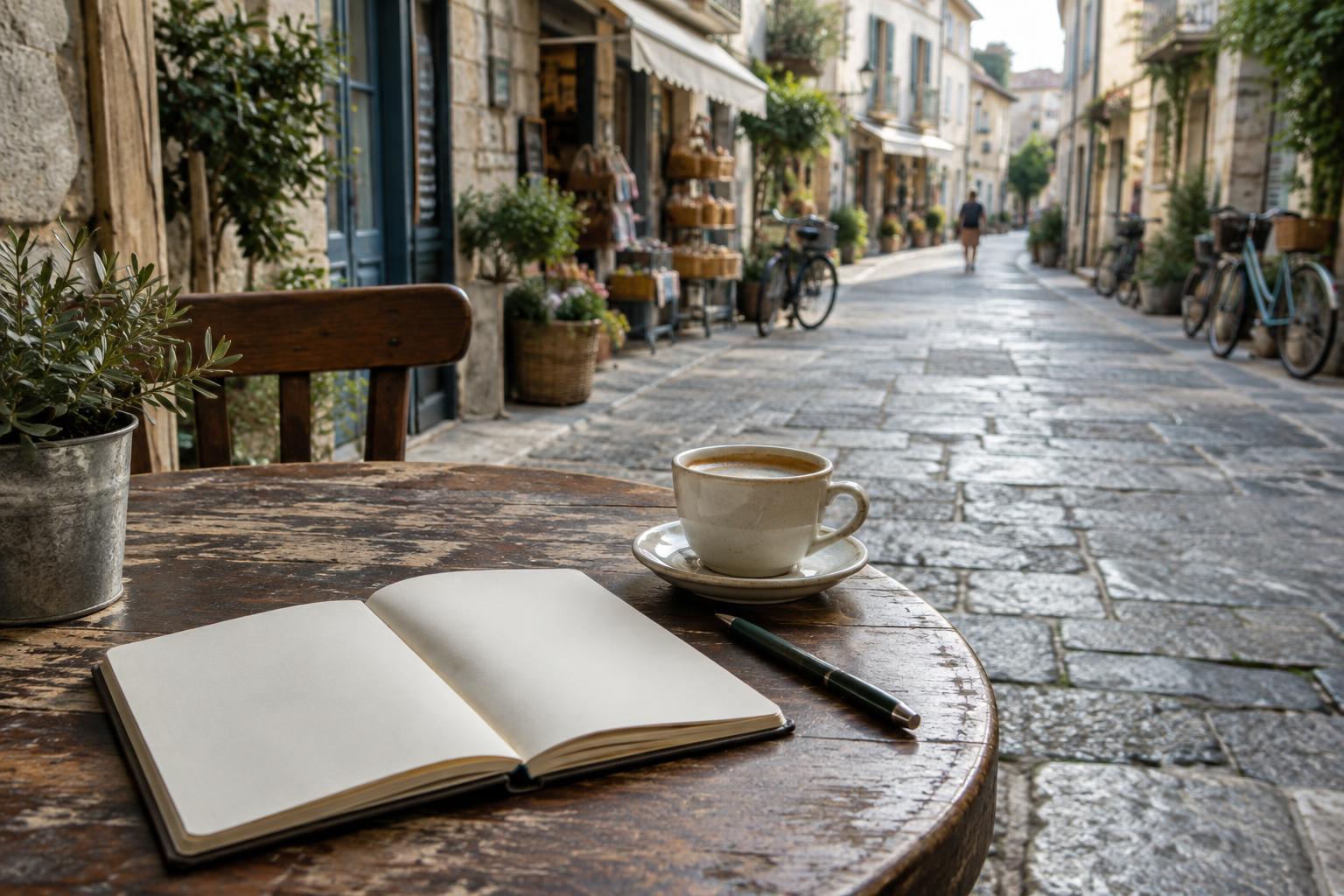
At the end of a walk, write down three specific details and one question. A brief note such as “different tiles at the corner entrance” will be more useful to your memory than “interesting street.” If you like drawing, make a quick sketch of a doorway or the shape of a square. Accuracy matters less than taking the time to look.
Photographs can help, but they need not be the default. Check whether photography is permitted indoors, avoid making strangers the subject without their consent, and leave room for people to use shared spaces. Then put your phone or notebook away for a while. Observation works best as a way of being present, not as a task to complete. One carefully noticed block can stay with you longer than a day spent rushing past many.