Start with a better question than “Is it real?”
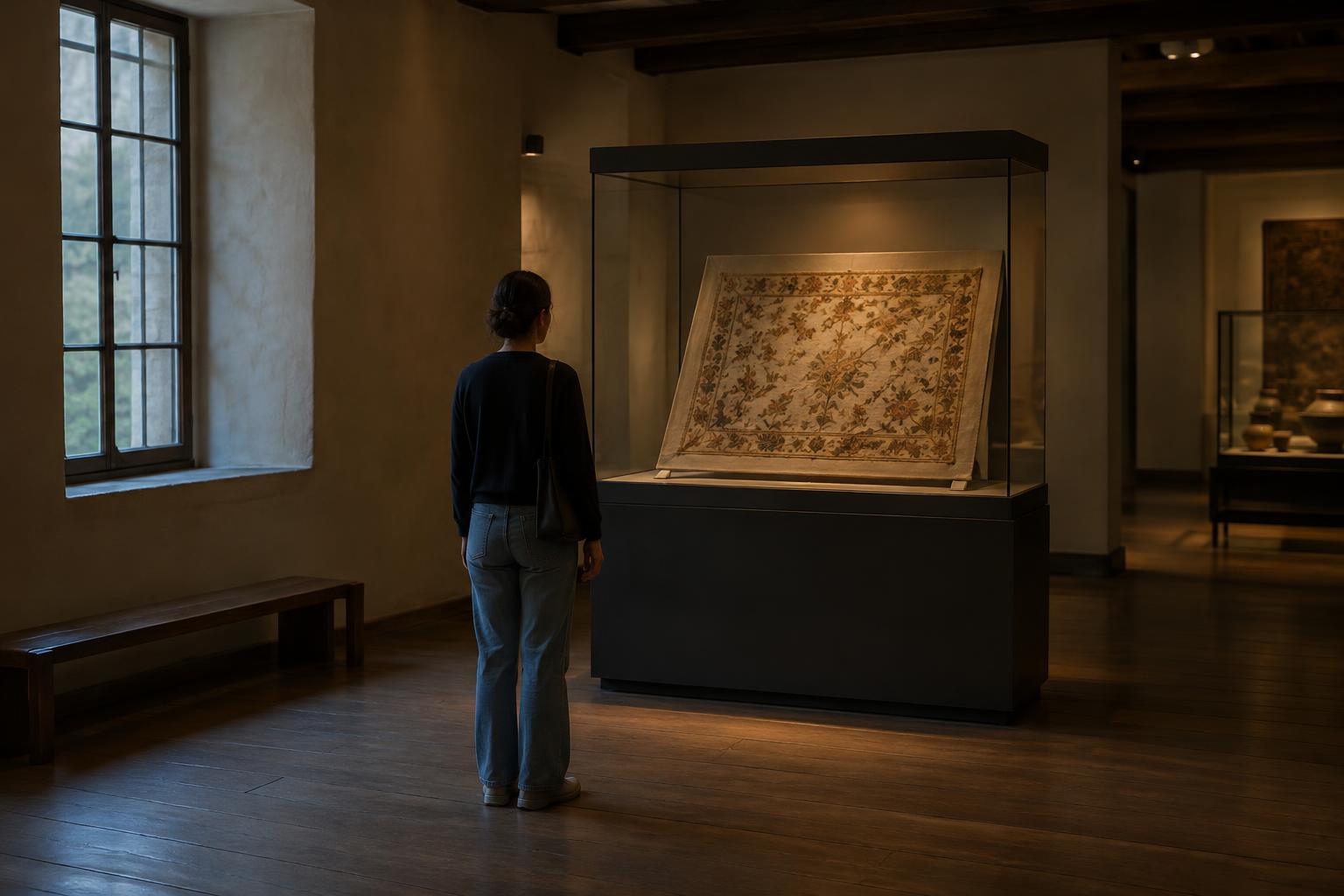
In a small museum, a shop counter may look ready for its owner to return. A pot may sit beside a photograph of an excavation. A handwritten letter may appear under glass. Each display invites a different question: Is this the object that was used, a copy made from it, or an arrangement created to show how something once looked?
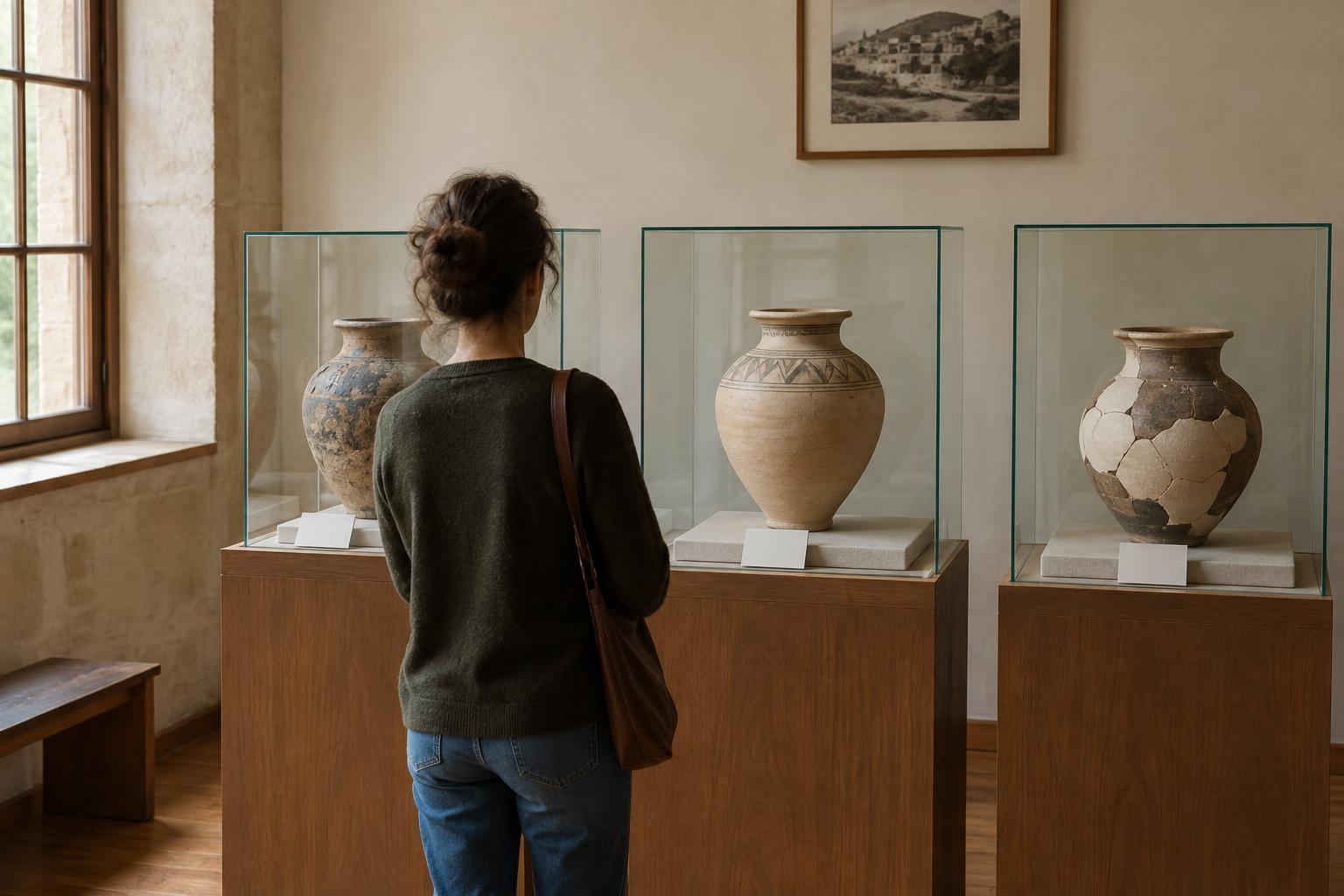
An original is an object from the time or setting the museum is interpreting, but “original” does not necessarily mean untouched. It may have been repaired, repainted, or assembled from surviving pieces. A replica is a later copy of a particular object. A reconstruction attempts to show a missing object, room, or arrangement using available evidence; some of its details may be informed guesses. These are useful distinctions, not a ranking of what deserves your attention. A copy can let you examine a fragile design up close, while a reconstruction can make an unfamiliar space easier to understand.
Read the label for what it says—and what it does not
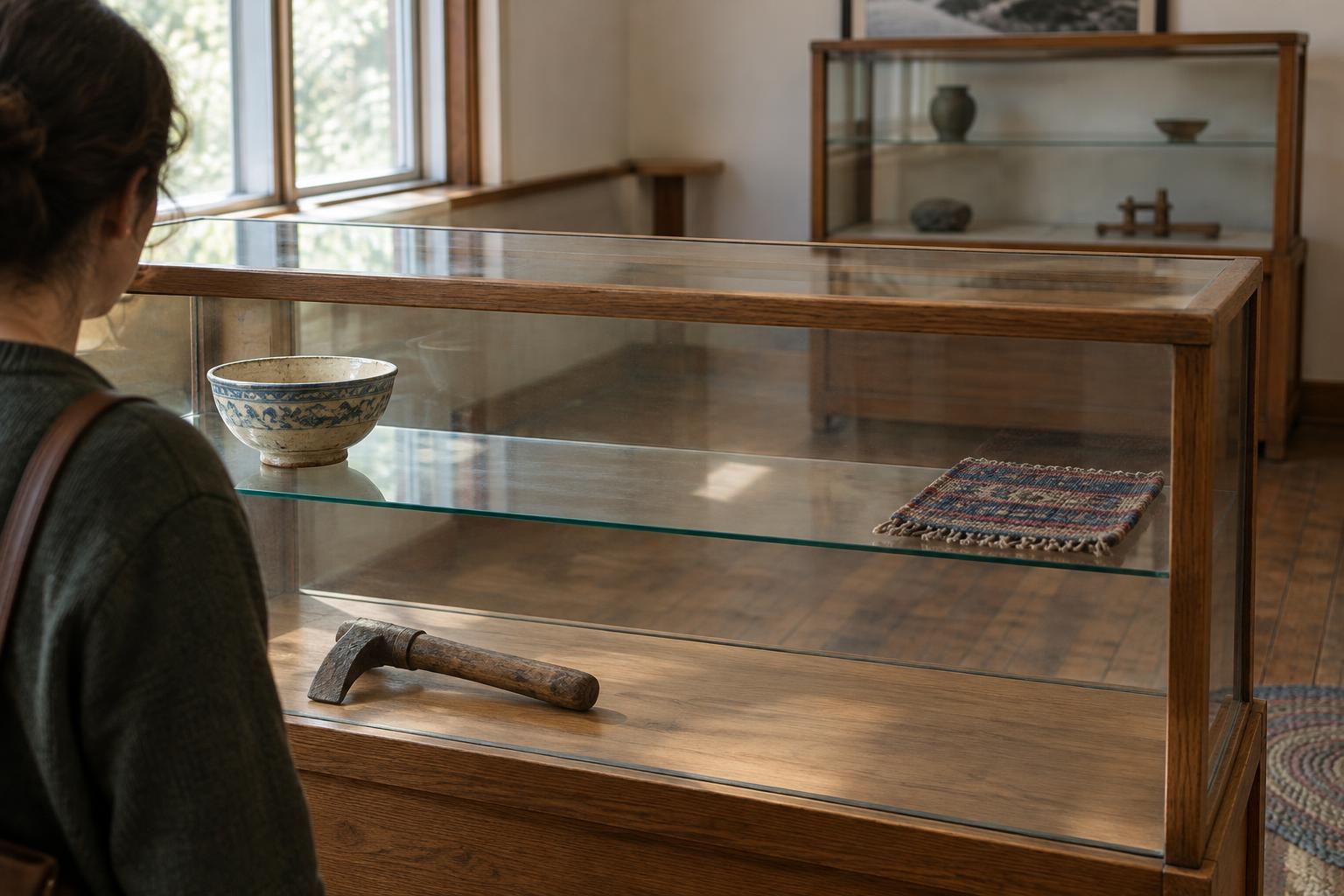
Look first for the object name, date, material, and any note about where it came from. Phrases such as “cast of,” “after,” “facsimile,” or “reproduced from” usually signal that you are looking at something made later. “Partly restored” suggests that original material remains but has been supplemented. “Period-style” or “typical of” may describe an illustrative example rather than an item known to have belonged to a particular person or place.
The date on a label can refer to the design, the original object, or the copy in front of you. If that is unclear, read any nearby panel before drawing a conclusion. A label might describe an early photograph while the object displayed is a recent print of it. In a recreated room, one label may cover the whole scene even though its contents include donated antiques, newly made pieces, and architectural fragments. Short labels are starting points, not complete biographies.
Look closely, but do not rely on appearance alone
Materials and placement offer clues. A model behind glass, a wall painting visible through a protective window, and a touchable cast probably serve different purposes. Repeated objects with identical wear may be reproductions; a surface that looks unusually uniform may have been renewed. But neither observation proves anything. Original objects can be cleaned or repaired, and replicas can be made to show wear. Display choices may reflect available space, access, or conservation needs rather than an object’s status.
It helps to separate three questions: What is the material object in front of me? What earlier thing does it represent? How much of the display is an interpretation? Imagine a historic kitchen assembled around an original stove. The stove could be an original object, the shelving a reconstruction based on photographs, and the jars later examples chosen to suggest everyday use. Seeing those layers makes the display more interesting, not less convincing.
Ask questions that invite a useful answer
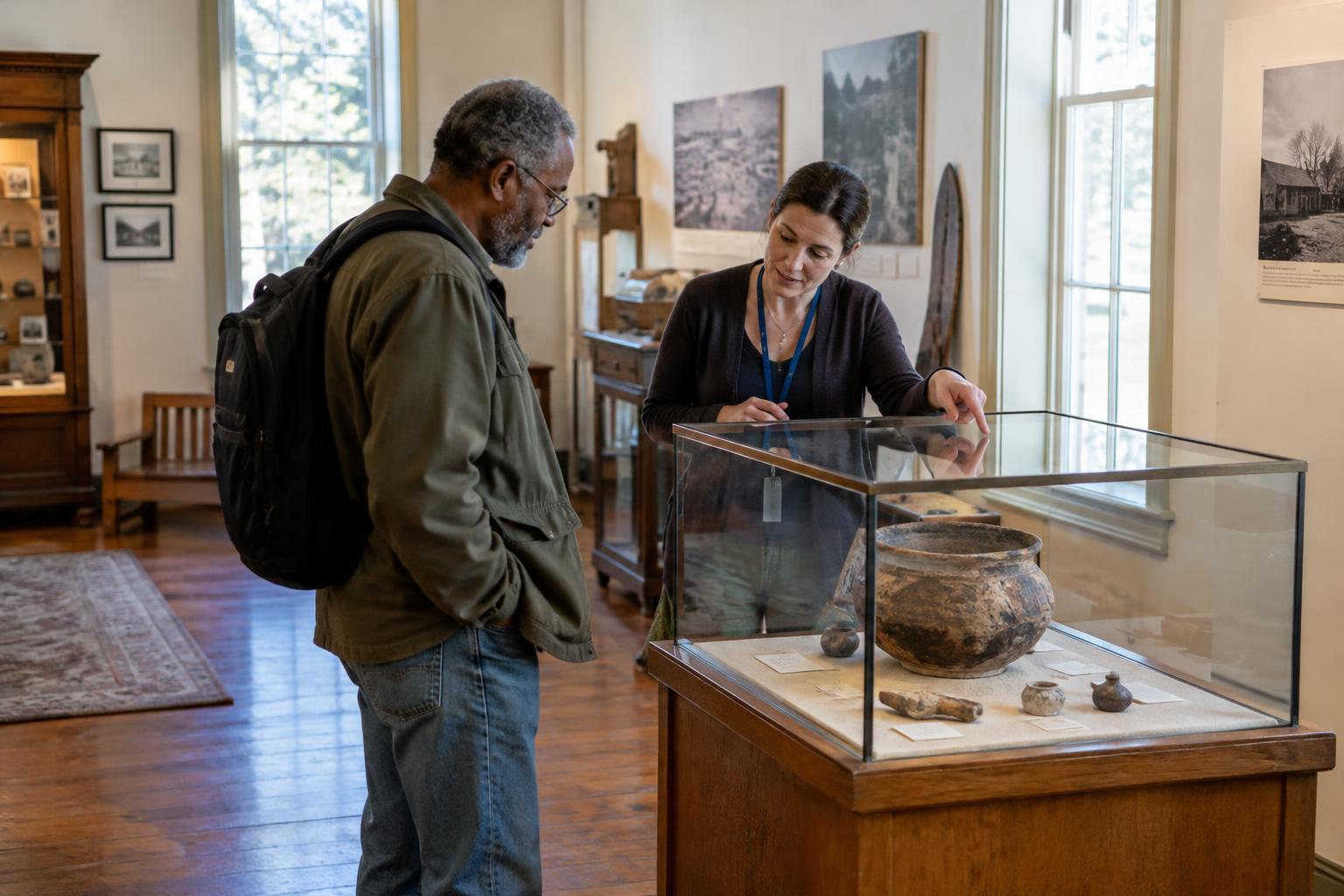
If a label leaves you curious, ask a staff member or volunteer something specific: “Is this the original object, or was it made for this display?” “Which parts of this room survive from the period?” “What did you use to work out this missing section?” These questions are easier to answer than “Is any of this real?” They also leave room for an honest “we don’t know.” In a small museum, the person at the desk may not have every detail, but they may be able to point you to a longer label, catalogue, or local history file.
Notice how the museum describes uncertainty. A reconstruction based on a photograph has a different footing from one built from general knowledge of a period. Neither is automatically misleading if the difference is made clear. When it is not, treat the display as an interpretation rather than as a precise record of every detail.
Let each kind of object change how you look
With an original, pay attention to traces that connect it to use: a repair, an inscription, a changed handle, or an uneven edge. With a replica, consider what it makes possible. You might be able to see the shape of an object whose original is too delicate to display, or understand the scale of a feature no longer in place. With a reconstruction, look for the choices behind it: what evidence guided the makers, and where did they have to fill a gap?
Before you leave, try naming one thing you saw in each category—or noting where the category remains uncertain. This small habit turns a quick visit into a more attentive one. It also respects the work of a small museum: preserving what survives, explaining what does not, and helping visitors tell the difference.