Start with the shape, not the age
A shopfront is rarely a single design frozen in time. A business may keep an older doorway while replacing its windows, cover a sign with a newer one, or repair a damaged base with different materials. Rather than asking, “Is this original?”, begin with a more useful question: “Which parts appear to have been made or changed together?” That approach makes an ordinary walk more interesting without requiring you to know the building’s history.
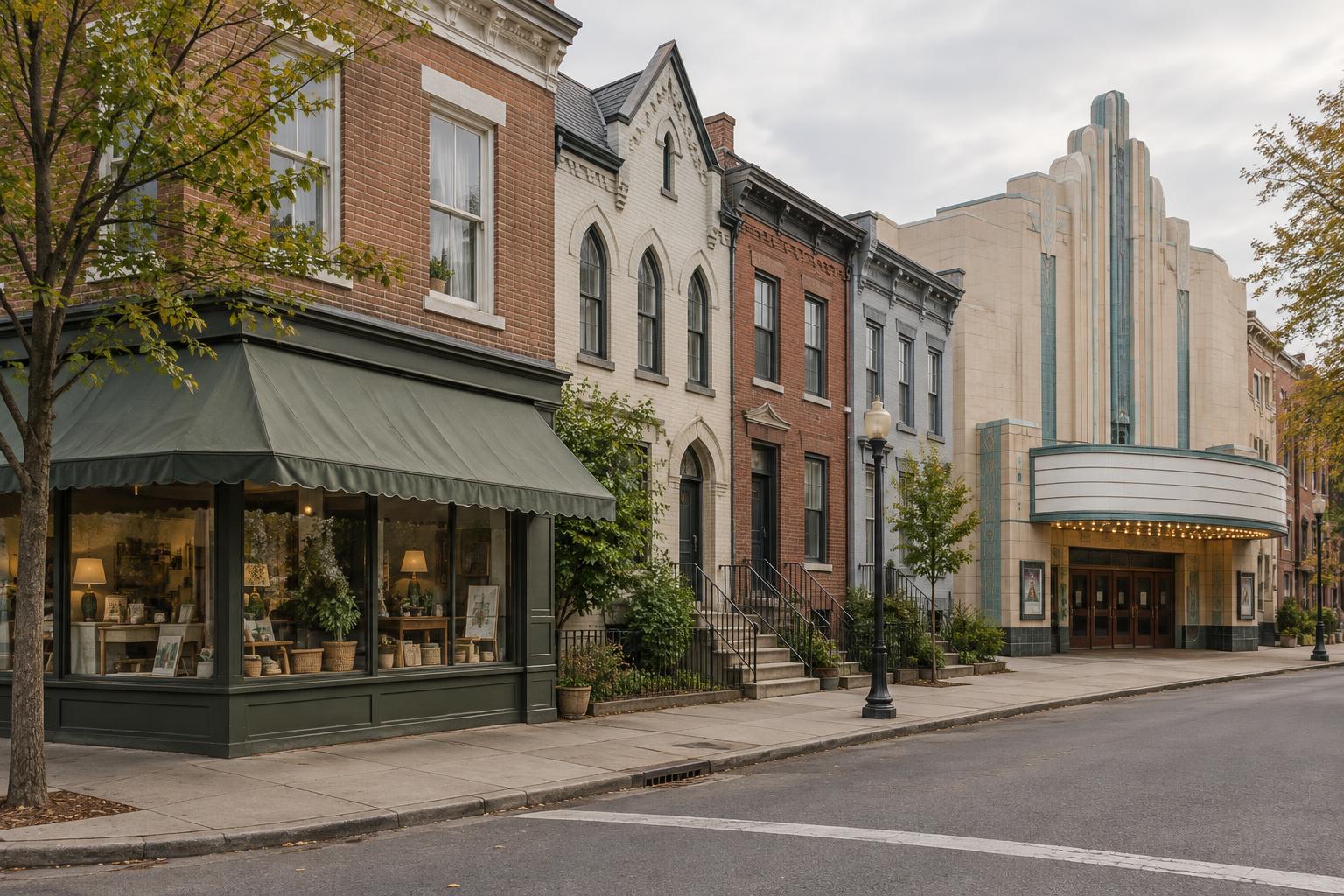
Stand back far enough to see the whole ground floor and the rooms above it. Notice where the shopfront meets the building: the width of the opening, the position of columns or piers, and any line separating the ground floor from the upper wall. A front that fits neatly between these boundaries may still have been altered, but the boundaries give you a framework for reading smaller details. Look from a public place, without blocking the entrance or photographing people inside.
Follow the joints and edges
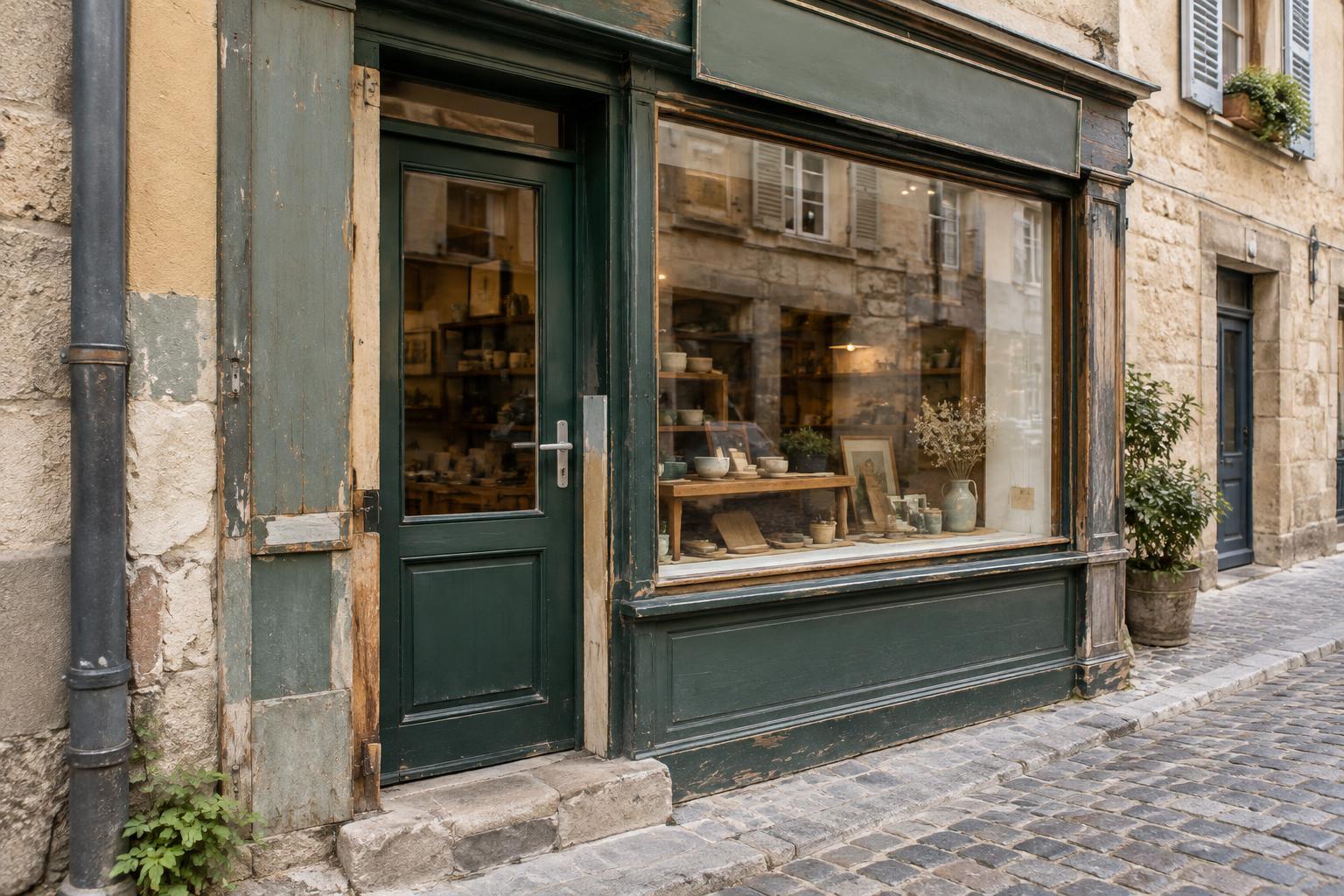
Changes often reveal themselves at the point where two materials meet. A window frame may sit inside a larger, older opening, leaving strips of infill at the sides. A new panel may interrupt a continuous line of brickwork. Paint can disguise such joins, so look at changes in depth, texture and alignment as well as colour. These clues suggest a sequence of work; on their own, they cannot tell you when it happened.
Compare repeated elements. Do the left and right sides have the same moulding, proportions and weathering? Are the window divisions evenly spaced, or does one section look adapted to accommodate a new door? Slight irregularities may be evidence of alteration, but they can also be part of the first design or the result of hand-built construction. Treat each observation as a question to test against the rest of the frontage, not as a verdict.
Read the working parts
Shopfronts change because shops need to work. A recessed entrance can offer shelter and create more display space; a level entrance may make access easier. Large panes can improve visibility, while smaller panes may reflect an earlier layout, a later stylistic choice, or replacement glass fitted within an existing frame. Look at the door, threshold, handles and window bases as parts of a working arrangement. If one feature seems newer, ask what practical need it might have answered.
Signs are especially changeable. A painted name, raised lettering, a projecting sign and a modern signboard can occupy the same frontage at different times—or overlap. Look for unused fixing holes, outlines visible through paint, or a signboard that covers decorative trim. Even if a business name looks old-fashioned, the sign carrying it may be recent. Likewise, new materials do not make a frontage uninteresting: a carefully fitted replacement is part of its story.
Notice repairs without dismissing them
The lower part of a shopfront faces scuffs, water and repeated use, so it may contain more repairs than the upper frame. A patch of tile, stone, metal or timber that differs from its neighbours could mark damage, a refit or a deliberate design decision. Look for whether the replacement follows the earlier pattern or changes it. A repair that copies an old detail can be difficult to distinguish from that detail at a glance.
Be cautious with words such as “original” and “restored.” An apparently old frame could have been moved, reconstructed or made in a traditional style. An apparently modern door might occupy an opening that has been there for a long time. Visible evidence is strongest when several clues agree—for example, a change in material, a shifted joint and a disrupted decorative line all occurring in one place. Even then, “likely later” is usually more honest than a precise date.
Build a small, respectful record
To remember what you saw, make a quick note in three columns: features that seem continuous, features that seem changed, and questions you cannot answer from the street. Record where a clue sits rather than guessing its age: “different tile below right window” will be more useful later than “recent repair.” If you take a photograph, a full view of the frontage and a closer view of one join can help you compare details. Respect any restrictions on photography and the privacy of staff and customers.
The aim is not to catch a building being inauthentic. Shops have to adapt to new uses, tenants, maintenance needs and ways of welcoming customers. Reading a shopfront means seeing those adaptations alongside what may have endured. Once you practise noticing edges, alignments and working parts, even a familiar street can become a record of choices made over time.