Why the distinctions matter
A historic street can look as though it has stood still for centuries. Look closer, and you may find a repaired doorway, a replaced roof, a protected wall painting, or an entire facade built anew. None of these changes tells the whole story on its own. Buildings need care to remain usable, and damage sometimes calls for difficult choices.
The words restoration, conservation, and reconstruction describe different approaches to those choices. Their meanings can vary between institutions and places, and a single project may use all three. Still, the distinctions offer a useful starting point for visitors: What survives from the past? What has been altered? What has been made again? Asking those questions reveals a place as something people continue to care for, rather than a finished artifact.
Conservation: caring for what survives
Conservation generally focuses on protecting existing material and slowing its deterioration. A conservator might stabilize loose plaster, address moisture that threatens old timber, or clean a surface using a method chosen to avoid unnecessary loss. The goal is not necessarily to make everything look new. Wear, repairs, and later changes can themselves carry information about how a place was used.
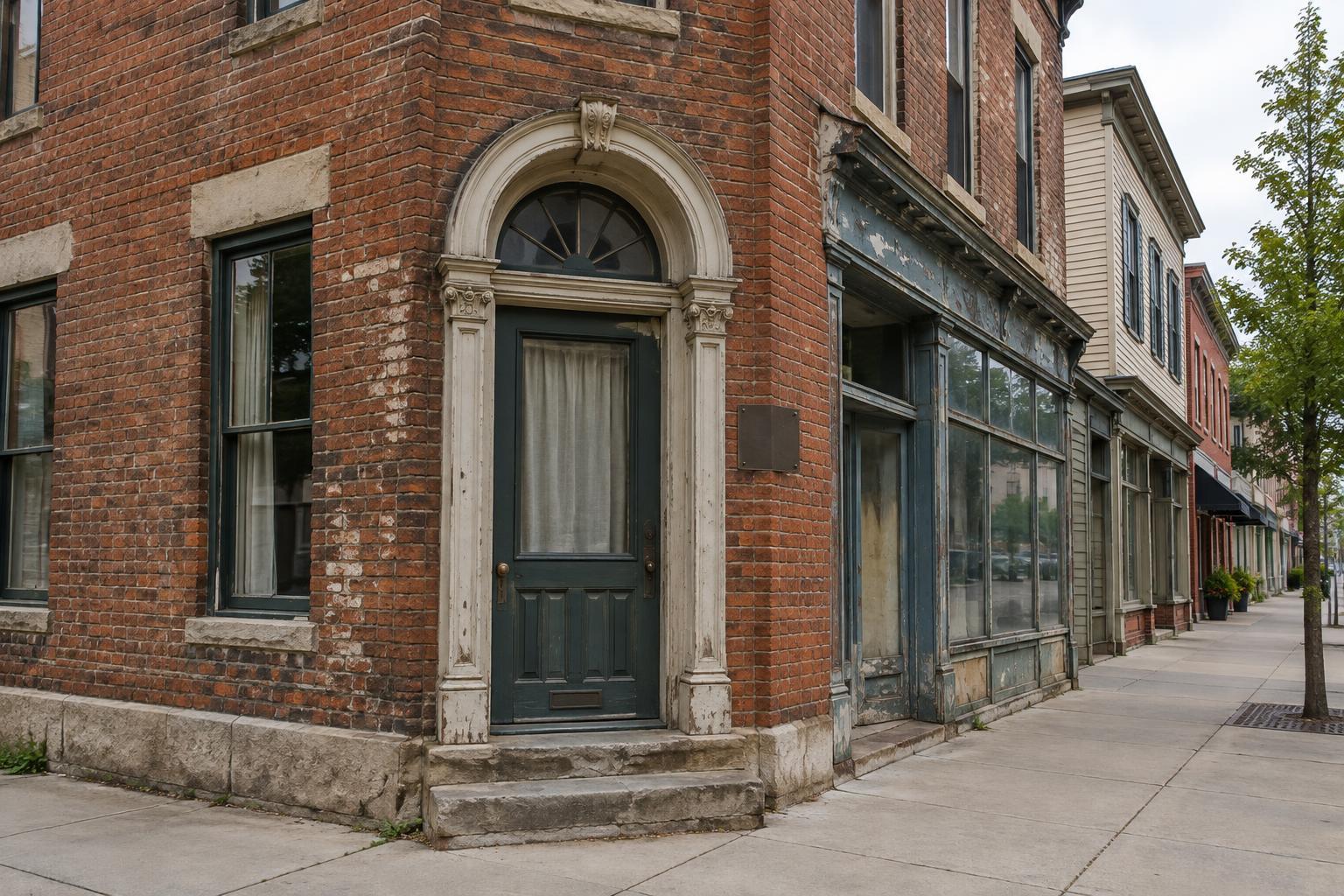
This approach often favors the least intervention needed to keep significant features sound and legible. That does not mean doing nothing: routine maintenance, suitable drainage, and careful monitoring can matter as much as a dramatic repair. For a visitor, uneven stone or a faded sign may be worth noticing rather than dismissing as neglect. If the feature is stable, its age and imperfections may be part of what the site is preserving. Appearance alone, however, cannot tell you whether something is safely maintained.
Restoration: bringing back an earlier appearance
Restoration usually aims to return a place or feature to an identified earlier state. That could involve removing a later covering to reveal an older finish, repairing a damaged decorative element, or reinstating details whose appearance is well documented. Unlike conservation alone, restoration may change what a visitor sees so that one period becomes easier to understand.
The key question is which period is being emphasized. A building might have been a house, a workshop, and then a shop, with each use leaving traces. Restoring its appearance as a house could make one chapter vivid while making later chapters less visible. Good interpretation helps visitors understand that choice and the evidence behind it. Restoration also need not erase every sign of age. A carefully repaired surface can remain recognizably old, rather than pretending that time has not passed.
Reconstruction: making a lost element again
Reconstruction creates a new version of something that no longer survives, whether a missing stair, a demolished room, or a larger structure. It can help people understand a lost layout or make a site usable again. But a reconstruction is not the same material object as the one that disappeared, even when it follows detailed evidence.
The strength of a reconstruction depends in part on how much is known. Plans, photographs, surviving fragments, and comparable features can guide the work; gaps may still require interpretation. Visitors benefit when a site makes clear what is original, what is newly made, and where decisions involved uncertainty. A recreated feature can be valuable without being mistaken for an untouched survivor. Its value may lie in making a former space easier to imagine or explaining why it mattered to a community.
How to look with more curiosity
On a visit, begin with the fabric in front of you. Are some bricks sharper-edged than their neighbors? Does a section of paint look deliberately left exposed? Is there a date, label, drawing, or guide that explains a change? These clues can prompt questions, but they are not proof: old materials can be reused, and skilled new work may be hard to distinguish from older work.
Look beyond the most photogenic facade, too. A modest entrance, repaired window, or retained shop sign may reveal how a place adapted to everyday needs. Where information is available, read how the site describes its choices and whose history it emphasizes. If you speak with someone caring for the place, ask what remains original and what required the most judgment. The most rewarding question is often not “Is this authentic?” but “Which parts of its story can I see, and which parts have been interpreted for me?”