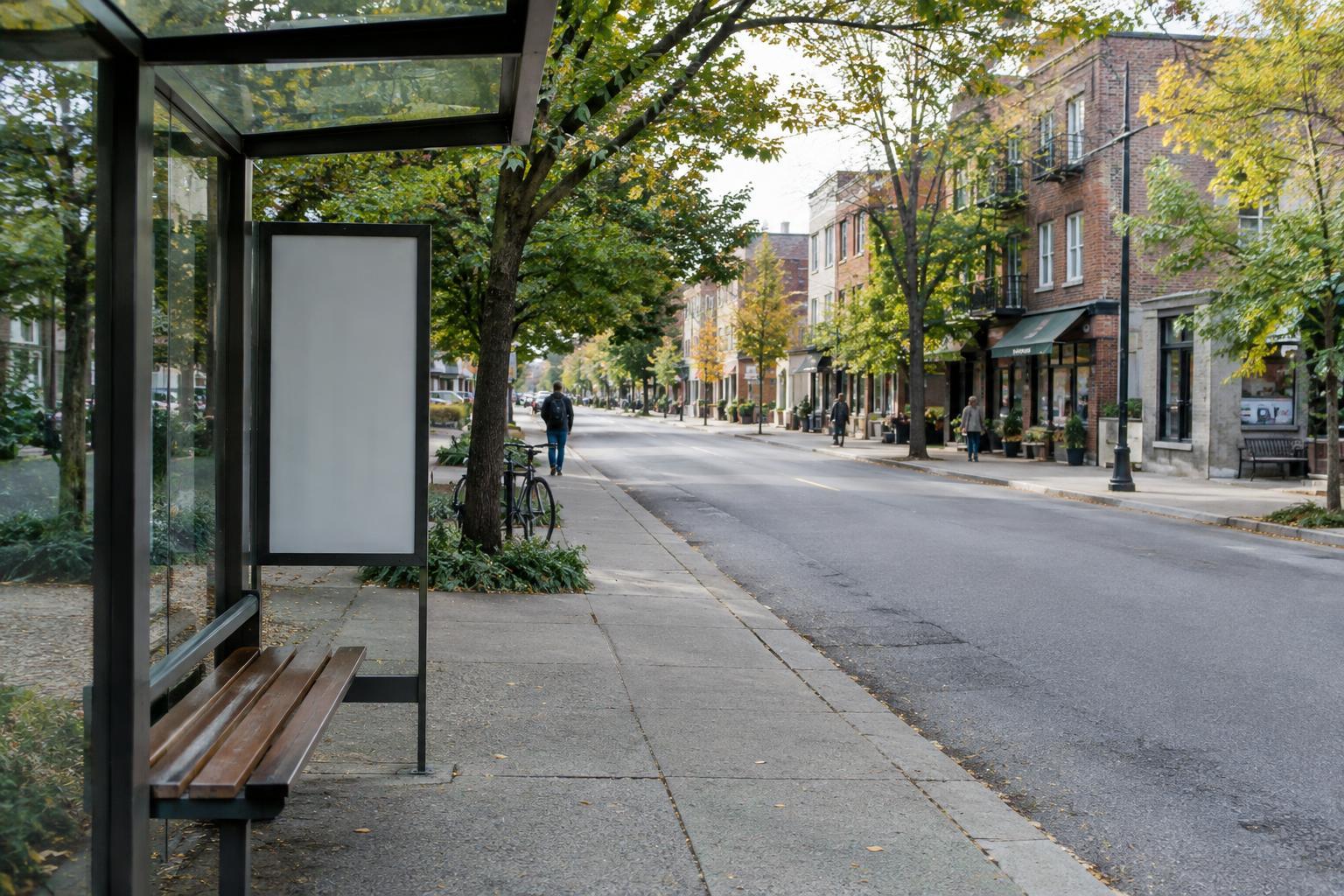
Choose a stop, not a list of sights
When planning a neighborhood visit, it is tempting to collect cafés, landmarks and photo opportunities before deciding how to move between them. Starting with a transit stop reverses that process. It gives you a clear arrival point and a simple question: where can you comfortably walk from here? The answer may lead to a shopping street, a small park or several blocks that rarely appear on visitor itineraries.
Choose a stop with a reliable way back and look at the surrounding streets before you travel. A compact loop is usually more manageable than a route that keeps extending toward the next interesting thing. Check where you can cross major roads and whether your planned return depends on a service or entrance with limited hours. If step-free access, seating or toilets matter to you, look for those in advance rather than assuming they will be available.
Let the first few blocks set your pace
On arrival, pause somewhere you are not blocking other passengers. Notice the basic choices the street offers: which directions have sidewalks, where crossings lead and whether there is an obvious public route away from the stop. A transit stop may sit beside a busy road or behind a building, so the nearest block is not necessarily the best place to linger. Give yourself time to reach a comfortable walking pace before deciding what the area is like.
As you walk, pay attention to how streets serve people making ordinary trips. You might notice a sheltered crossing, a row of ground-floor businesses or a shortcut that is clearly open to the public. These details can help you understand how one part of the neighborhood connects to another. They do not, by themselves, tell you who lives nearby or how residents feel about the place.
Make a small loop with room to change course
A useful route might follow one street for several blocks, turn onto a parallel street and return by a different path. That modest change of direction can reveal a contrast between a busy frontage and a quieter residential block without requiring a long walk. Pick turns at public intersections rather than cutting through courtyards, parking areas or paths whose access is unclear. If a street feels uncomfortable to walk, changing your route is a sensible choice, not a failure of the plan.
Keep the walk short enough that you can stop and look without rushing. A public bench or open square can provide a place to check your route; a shop can be a place to make a purchase if you want to. Neither needs to become an attraction. Respect posted rules, keep doorways clear and avoid photographing people or homes in ways that make ordinary activities feel like a display.
Return with better questions, not a verdict
A single loop gives you a partial view. A shuttered storefront may be closed for the day; a quiet street may be busy at another hour. Resist turning one visit into a verdict about a neighborhood’s character or future. Instead, note what you could actually observe: the streets you took, the public spaces you found and the connections that were easy or difficult to use.
Back at the stop, consider whether the route would be easy for someone arriving without a car or unfamiliar with the area. Were crossings clear? Was there somewhere to pause? Could you find your way back without relying on a single shortcut? Those questions can make a short visit more attentive without pretending to capture the whole place. If you return another day, you can take a different loop and see what your first walk missed.