An entrance serves more than one audience
An apartment entrance is a meeting point between the city and a set of private homes. Residents need a reliable route in and out. Guests, delivery workers and maintenance staff need to find the right door and understand what to do next. Passersby may simply need to know where the public sidewalk ends. A well-considered entrance makes those different relationships legible without making the building feel either exposed or forbidding.
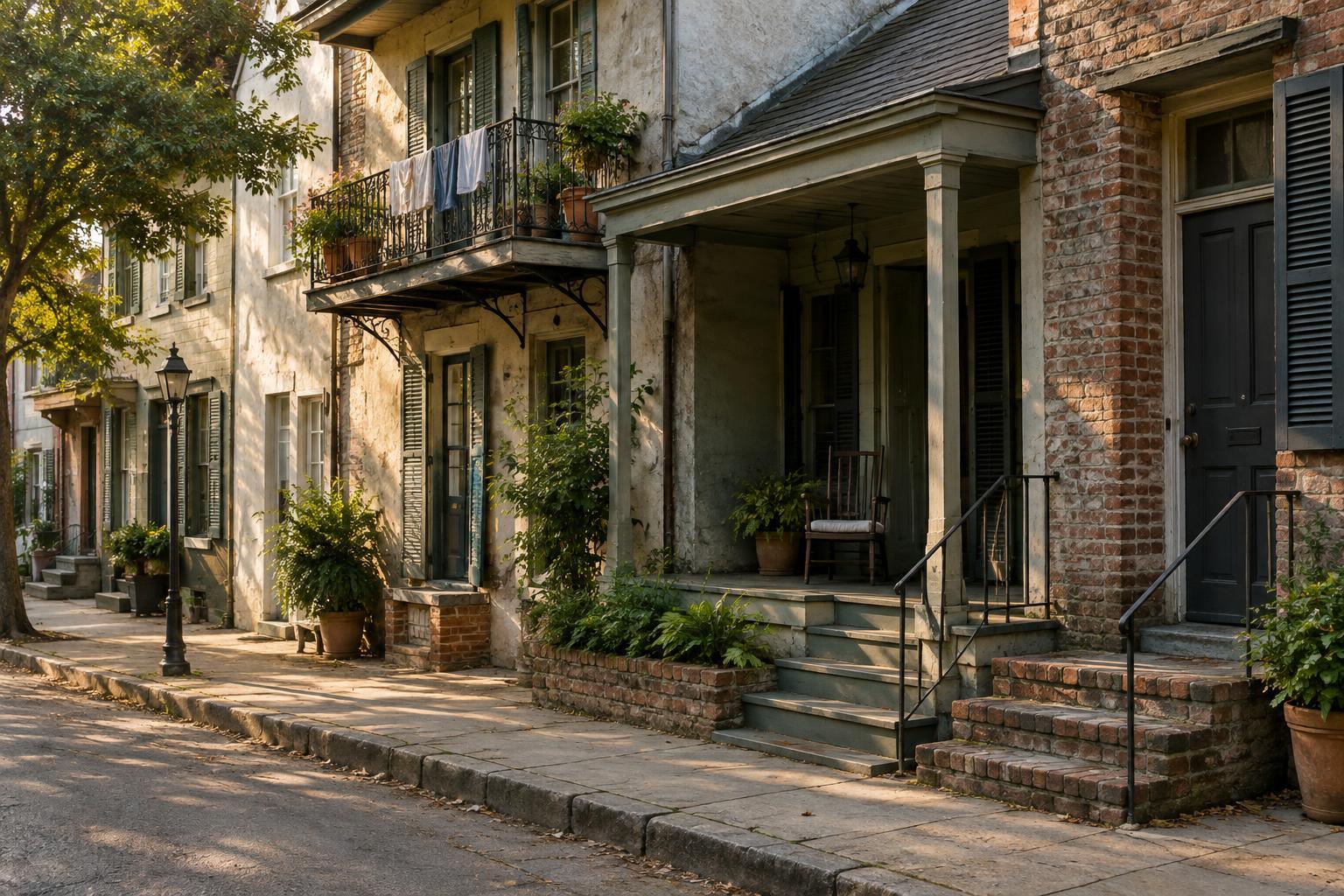
That balance can begin before anyone touches a door. A change in paving, a shallow set of steps, a canopy or a recessed doorway signals a transition from street to building. None of these features is a lock, but each provides a moment to pause and orient oneself. The most useful cues are clear enough for a first-time visitor to follow and restrained enough to leave residents’ comings and goings feeling ordinary.
The street-facing threshold
Consider two doors on the same block. One opens directly onto a busy pavement; the other sits a few feet back beneath an overhang. The recessed entrance can offer shelter while someone finds a key or checks an address. It may also keep a small gathering from blocking pedestrian traffic. But a deep, poorly lit recess can make it harder to see who is waiting there. The effect depends on the entrance’s proportions, lighting and relationship to the street.
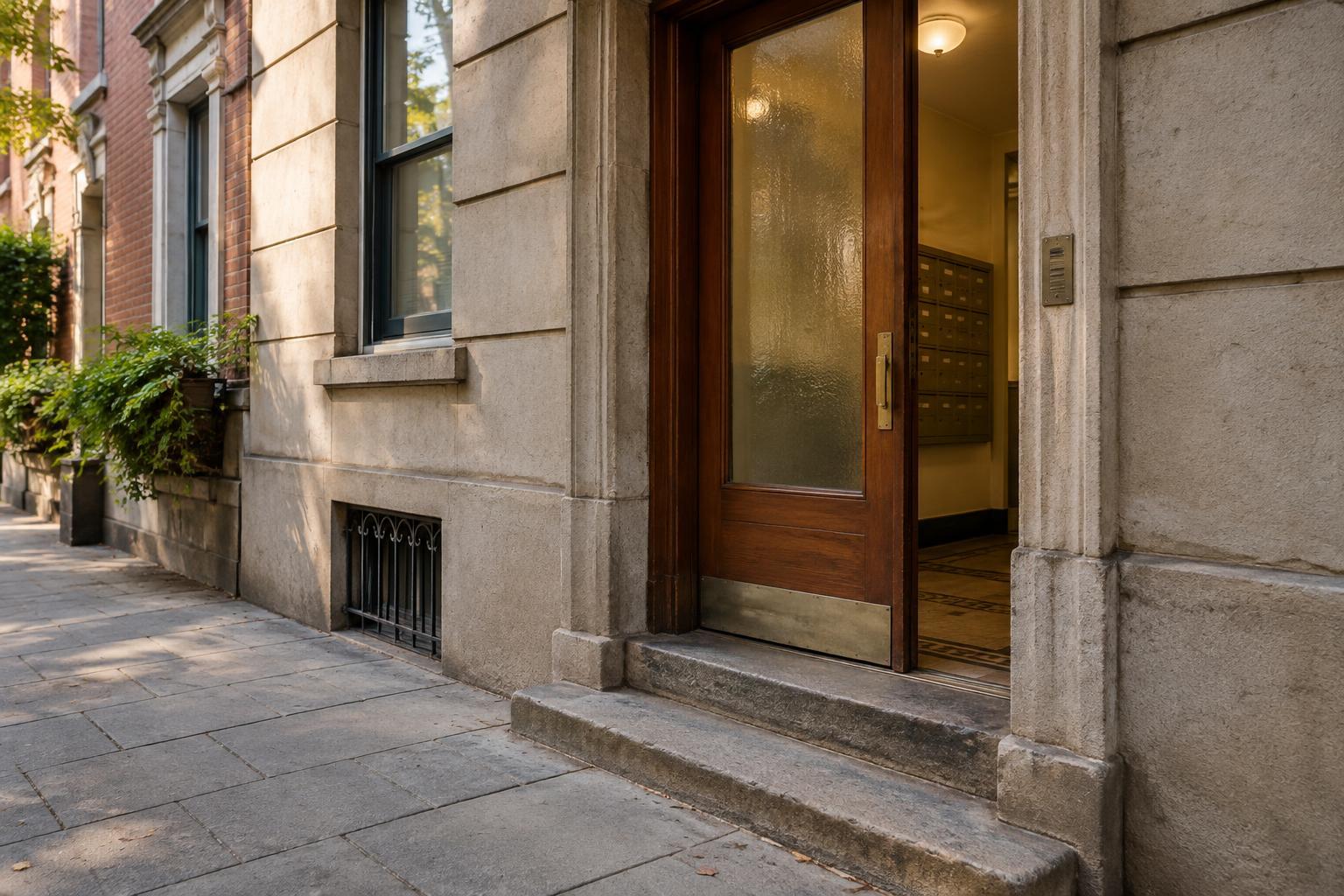
Windows near an entrance create a similar trade-off. A glazed door can help visitors see that they have found a lobby rather than a shop or private apartment. It can also expose mailboxes, waiting residents or the path to a lift. Frosted glazing, a partially screened view or a lobby arranged at an angle may admit daylight and offer some visual orientation without displaying everything inside. Privacy here is not the absence of visibility; it is some control over what can be seen from where.
Lobbies as shared space
The lobby is neither fully public nor fully private. Its details often tell visitors how far they are expected to go. A visible intercom and readable apartment numbers make it possible to contact a resident without wandering through the building. A bench may provide a place to wait, while a second door can mark the point beyond which residents or invited guests proceed. These arrangements offer a sequence of decisions rather than a single abrupt boundary.
A lobby must also accommodate routine tasks. Mail and parcels need somewhere to go; people carrying shopping or pushing a stroller need room to move; neighbors may stop for a brief conversation. When storage overflows into the route through the lobby, access and privacy can both suffer. Residents may have to negotiate obstacles, and unattended belongings can make the space feel more exposed. The everyday use of an entrance matters as much as its appearance in an architectural photograph.
Privacy changes through the day
A threshold works differently depending on who is using it and when. In the morning, several residents may leave at once. Later, a visitor might wait alone for an answer to the intercom. After dark, the clarity of the address and the quality of lighting become more important to someone trying to find the correct building. Good lighting helps people see steps, handles and faces, but it need not flood ground-floor windows or turn the lobby into a display case.
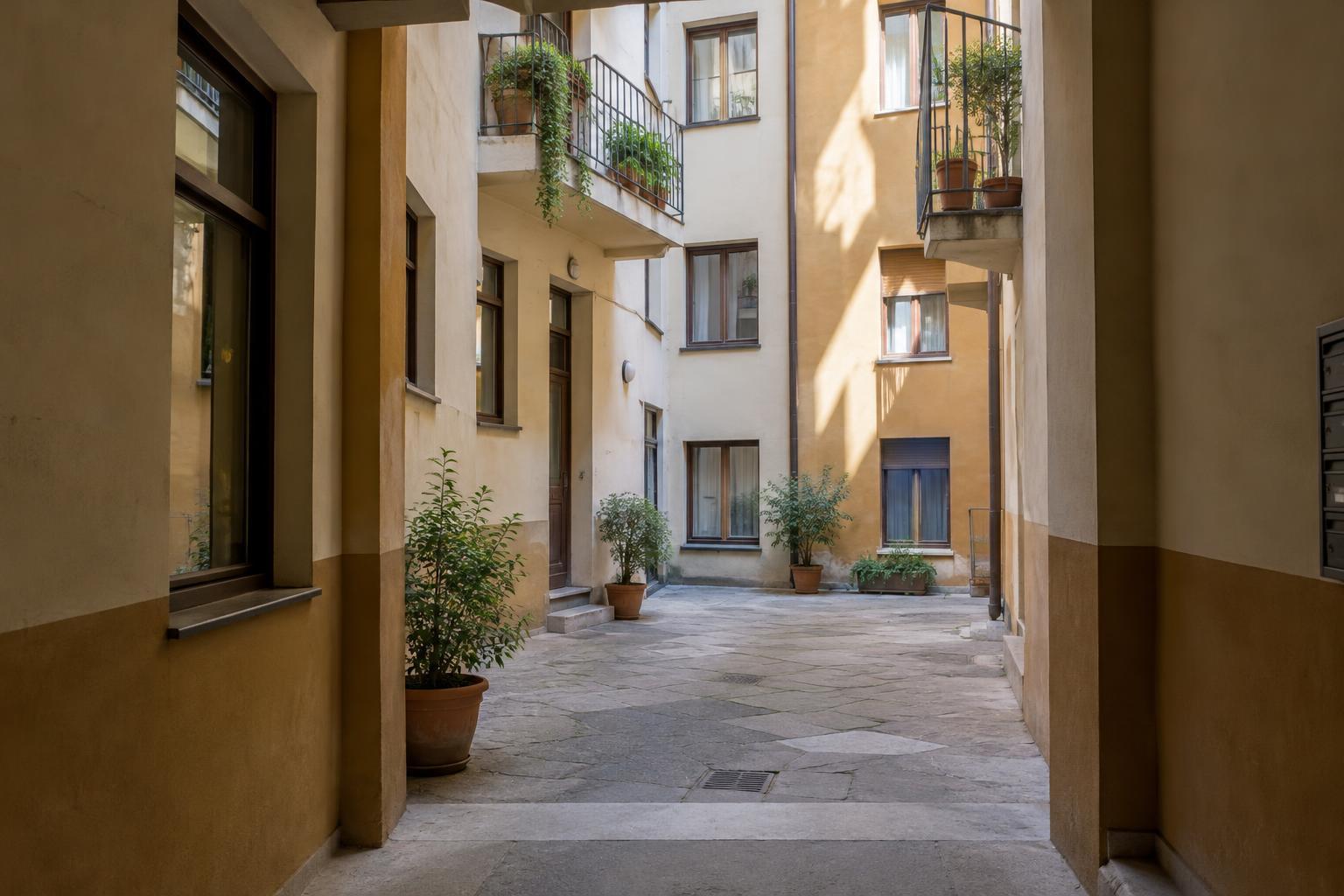
There is no single entrance design that suits every apartment building. An older walk-up with a narrow vestibule has different possibilities from a building with a staffed front desk or a courtyard approach. The useful question is how each place handles predictable moments of uncertainty: Where should a visitor stand? How does a resident recognize that someone is waiting? Which route is clearly shared, and which begins to feel domestic?
How to notice an entrance respectfully
Apartment entrances reward close attention, but they are also part of people’s homes. From a public sidewalk, notice the layers between street and interior: the position of the door, the placement of the address, the shelter offered by a canopy and whether the route seems easy to understand. You can learn a great deal without entering a lobby, photographing residents or testing a door.
The next time you walk through a neighborhood, compare entrances rather than looking for a single ideal example. A modest doorway may handle the transition gracefully with little more than clear signage and a sheltered place to pause. A grander entrance may still leave visitors unsure where to go. These small observations reveal an essential task of everyday architecture: helping strangers, neighbors and residents share an edge of the city while leaving room for home to remain home.