Start with what caught your attention
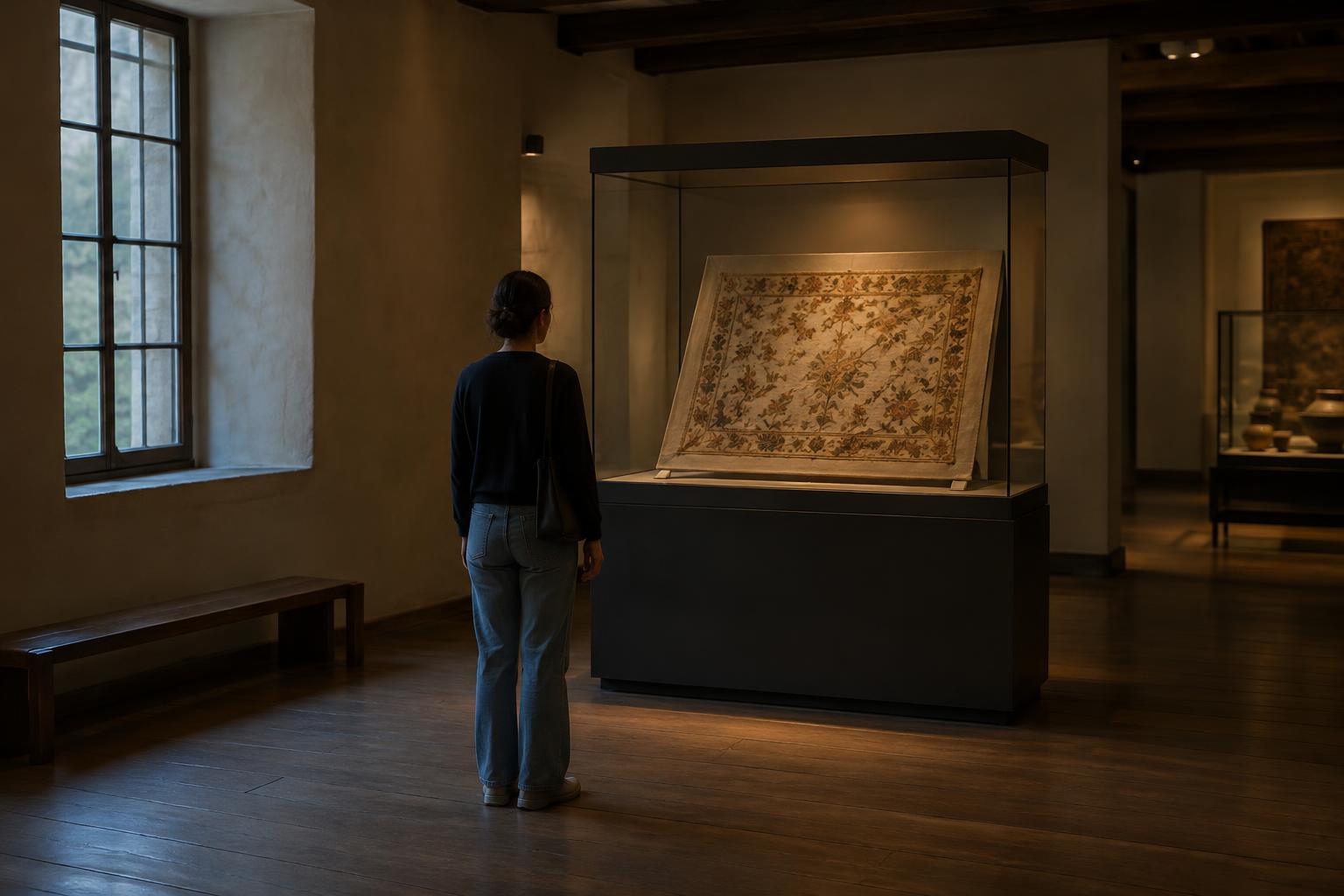
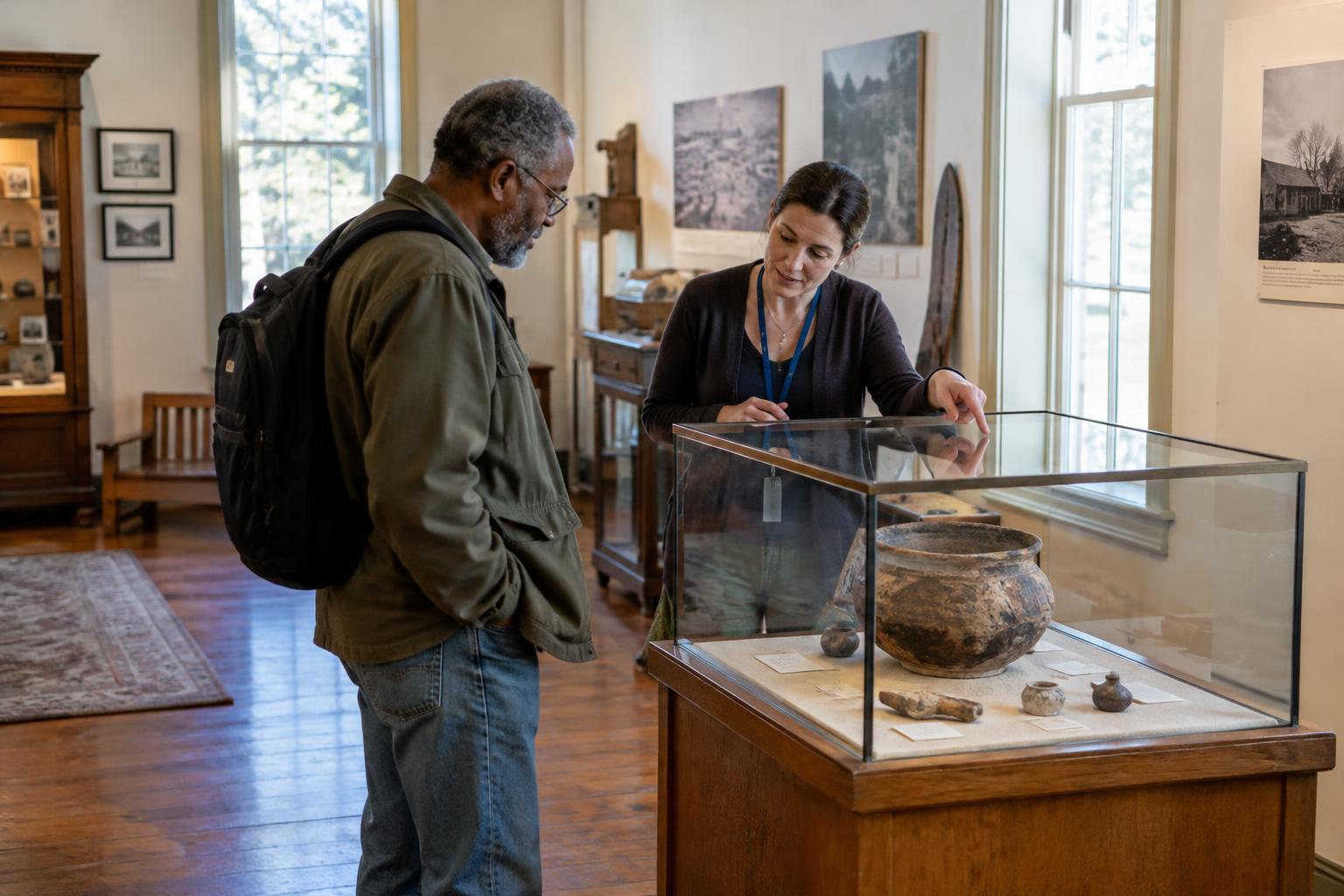
Small museums often reward a slower visit. A modest display might bring together an object, a photograph and a short label, leaving room for questions that a larger exhibition might answer on the wall. Staff and volunteers may know more about what you are seeing, though their roles and areas of knowledge vary. Rather than asking for a complete tour, begin with something specific: “What should I look closely at here?” or “Is there a detail in this case that visitors tend to miss?”
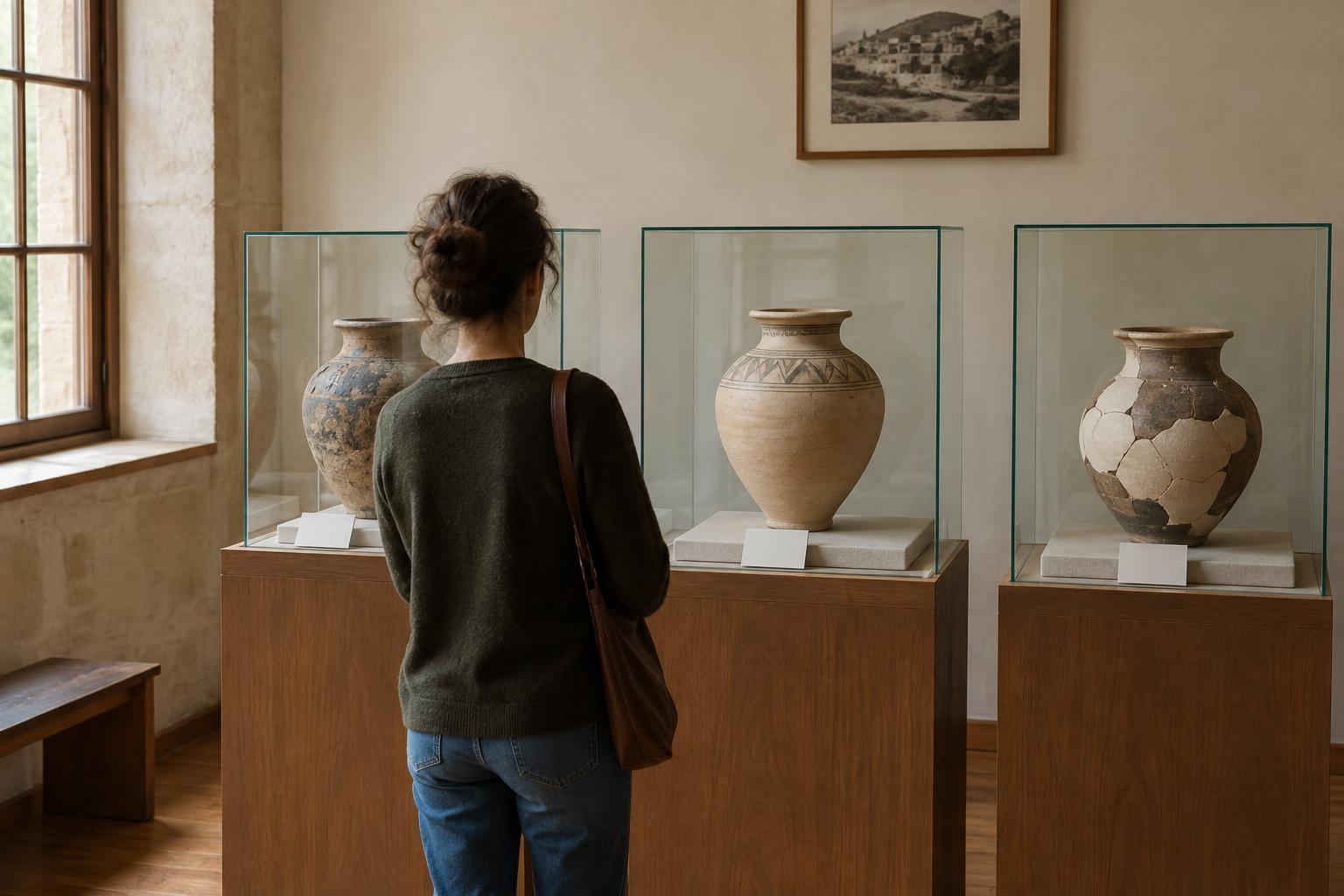
You can also describe your own curiosity: “I noticed this object has been repaired. Do you know how it was used after that?” A question tied to something visible gives the person a clear starting point. It also works when an object is unfamiliar to you; you do not need to identify it first or guess at its importance.
Ask how the exhibit took shape
An exhibit is a selection, not a complete account of a place or period. If someone has time to talk, ask, “How did these objects come together?” or “Why was this story chosen for a display?” The answer may help you understand a connection that is hard to convey in a short label. If the person does not know, that is useful to hear, too: not every staff member works on collections or exhibition planning.
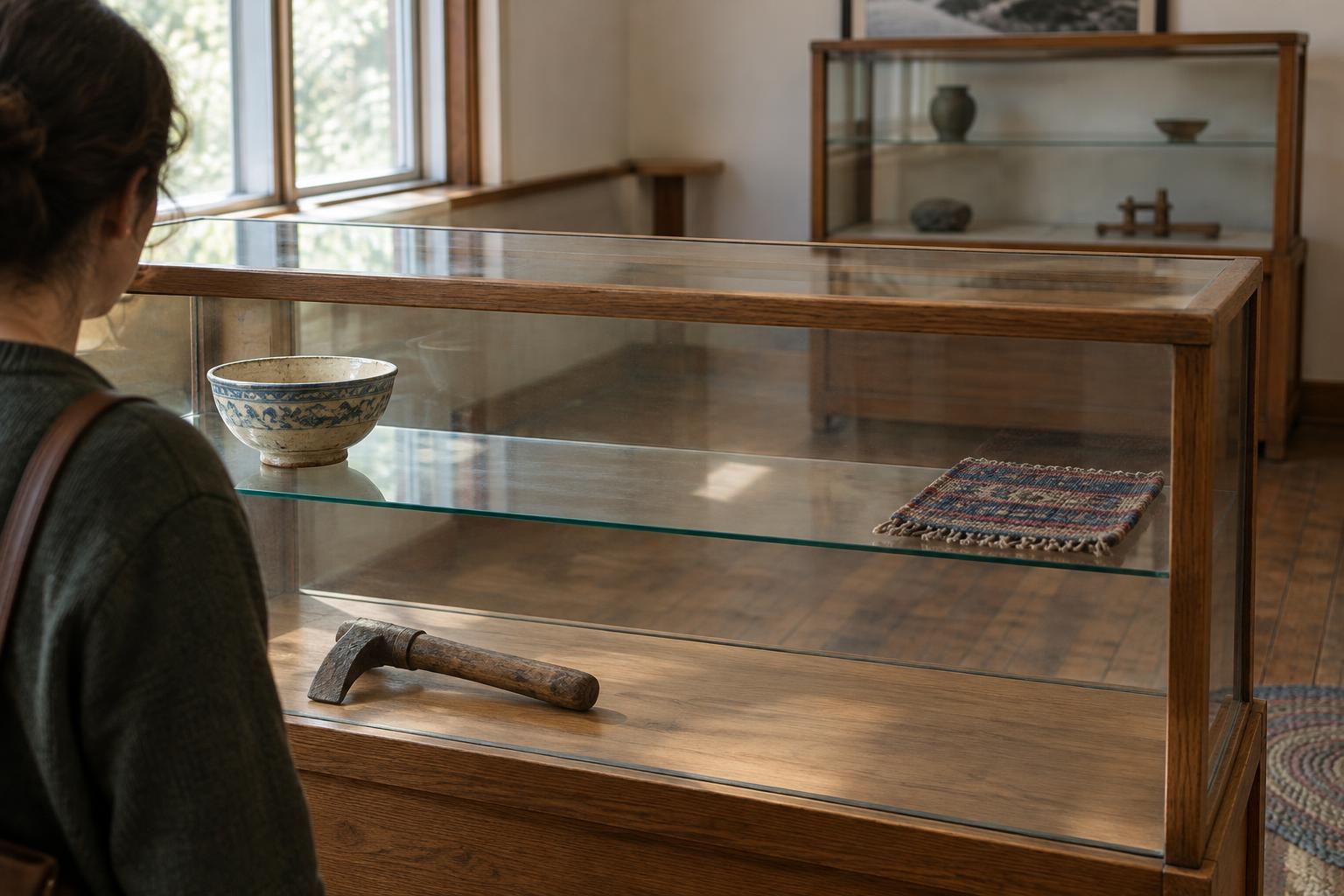
For a display of everyday items, a productive follow-up is, “What can these objects tell us, and what can’t they tell us?” A photograph might show how a street looked but not how every resident experienced it. An item kept in a collection may be easier to describe than something used and discarded. Questions about the limits of the evidence can deepen your visit without demanding a definitive answer.
Look for local connections without assuming one story
Small museums can offer a way into local heritage, but it is worth asking open questions rather than treating one exhibit as the voice of an entire community. Try “How does this display connect to the neighborhood today?” or “Are there other local perspectives I should keep in mind?” These invite context without assuming that every resident relates to the past in the same way.
If the exhibit includes a building, trade or family you want to learn more about, ask whether there is a related display elsewhere in the museum. You might also ask whether the museum has a guide to places that are appropriate for visitors to see. Do not assume a building is publicly accessible simply because it appears in a photograph, or ask staff to direct you to private homes.
Make room for gaps and difficult subjects
You may notice an unanswered question in a label or a perspective you expected to see. It is fair to ask about it with care: “Is there more information available about the people named here?” or “Does the museum know whose account this description draws on?” The aim is to understand what the display can establish, not to put a front-desk worker on the spot for decisions they may not have made.
Some exhibits touch on loss, displacement or contested histories. In those cases, avoid pressing for a simple verdict or a personal opinion. Ask where the museum explains its approach, whether it offers additional material, or whom you could contact with a question. A staff member may need to return to their duties or refer you to a colleague; a brief, gracious response keeps the conversation comfortable for both of you.
Match the question to the moment
Before starting a conversation, notice whether the person is helping other visitors or managing an activity. “Is this a good time for a quick question?” is an easy way to check. Ask one question at a time, listen to the answer, and let it guide a follow-up if there is space. When you need practical information, be direct: “Is photography allowed in this room?” or “Is there a label or guide I can read for more context?”
If staff are busy, you can still have a rewarding visit. Write down the object name or exhibit title, revisit the label, and see whether the museum provides a reading area or a way to send questions later. Before you leave, thank anyone who helped. The point is not to collect insider facts; it is to notice more carefully and come away with a better understanding of what the museum knows, what remains uncertain and why the display matters.