Choose a museum for the visit you can make
Small museums can offer children a close look at objects, stories and skills tied to a particular place. A room of old shop signs, a collection of local photographs or a display about one building may be easier to take in than a much larger exhibition. But small does not automatically mean child-friendly. Spaces vary in their rules, layout, noise levels and opportunities to sit down.
Before you go, look for basic visitor information: opening hours, admission, toilets, step-free access and any guidance for families. If that information is hard to find, a brief question to the museum may save a difficult arrival. Ask whether there is a place to leave a stroller, whether bags are allowed in the galleries and whether any displays can be handled. These details matter more than a promise to see every room.
Pick a few things to notice
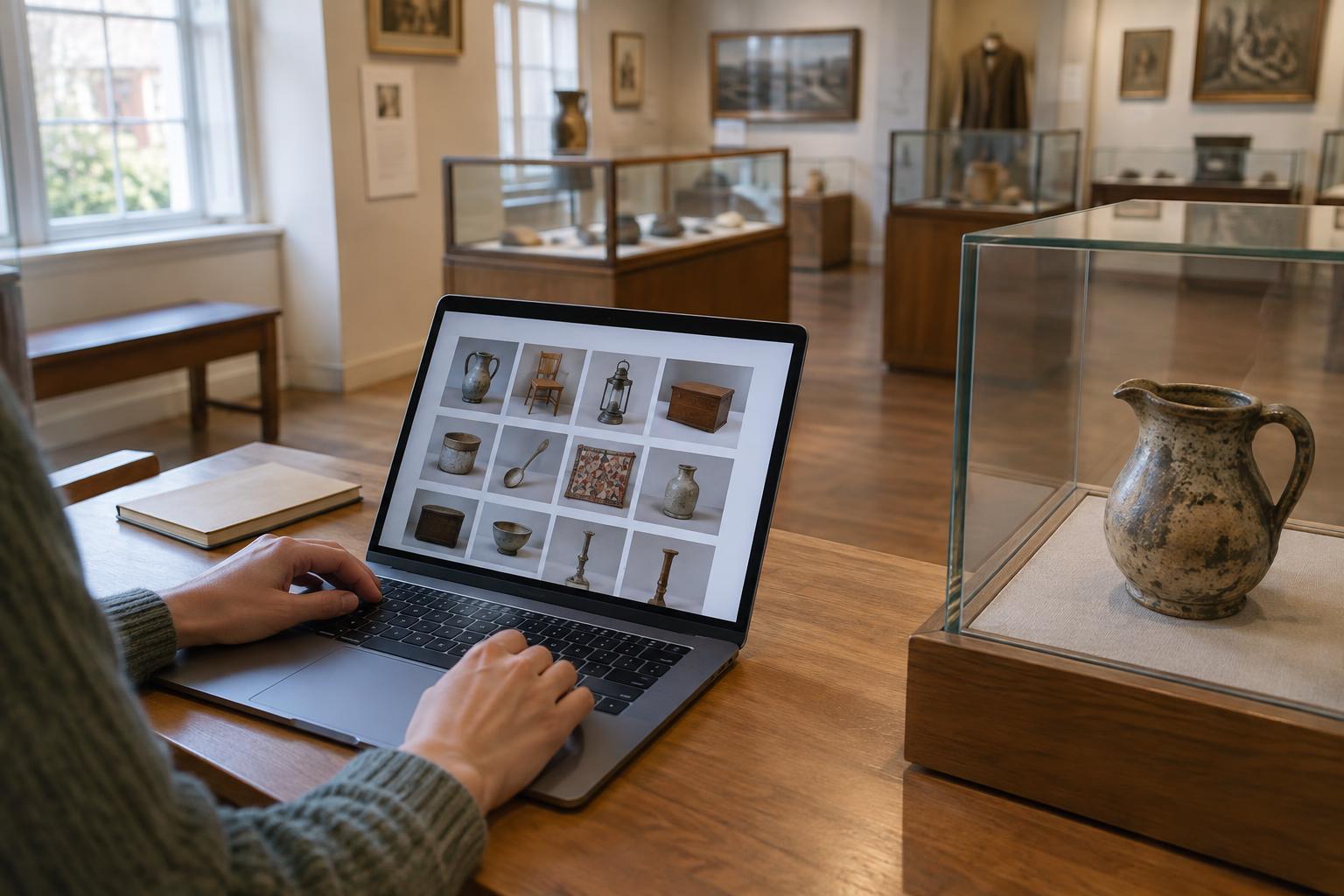
A child does not need to understand an entire collection to have a good visit. Choose one or two likely points of interest, such as clothing, toys, tools, maps or photographs of familiar streets. If the museum has an online description, use it to suggest a simple question before leaving home: What did people use before this everyday object existed? What has changed on this street? What looks surprisingly similar?
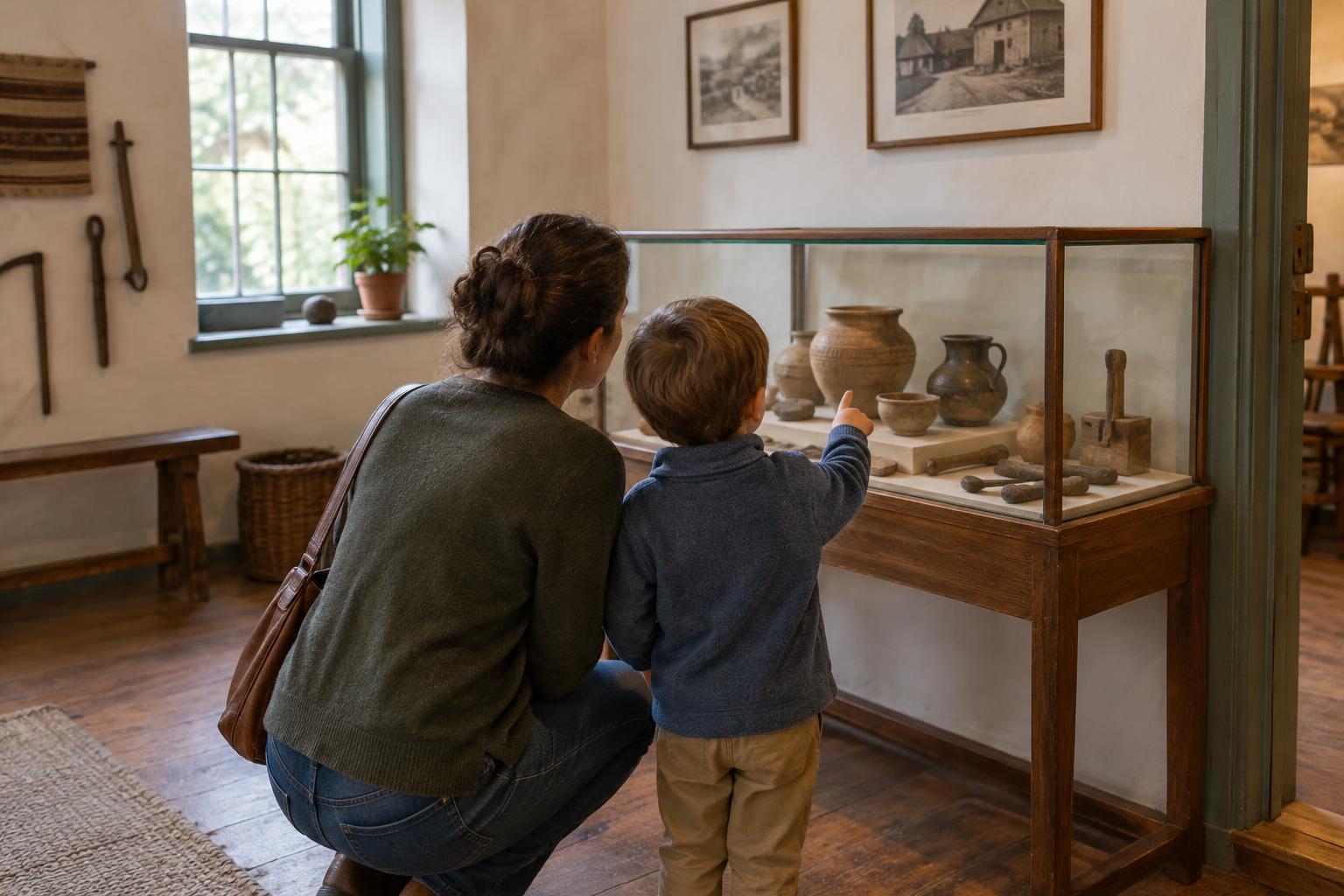
Once inside, let the objects guide you. A child might pass the exhibit you expected them to love and stop at a door handle, a model roof or a label showing an unfamiliar word. That attention is worth following. Ask what they notice before offering an explanation, and read only the labels that help answer their questions. The goal is not to complete a lesson; it is to make space for a closer look.
Explain the rules before they become a problem
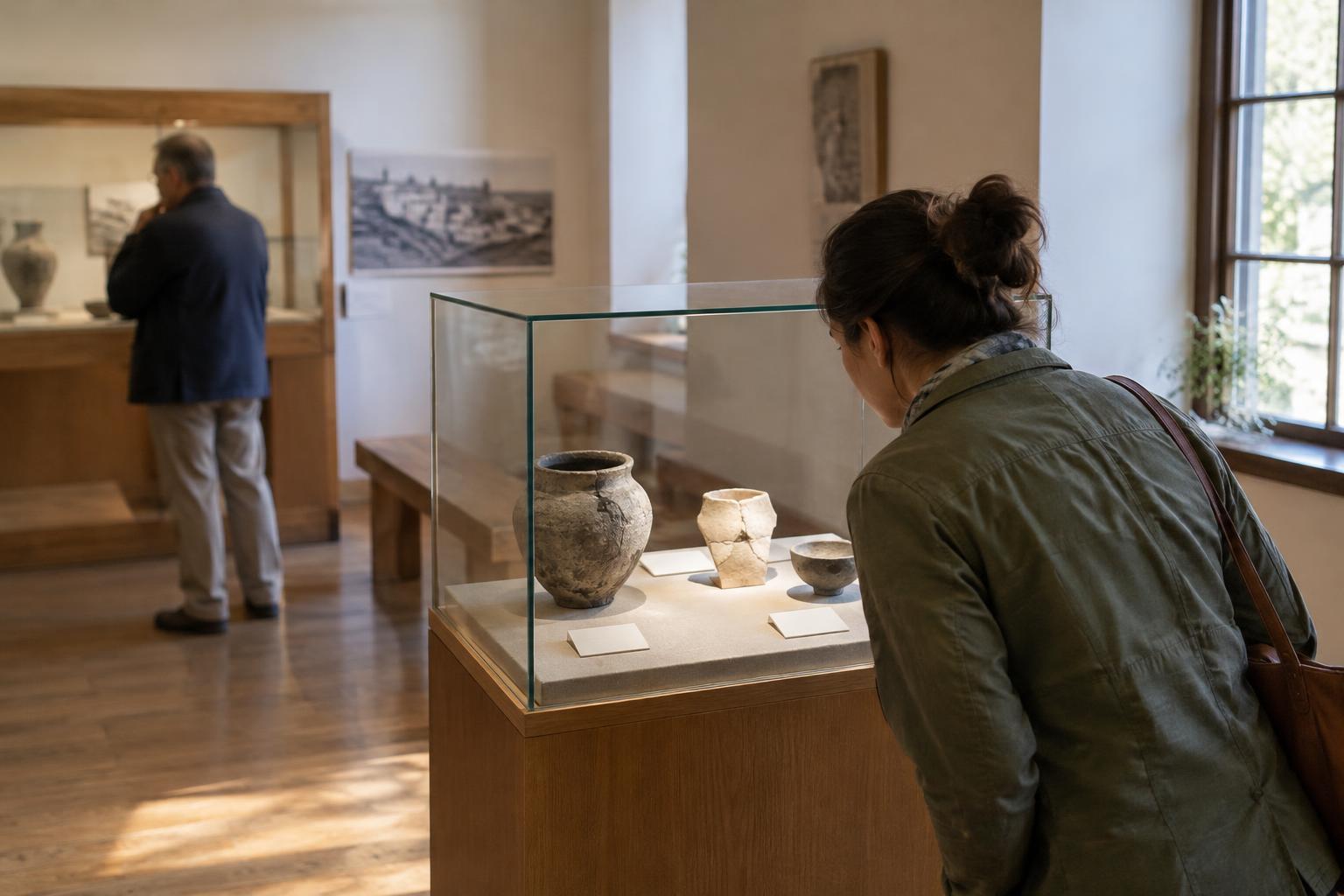
Many small museums display objects in modest rooms, sometimes quite close to visitors. Tell children before entering that some things are for looking at rather than touching, and that you will check signs or ask staff before anyone handles an object. A concrete explanation can help: an old item may be difficult to repair or replace. Avoid promising interactive activities unless you know they are available.
Set expectations for voices and movement, too, without treating curiosity as misbehavior. You might agree to walk indoors, give other visitors room to look and step outside together if someone needs a break. If a child asks a loud question, that is often a chance to answer quietly rather than demand silence. Museum staff can clarify rules; they should not have to supervise the visit for you.
Keep the visit short enough to enjoy
A small museum is not necessarily a quick museum. Children may want to inspect one case for a long time, while adults may be tempted to hurry toward the next room. Choose a flexible stopping point instead of a strict route. Seeing three memorable things can be more satisfying than moving past every display when everyone is tired.
Watch for signs that attention is fading: repeated requests to leave, restless movement or difficulty following simple rules. A snack or outdoor pause may help if the museum allows re-entry, but it is also fine to finish early. Leaving on a good note makes it easier to remember the visit as a discovery rather than an endurance test. Check the museum’s food and drink rules before bringing anything into the galleries.
Carry the discovery back into the neighborhood
Small museums often make more sense when you look outside afterward. A display about local trades might change how you see nearby storefronts; an old map might prompt a walk along a street you have just learned about. You do not need to turn the outing into a long tour. One connection between an exhibit and the surrounding place is enough to make both feel more vivid.
On the way home, ask each child to name something they would like to see again, or something they still wonder about. They might remember an unexpected detail rather than the museum’s main theme. Let that be the souvenir. A successful visit is not measured by how much information children can repeat, but by whether they felt welcome to look, ask and notice.