An object has a history after it is made
Imagine a painted shop sign in a small local museum. A label might tell you its approximate age, the business it advertised, and the materials used to make it. Provenance asks another set of questions: Who kept the sign when the shop closed? Was it stored in a family attic, sold, or given to the museum? How does the museum know?
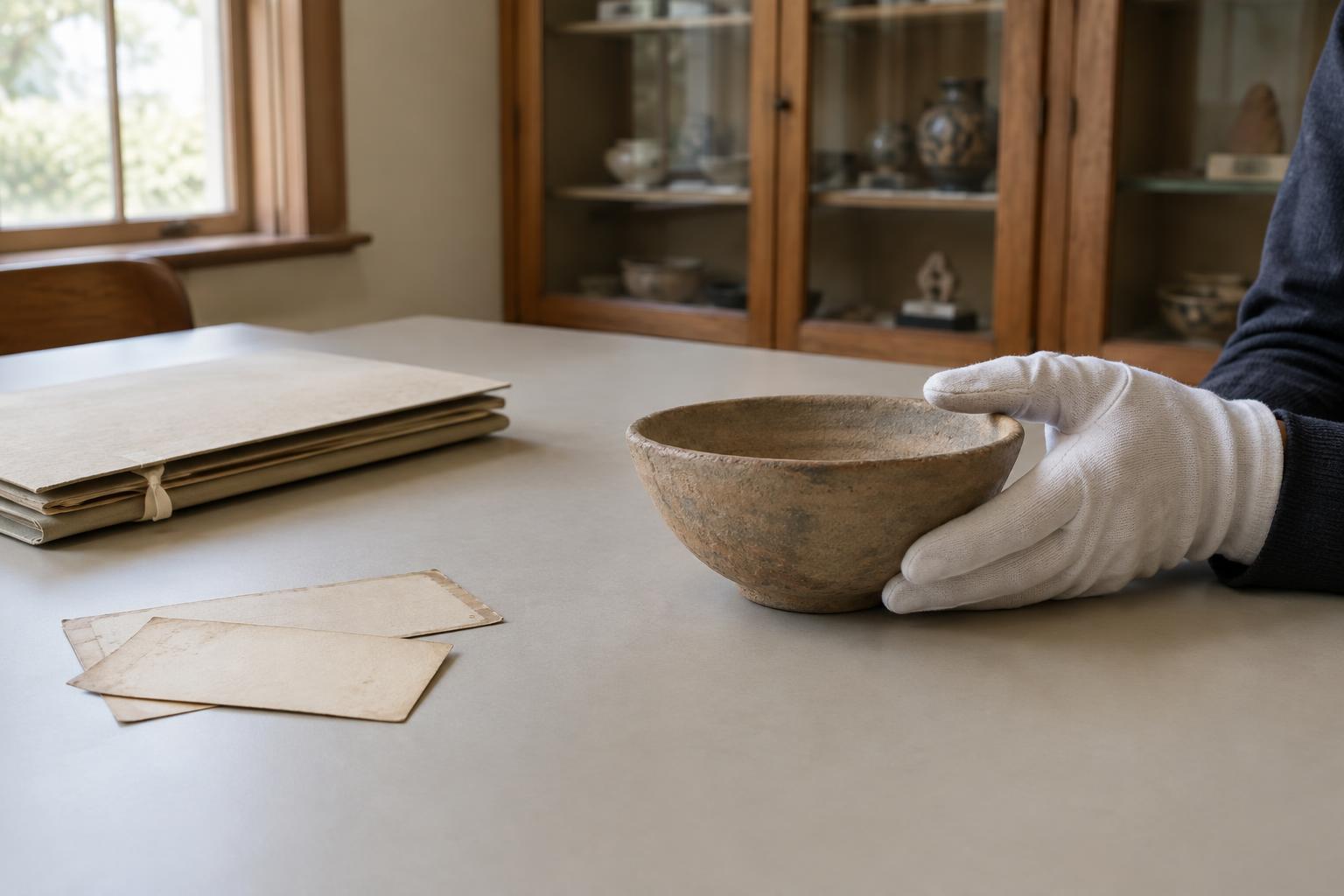
Provenance is the documented history of an object’s ownership, custody, and movement. Depending on the object, that history might be pieced together from receipts, letters, photographs, inventories, accession records, or memories recorded in an interview. It is more than a list of names. The circumstances of a transfer can matter as much as the transfer itself.
What a provenance record can tell us
A well-supported provenance can help a museum understand whether an object is what it appears to be. An old photograph showing the shop sign above a particular doorway, for example, could connect it to a place more firmly than its style alone could. Records may also clarify when an object was altered, repaired, or displayed for a different purpose.
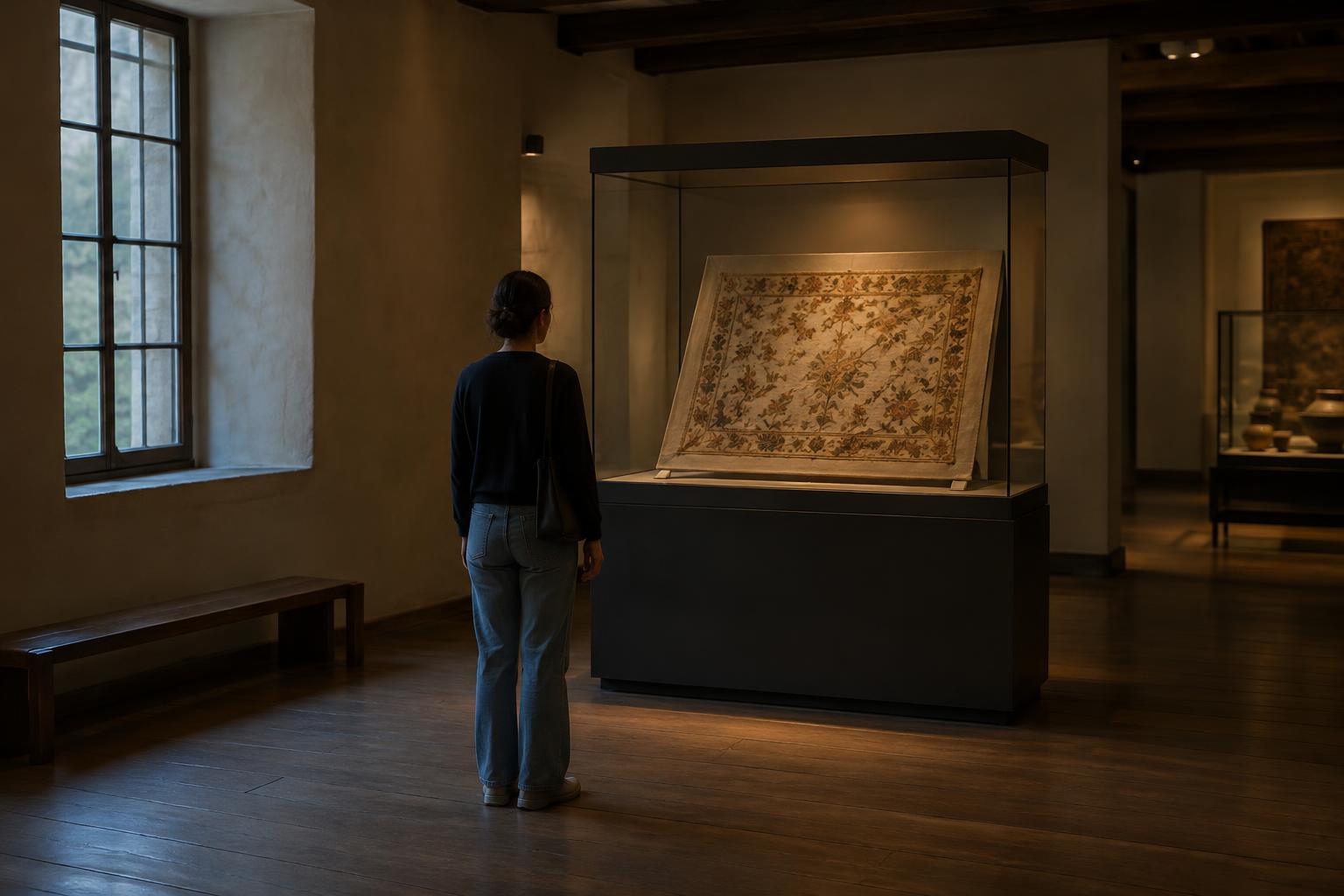
Provenance matters for care and interpretation, too. Knowing that a textile was worn at community celebrations gives it a different context from knowing only its approximate date. Learning that a piece of furniture moved between several households can reveal patterns of reuse that a polished gallery display might otherwise hide. A small museum may hold especially close connections to donors and local places, but familiarity is not a substitute for documentation. Staff still need to distinguish what a record establishes from what someone reasonably remembers or believes.
Why gaps deserve attention
Many objects have incomplete histories. Paperwork gets lost, names change, and earlier collectors may not have recorded how they acquired things. An unknown period does not automatically mean an object was improperly obtained. It does mean that the museum should be careful about presenting an unbroken story.
Some gaps raise more consequential questions. Objects may have changed hands during war, displacement, colonial rule, or other circumstances in which a transfer cannot be understood simply as a willing sale or gift. Records written by collectors may also leave out the perspectives of the people who made, used, or valued an object. Investigating provenance can therefore involve looking beyond a museum’s own files and listening to communities with a connection to the material. The aim is not to make every object fit a tidy narrative; sometimes the most accurate account includes uncertainty.
Provenance and the choices museums make
A museum uses provenance when deciding whether to accept a donation, how to describe an object, what further research is needed, and whether a claim about it requires a response. It can also inform conversations about returning an object or changing how it is held and interpreted. These decisions depend on the particular object and its history; provenance alone is not a simple stamp of approval or disapproval.
Careful wording is part of the work. A label that says “donated by” identifies the person who gave an object to the museum, but it may not explain how that person obtained it. Likewise, “from” might refer to where an object was made, found, collected, or purchased. More precise labels help visitors understand what is known. When space is limited, a museum may offer fuller records elsewhere in the gallery or through its collection staff.
How to look for provenance on your next visit
At a small museum, pause over the modest details of an object label: a donor’s name, a place, an accession number, or a phrase such as “believed to be.” Ask yourself which part of the object’s journey each detail describes. Does the label identify its maker, its first owner, or only its most recent donor? Is the connection to the local area documented, or presented as a possibility?
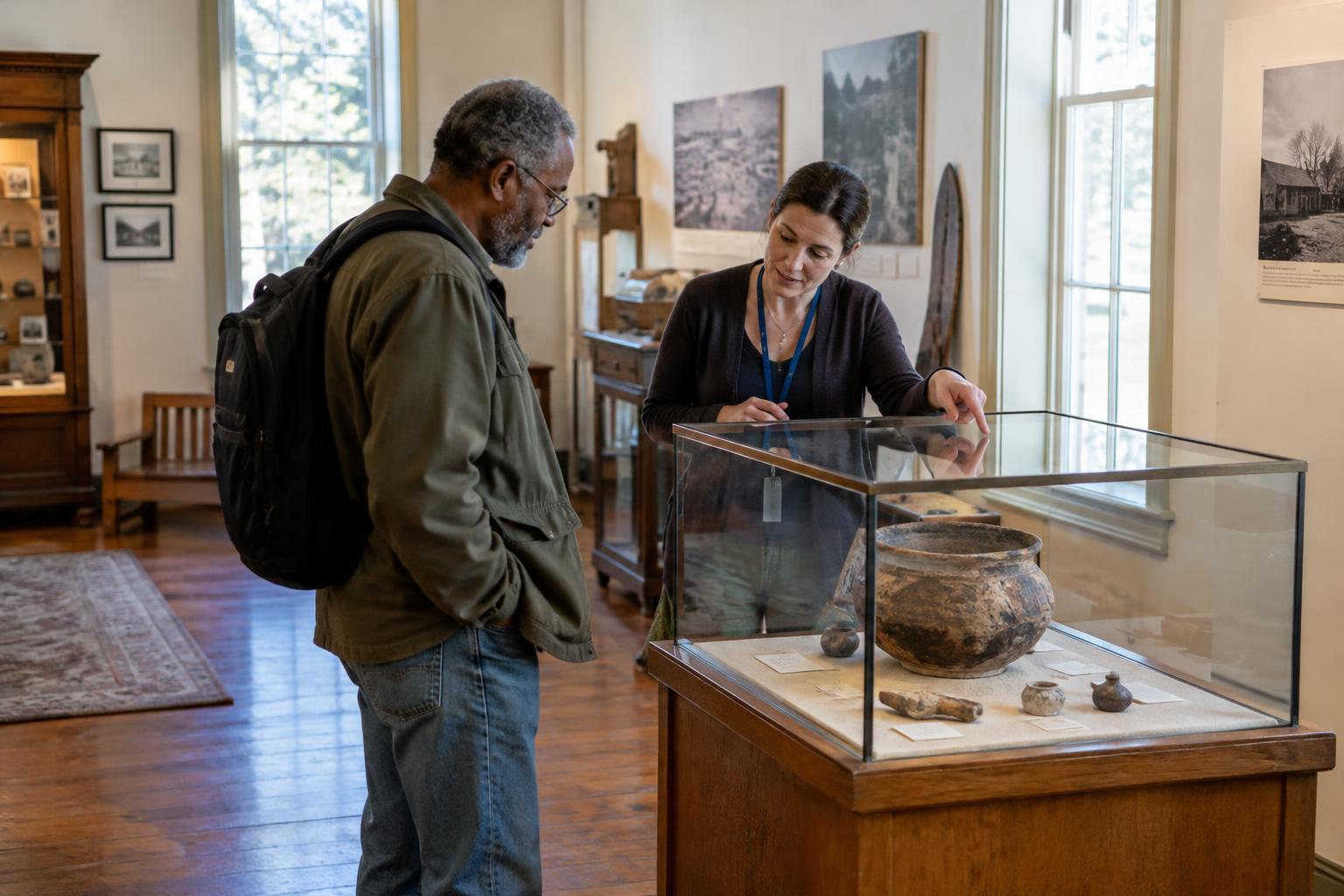
You do not need to treat every missing detail as a mystery to solve. A useful, respectful question for staff is, “What do you know about how this came into the collection?” They may have a fuller story, an ongoing question, or a reason some information is not public. Provenance invites that kind of curiosity. It reminds us that a museum collection is not just a gathering of things, but a gathering of relationships and decisions that continue to shape what visitors see.