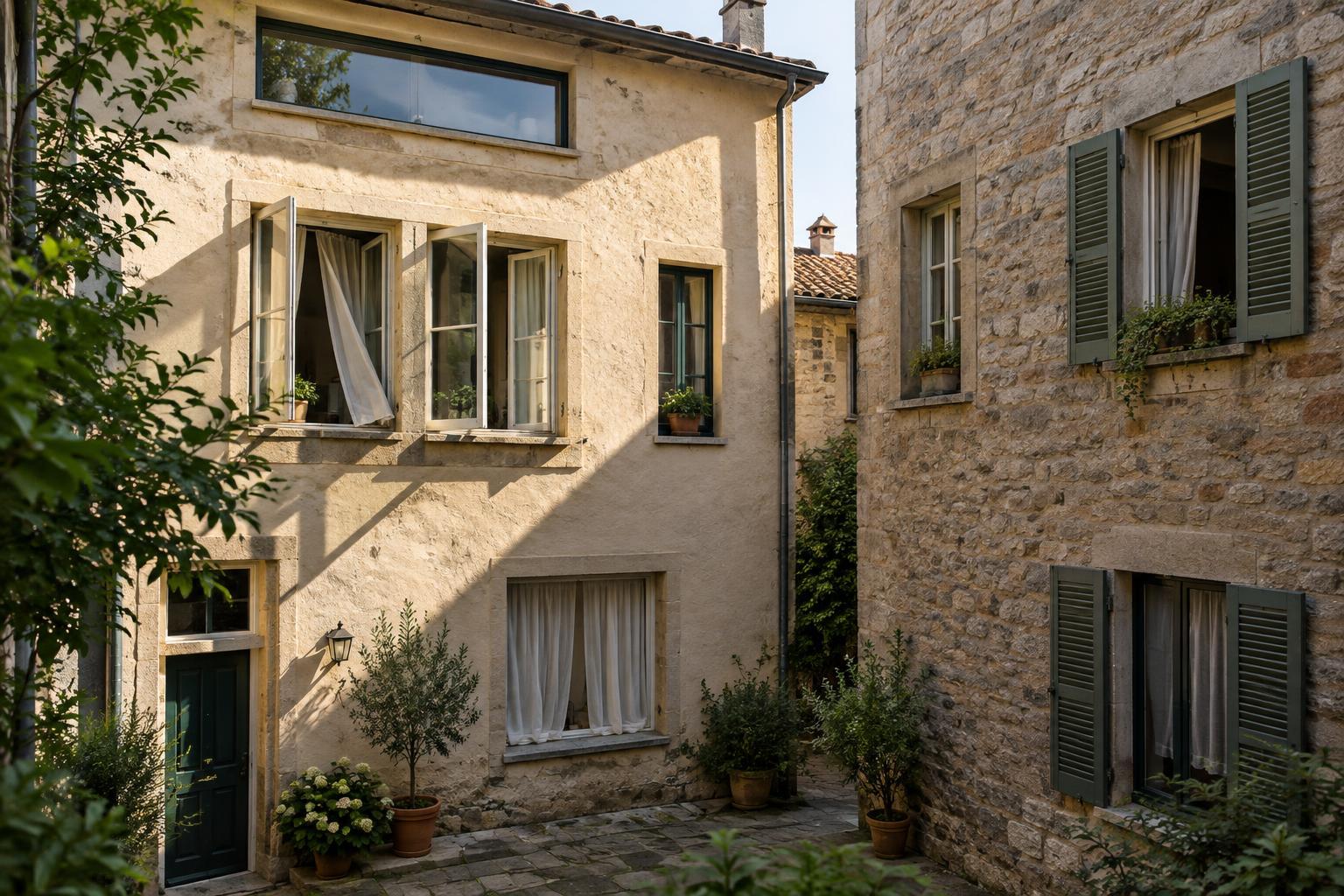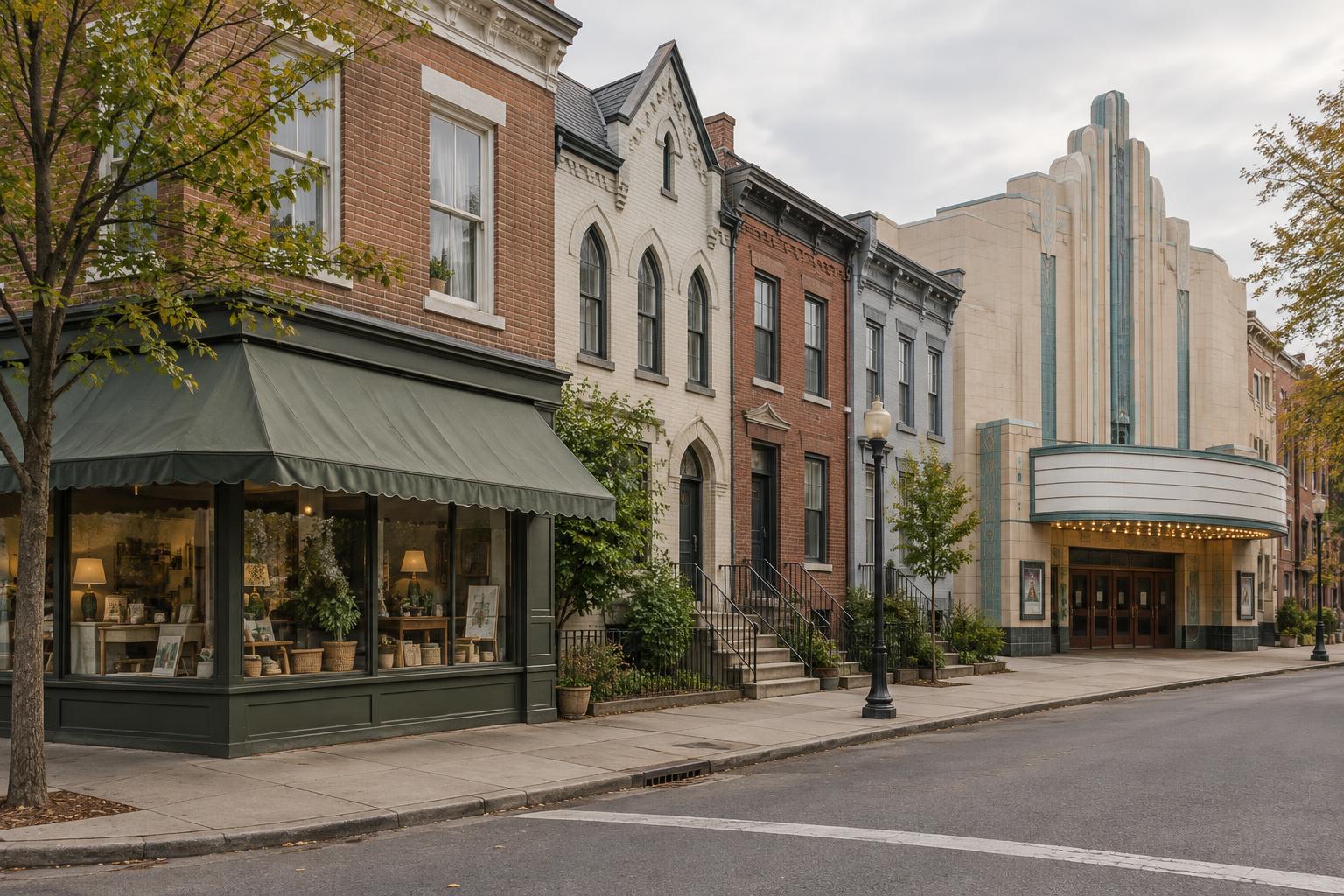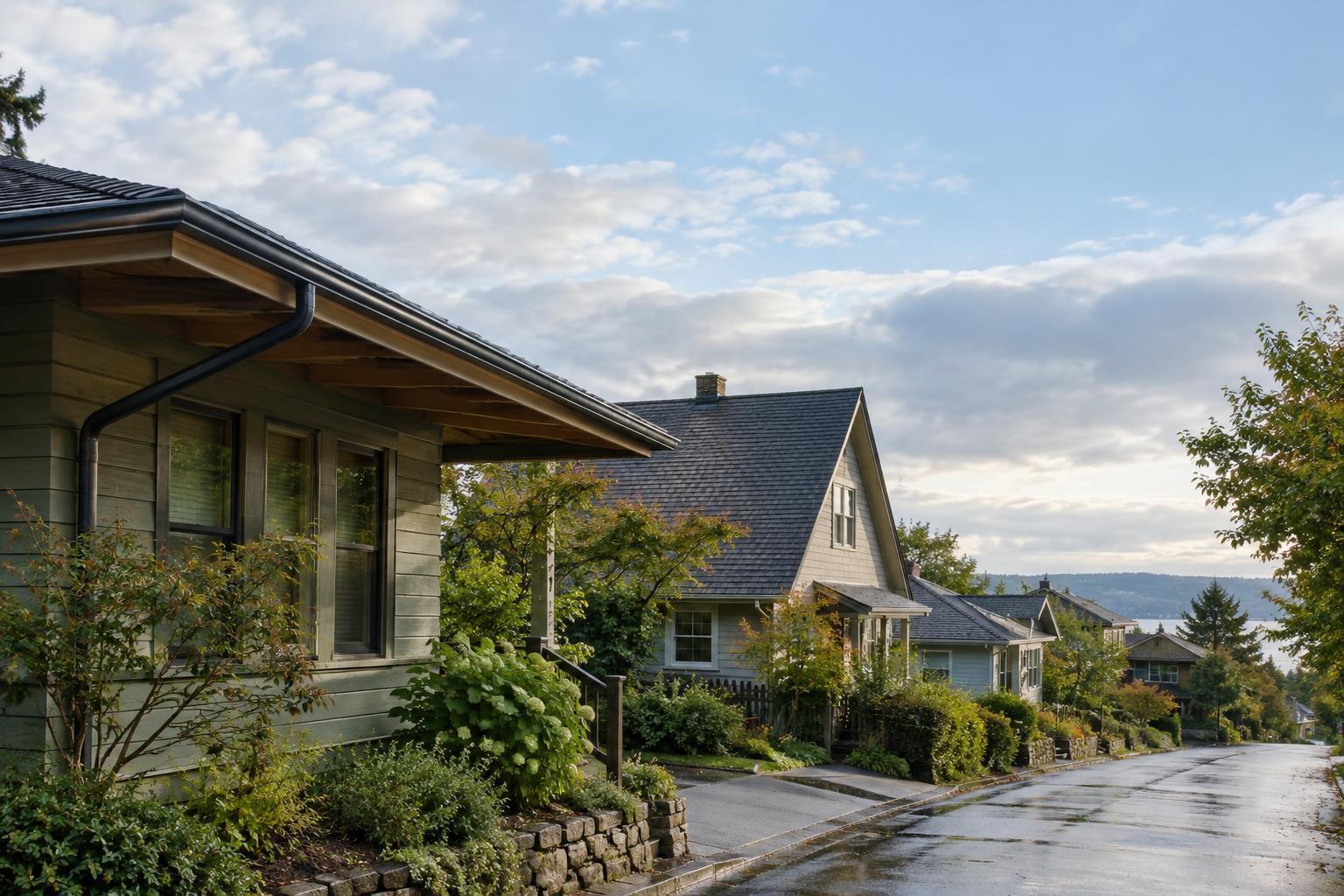
Start with the path of water
When you look at a roof, imagine where a drop of rain will go after it lands. On a sloped roof, water runs toward an edge, a gutter, or a valley where two roof planes meet. Those meeting points need particular care because they collect runoff from a larger area. A broad, simple roof may have fewer such junctions; a roof with many dormers and intersecting slopes has more places where water must be guided away.
A low-slope roof can work in rainy places, too. It is not necessarily flat: even a surface that looks level from the street may be designed to lead water toward drains or scuppers, which are openings through a wall at the roof edge. Gutters and downspouts carry water farther from doors, walls, and foundations. If you can see them from a public sidewalk, notice whether they empty onto the ground, into a channel, or out of view. The visible roof shape is only one part of the drainage system.
Notice how far the edge reaches
An overhang is the part of a roof that extends beyond the wall below. It can help keep some rain off windows, entrances, and exterior finishes. A generous overhang may create a sheltered strip where someone can pause to find a key or shake out an umbrella. Its usefulness depends on wind direction as well as rainfall: wind-driven rain can reach a wall even beneath a deep eave.
Roof edges also affect what happens after water leaves the building. An eave without a gutter may drop rain in a line beside the wall, so the ground surface below matters. Look for gravel, paving, planting, or a drainage channel that appears to receive that runoff. These small details can be more revealing than the roof’s silhouette. They show how the building meets its site, not just how it looks against the sky.
Read shade as a design choice
Overhangs can shade windows when the sun is high, reducing direct sunlight and glare indoors. Their effect changes with the window’s orientation, the sun’s seasonal path, and nearby trees or buildings. A horizontal eave may shade a window effectively at one time of day but do little when low-angle light comes from the side. That is why a street-facing roof edge may not tell you much about the light reaching windows on another side of the building.
Shade can be welcome, but more is not always better. In a dim room or a cool season, people may value the daylight and warmth that a deep overhang blocks. While exploring, compare roofs with other features: a porch, shutters, recessed windows, or a balcony above a window may provide shelter or shade without relying on the main roof. Everyday architecture often responds to sunlight through several modest choices rather than one dramatic gesture.
Look carefully at snow
A steep roof can encourage snow to slide off, while a lower-slope roof may hold more of it. Neither shape alone tells you whether a building is suited to snowy weather. Roof structure, materials, insulation, drainage, and maintenance all matter. Snow can also gather unevenly where roof planes meet or where wind deposits it, so a simple visual rule about pitch will miss important details.
Where snow slides from a roof matters as much as whether it slides. A roof edge above a doorway or walkway raises a different practical question from an edge above an unused patch of ground. In some places, snow guards are fitted to help control sudden slides. From a respectful distance, you can look for these small attachments and for the space allowed beneath the eaves. Avoid standing under a snow-covered roof edge to inspect it.
Treat the roof as a clue, not a verdict
Roof shapes reflect more than weather. Available materials, building traditions, lot size, cost, and later alterations can all influence what you see. Neighboring buildings may share a roof form because they were built to a similar plan, even if one now has a different use. A single roof cannot prove what a place’s climate is like or why its designer made a particular choice.
A useful walking habit is to ask three questions: Where does the water go? Which openings receive shade or shelter? What happens at the edge in snowy or windy conditions? Then look at several buildings on the same street. Differences between a house, a shop, and a small public building can make familiar rooflines newly interesting. The goal is not to diagnose buildings from the sidewalk, but to notice how ordinary details help people live with the weather.