Treat disagreement as a starting point
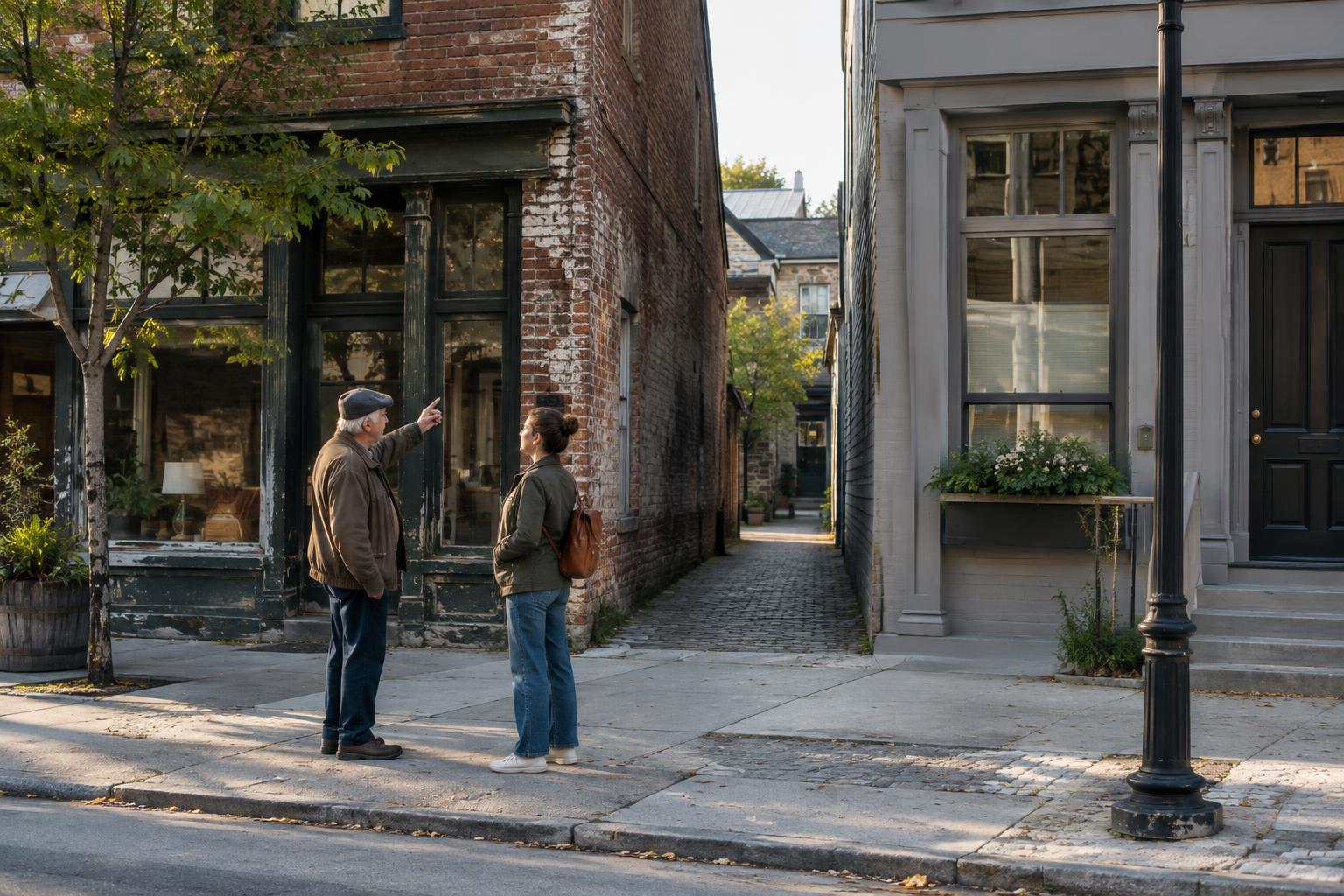
A street name, an old shopfront, or a small museum display can seem to offer a straightforward account of a place. Then a resident tells you something different. Perhaps a plaque credits one person with founding a market, while families nearby remember several people doing the work. Perhaps people agree that a building mattered but disagree about what happened inside it. You do not need to settle the question immediately to learn from it.
Begin by identifying exactly what differs. Are people disputing a date, a name, a motive, or the importance of an event? Two accounts may both be useful if one describes an official decision and the other describes its effect on daily life. Write down each claim separately, along with where you encountered it. This simple distinction helps keep a vivid story from turning into an unsupported conclusion.
Ask what each account can tell you
Different kinds of sources answer different questions. A municipal record may establish when a building was registered, but not what neighbors called it or how they used it. A family memory may preserve details that never entered an archive, but dates and sequences can become hard to pin down over time. A museum label is a useful introduction, not necessarily the last word. Rather than ranking one form of knowledge above all others, ask what each can reasonably support.
Pay attention to vantage point, too. Someone who worked in a workshop may remember it differently from someone who lived beside it. An account of a festival may foreground organizers and leave out cleaners, vendors, or people who could not take part. These gaps do not automatically make an account false. They tell you where to ask another question: Who was present? Who had a reason to record the event? Who might have had little opportunity to do so?
Check details without turning people into sources on demand
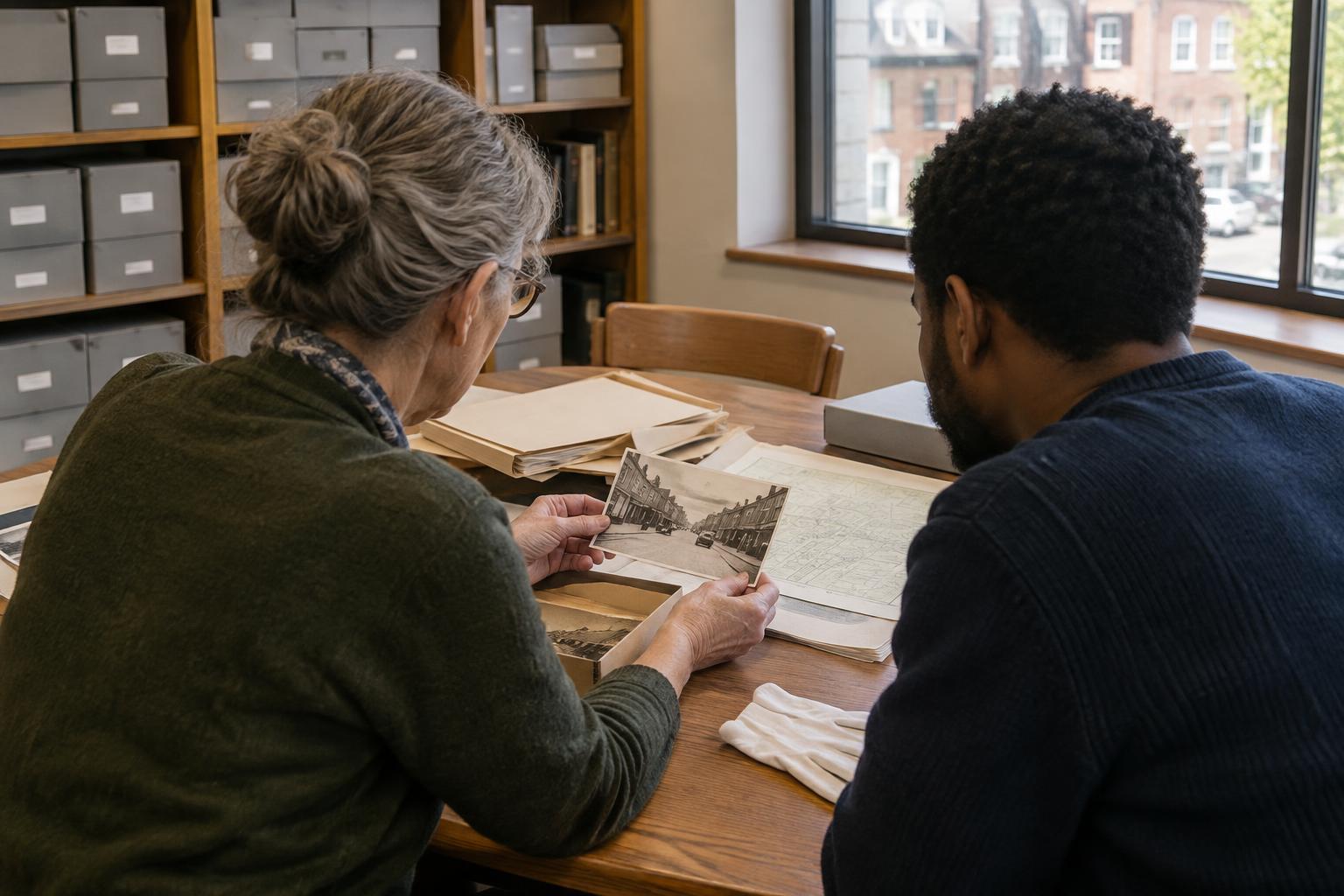
If a question matters to your understanding, look for another way to examine it. Compare the wording on nearby signs, ask a museum staff member how a label was prepared, or consult a publicly accessible local archive if one is available. Old maps, photographs, directories, and meeting records may help with specific names or uses of a site. They can also raise new questions. A change on a map, for example, does not by itself explain why a neighborhood changed.
Conversation calls for a different kind of care. Ask open questions such as “How did you come to know that story?” rather than pressing someone to defend a memory. Make clear when you are taking notes, and ask permission before recording, photographing, or sharing a person’s words. A casual encounter is not an obligation to give you an interview. If someone declines or seems uncomfortable, thank them and move on.
Notice what is at stake in the story
Local history is not always a puzzle with a neutral answer waiting at the end. Disagreement about a building’s former use may be connected to pride, displacement, loss, or a long effort to have certain work recognized. You may not know those stakes on a short visit. That is a reason to slow down, not a reason to avoid the subject altogether.
Be especially careful when a dramatic version makes a place sound more interesting to outsiders. Ask whether repeating it would reduce residents to characters in a travel story or turn a painful event into atmosphere. You can describe what you see and explain that accounts differ without choosing the most colorful claim. Respectful curiosity includes accepting that some details are private, unsettled, or simply beyond what you can verify.
Share what you learned with the uncertainty intact
When you tell someone else about a place, distinguish observation from interpretation. “The sign says the hall opened as a cinema” is different from “The hall was always a cinema.” If residents recall other uses, say so without implying that one conversation speaks for an entire community. Phrases such as “one account describes” or “I could not confirm” are clearer than presenting an uncertain detail as fact.
You can also describe the path your curiosity took: a plaque led to a question, a conversation added another perspective, and an archive answered one detail while leaving another open. That is a satisfying account of a visit, even without a tidy verdict. The aim is not to collect a definitive story from every stop. It is to leave with a more attentive understanding of the place and a fairer way to speak about the people who know it.