A repeated façade is a clue, not the whole story
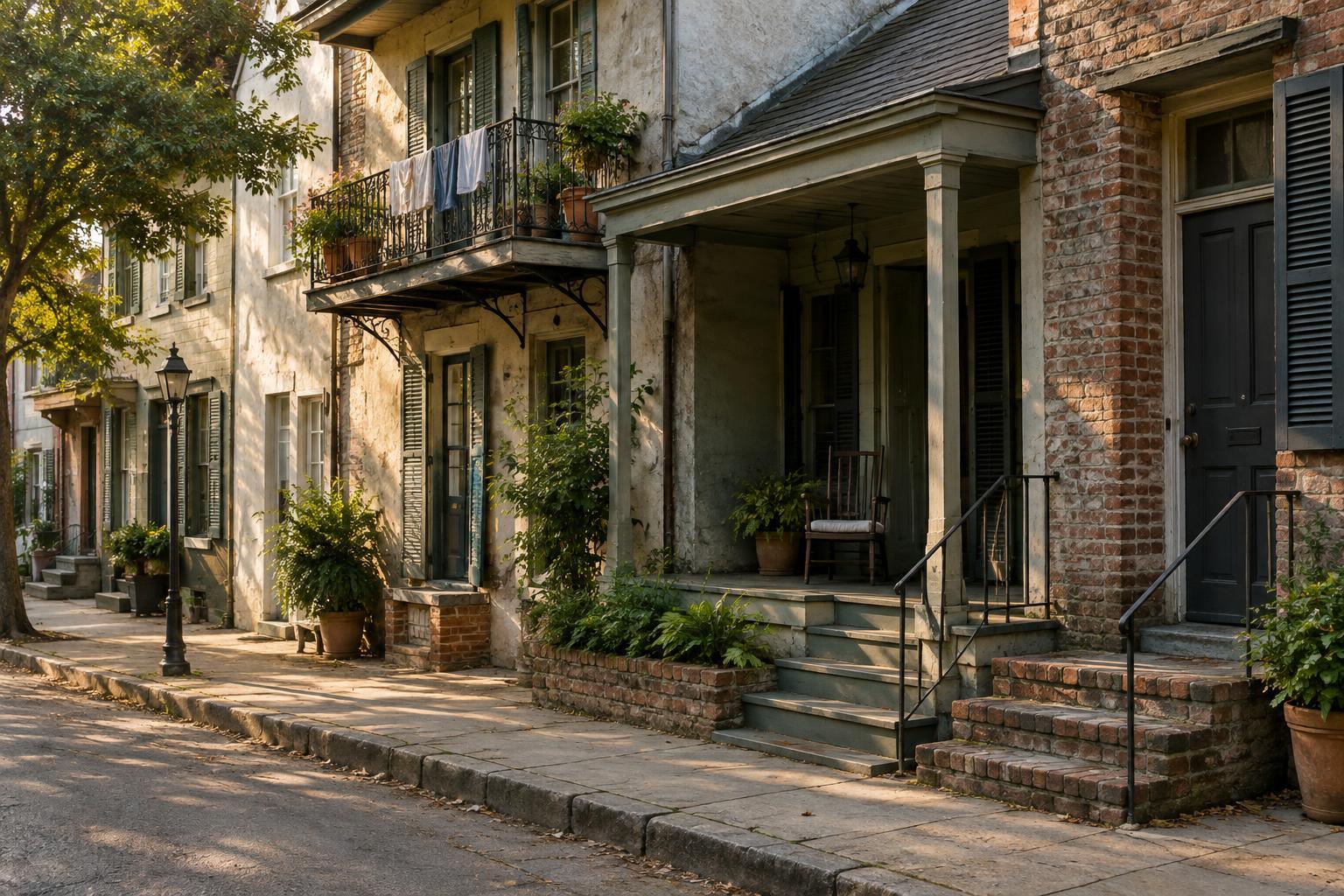
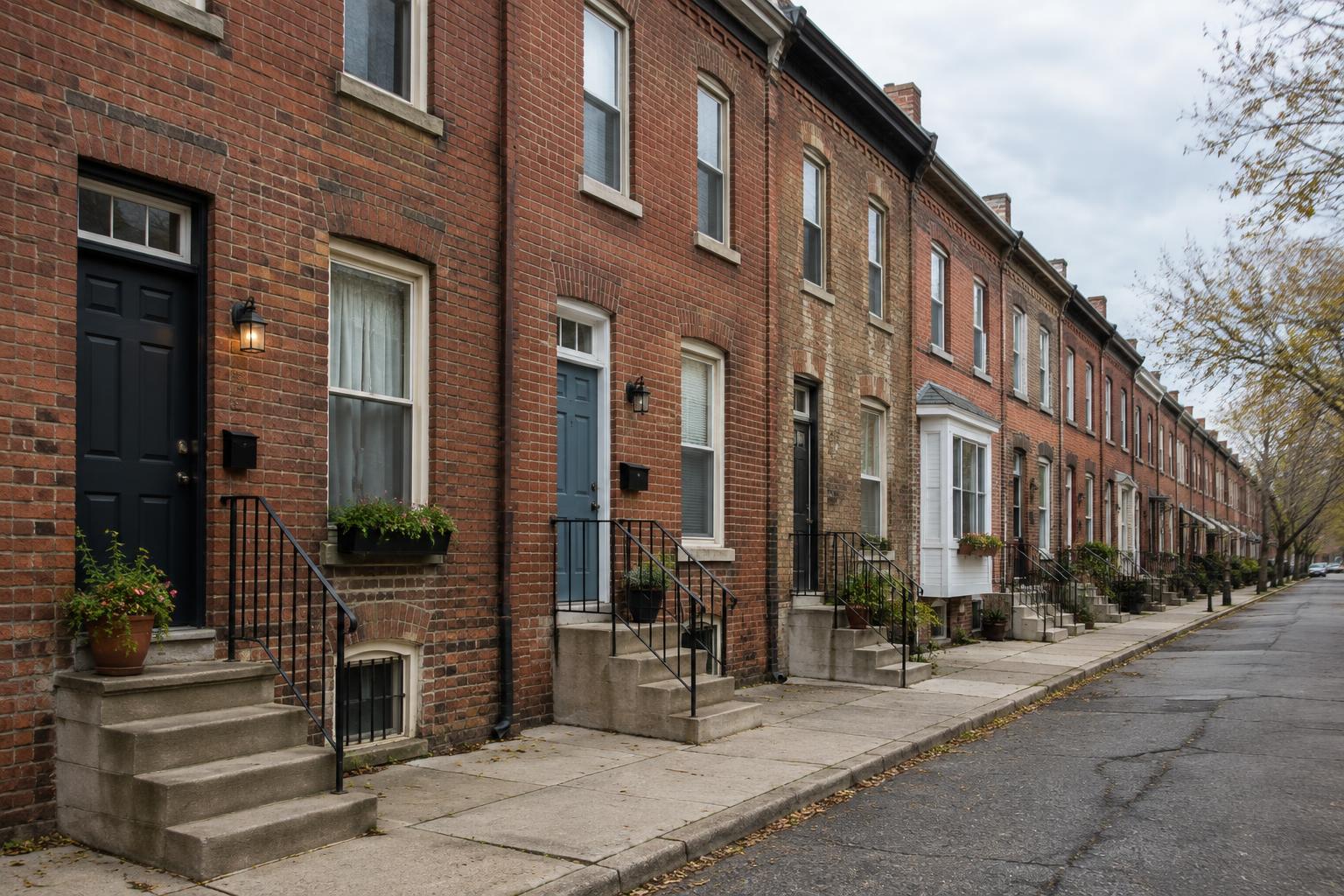
Walk down a street of row houses and the rhythm is hard to miss: door, window, door, window, repeated from one end of the block to the other. Similar rooflines and front steps can make the houses look like copies. Yet repetition usually reflects several practical choices working together. The size of the lots, the cost of construction, and the need to fit homes along a street all influence what appears at the curb.
The most useful way to look at a row is to notice both its pattern and its exceptions. Are the doors all on the same side, or do neighboring houses mirror each other? Do the rooflines stay level as the sidewalk slopes? Those small differences can suggest how builders adjusted a common plan to a particular site.
What shared walls make possible
A row house typically joins its neighbors at one or both sides through shared walls, often called party walls. Unlike a detached house, it does not need open space around every side. That lets more homes face the same stretch of street. Builders may also find it simpler to repeat dimensions and construction details across adjoining houses, though the exact savings depend on the building methods and place.
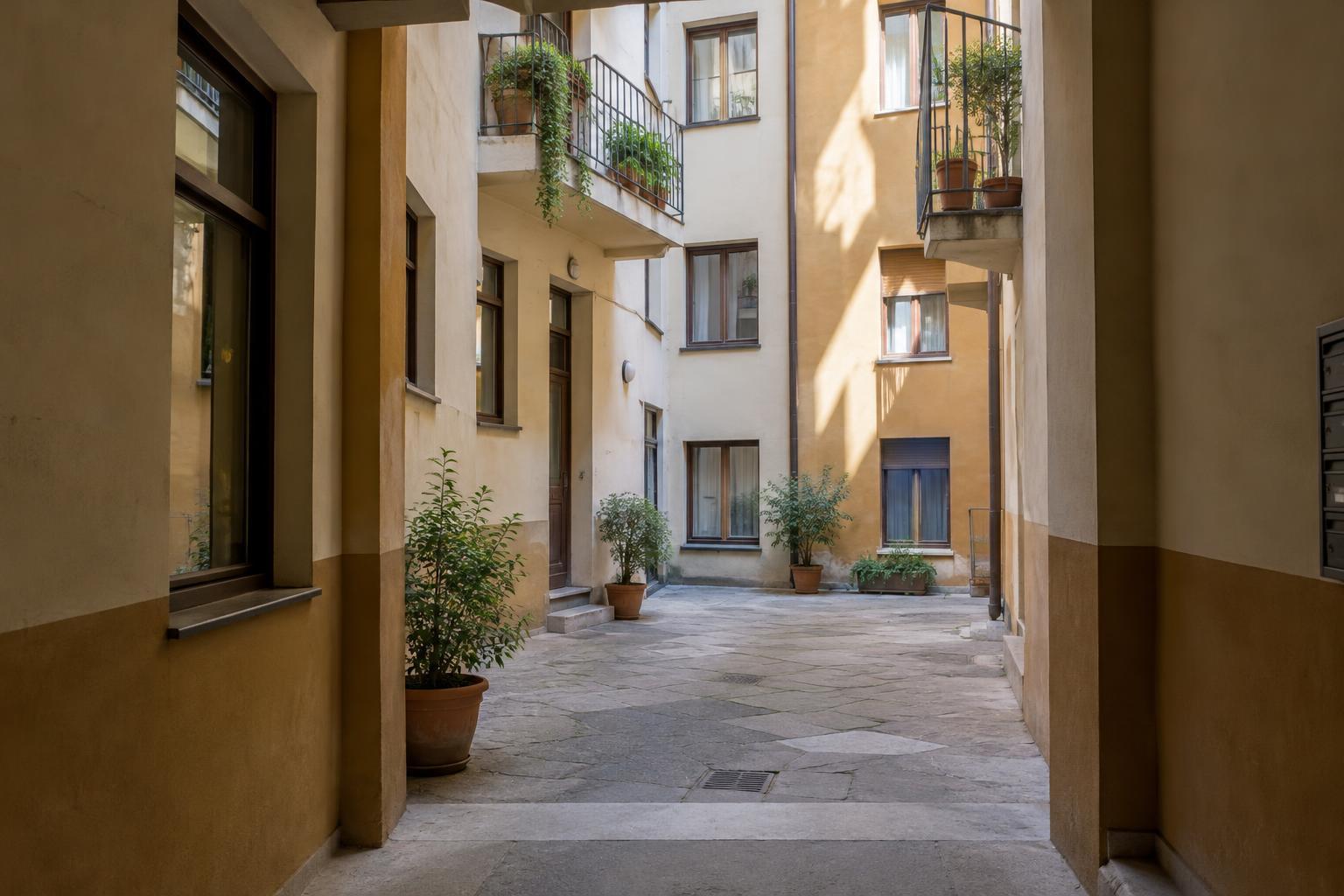
Shared walls help explain the familiar shape of many rows: a public front, a private interior, and often a back facing a yard, lane, or service space. The arrangement has trade-offs. Side windows may be limited, so light and ventilation often depend more heavily on the front, back, and any internal openings. An end house can feel noticeably different because it may have an exposed side wall.
Narrow lots shape life behind the front door
The repeating houses often sit on repeating parcels of land. When a larger tract is divided into narrow lots, each home gets a modest width at the street. A narrow frontage can keep the distance between homes and the sidewalk short while leaving room for many separate addresses along a block. To provide enough interior space, a house may extend backward or add floors rather than spread sideways.
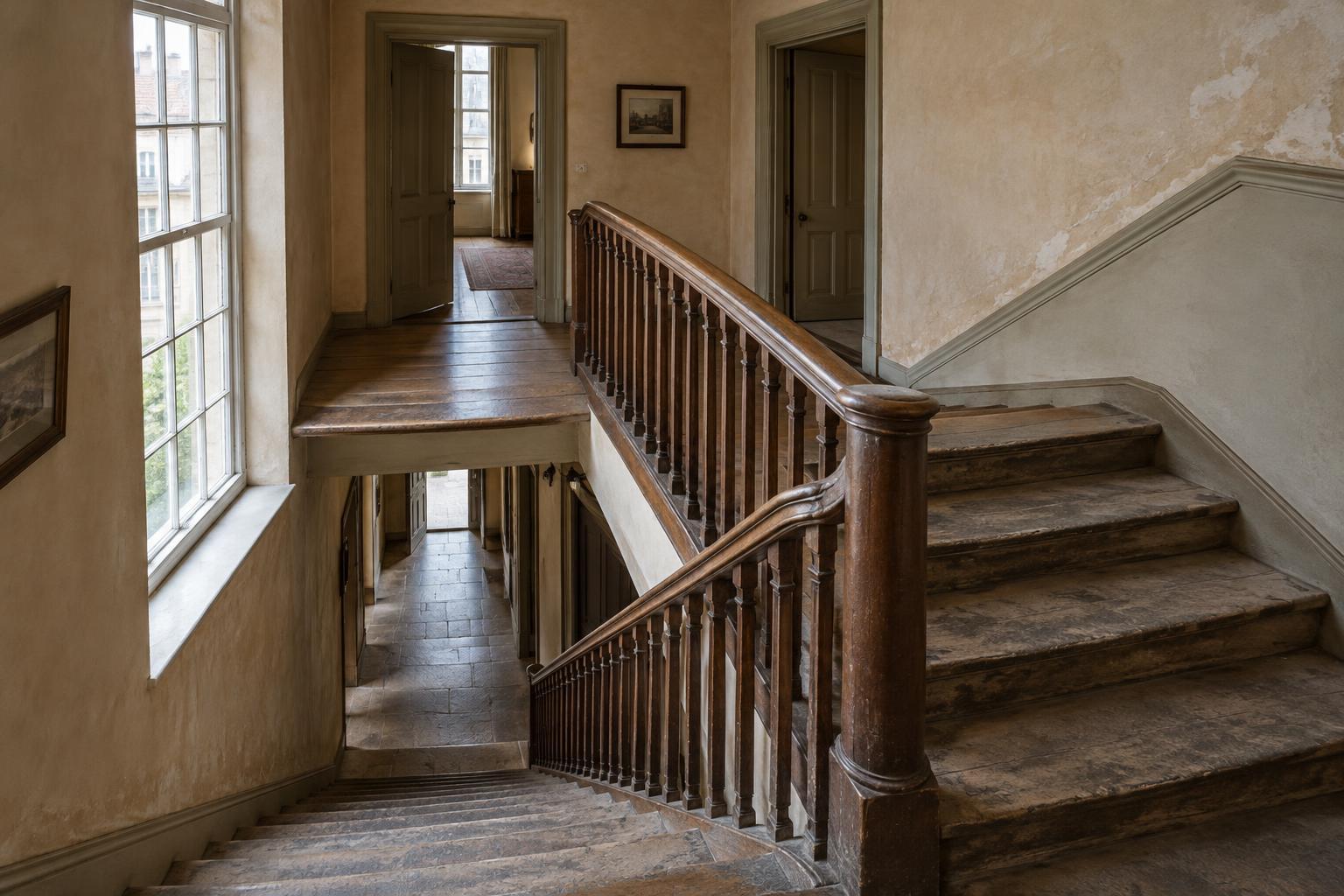
Lot width leaves visible clues. A tight frontage may place the entrance beside a single broad window or pair of slimmer ones. Stairs might sit near a shared wall to preserve space for rooms. None of these details proves what the interior looks like today; renovations can change plans considerably. Still, the outside proportions offer a starting point for understanding the space a house had to work with.
The street gives the row its rhythm
Rows are also shaped by the streets they face. A regular block can support a steady sequence of lots and houses. A bend, corner, alley, or change in elevation interrupts it. On a sloping street, front steps may grow taller from one doorway to the next, while builders keep windows or rooflines aligned in a different way. A corner house may turn toward two streets or present a mostly blank side wall.
Look across the road as well as along one side. The width of the street, the position of sidewalks, and the presence of small front gardens affect how close and uniform a row feels. What reads as one architectural pattern is partly a pattern of public space: the relationship between entrances, pavement, trees, and the path people take past the houses.
Read the changes with respect
Even a carefully matched row rarely stays identical. One owner replaces a door; another changes a window, adds a railing, or repairs brickwork in a different shade. Some differences are cosmetic, while others reflect changing needs or building conditions. A repaired façade is not necessarily less interesting than an untouched one: it shows that these are working homes, not just a design repeated for display.
To explore a row thoughtfully, pause on the public sidewalk and compare a few houses before photographing details. Notice what repeats first, then ask where the sequence breaks and what the site might explain. Avoid treating private steps, windows, and yards as exhibits. The reward is a richer view of an ordinary street: a shared framework that gives each house room for its own history.