A small collection can carry a large responsibility
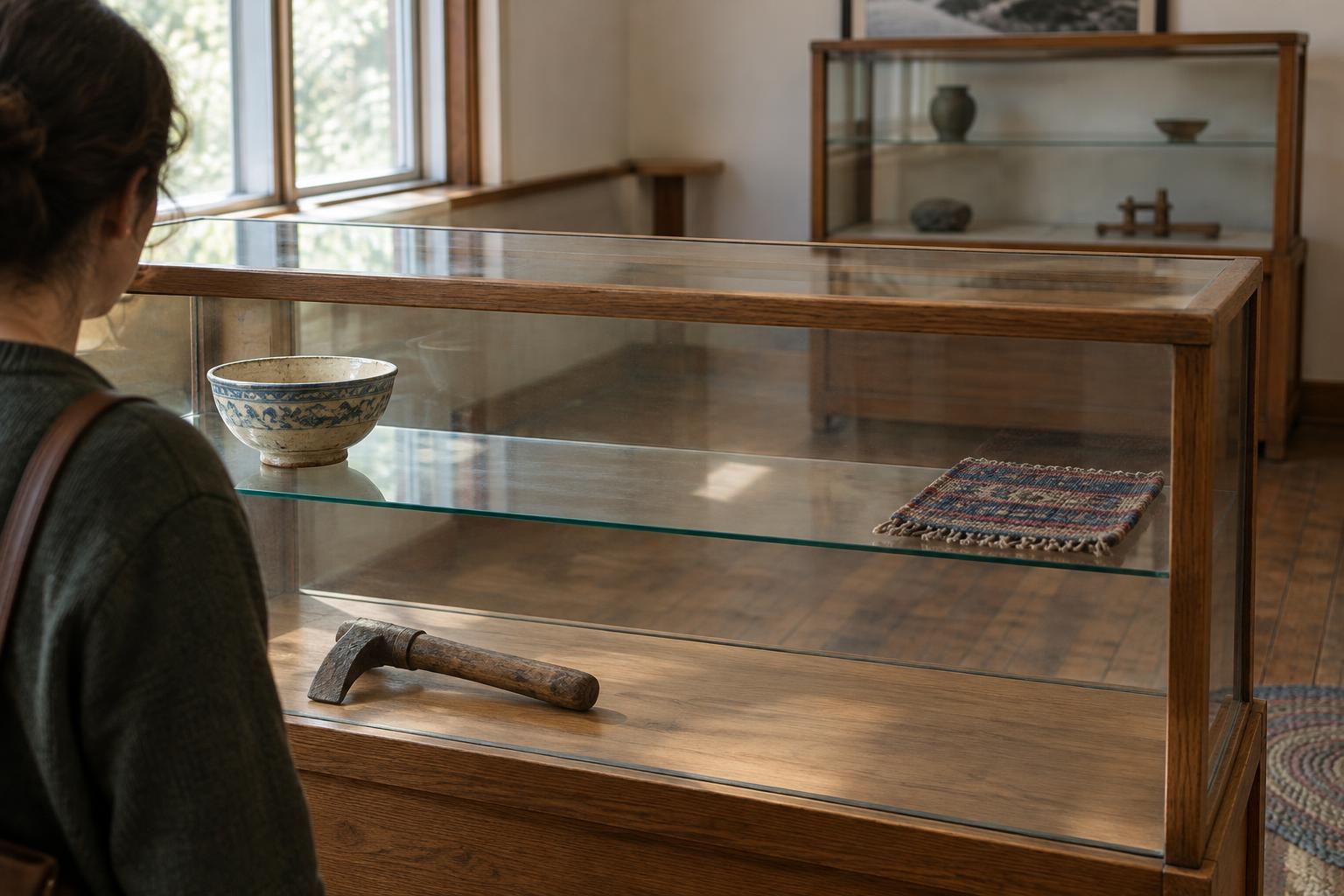
A neighborhood museum might display a handwritten letter, a woven garment, a family photograph, or a tool donated by someone nearby. These objects may be modest in size, but they can hold information and memories that cannot be recovered if the originals are damaged. A museum’s rules are often less about keeping visitors at a distance than about making sure future visitors can see the same things.
Small museums also work with different spaces, budgets, and collections. One may have purpose-built cases; another may occupy an older building with windows that are difficult to shade. A rule that seems broad—such as no touching anywhere in a room—can be a practical way to protect many kinds of objects without asking visitors to judge which ones are fragile. The best way to understand a particular rule is to ask the people who care for that collection.
Why the lights may be low
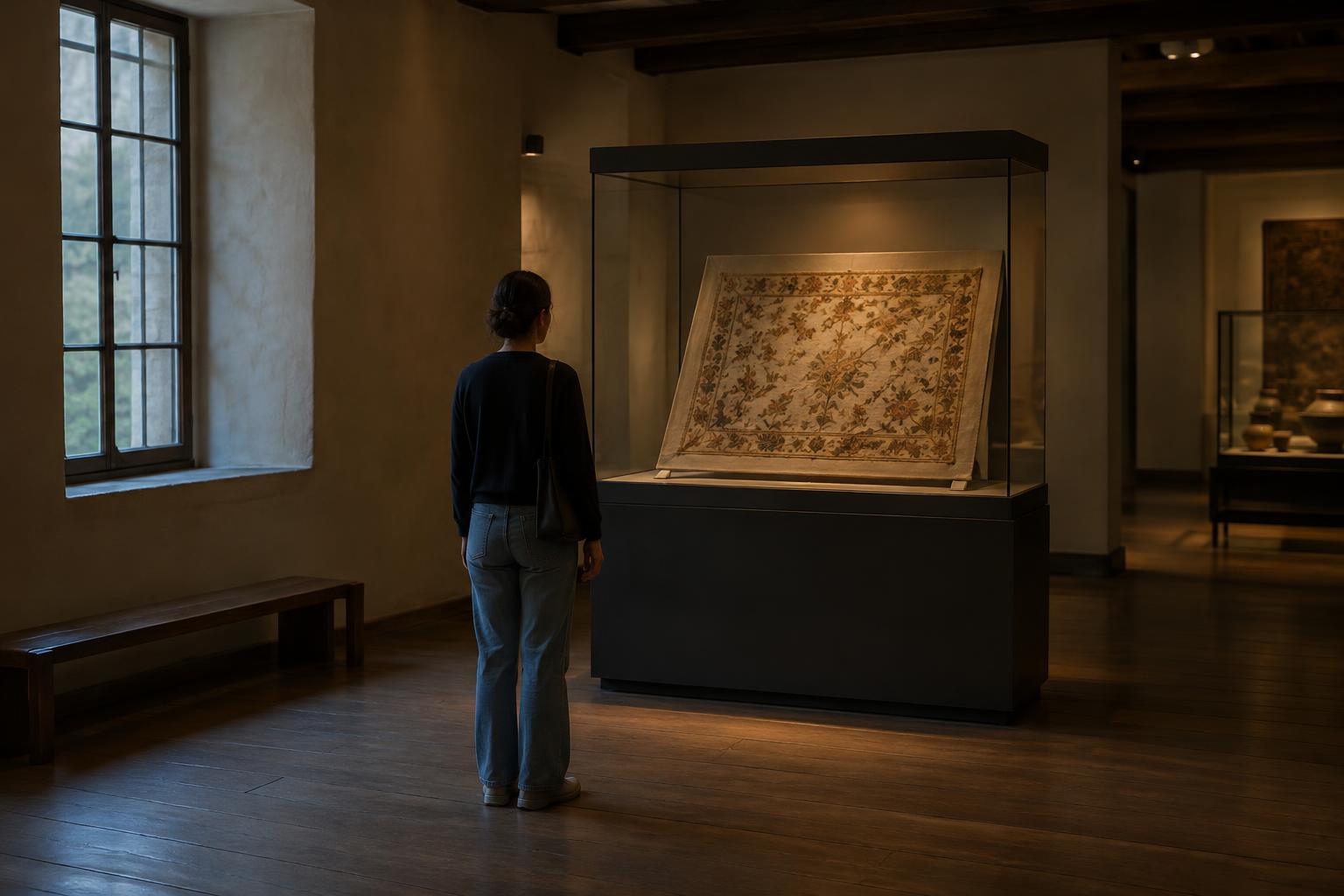
Light lets us see an object, but exposure can also change it. Paper, photographs, textiles, and some pigments may fade or discolor over time. The effect depends on the material, the intensity of the light, and how long the object is exposed. Unlike dust that can sometimes be removed, fading is generally not something a museum can simply clean away.
That is why a gallery may use dim lighting, shade its windows, or display a sensitive item for only part of the year. These measures do not mean every object is equally vulnerable. A ceramic bowl and a watercolor, for example, present different concerns. But both the brightness and the total time on display matter when staff decide how to show a collection.
If a label is hard to read, avoid moving a lamp or opening a shade yourself. Ask whether a larger-print label, a handout, or staff assistance is available. Moving closer to a label can help; leaning over an open display or bringing your own bright light close to an object may not.
Why “just one touch” adds up
Hands can leave oils, moisture, and traces of other substances on a surface. Touch can also cause scratches, loosen a delicate part, or wear down a finish. One careful visitor might leave no visible mark. Across many visits, though, repeated contact can create damage that is difficult to reverse. The risk is especially hard to assess by appearance alone: a sturdy-looking book cover or piece of fabric may have a weak area that is not obvious from the visitor side of a case.
Barriers and “do not touch” signs also protect the context of an object. Staff may need to know how it was positioned, which parts are loose, and whether its condition has changed. When visitors handle or move it without permission, that work becomes harder.
Not every museum experience needs to be hands-off. Some places offer replicas, handling collections, or supervised activities intended for touch. If exploring by touch is important to your visit, ask what is available rather than assuming that every object follows the same rule.
Why flash rules are not always just about the flash
A no-flash sign can be confusing when a room already has lights on. A single camera flash is brief, and its effect on an object is not necessarily comparable to prolonged display lighting. Museums may still restrict flash as a precaution for sensitive collections or because it is difficult to manage repeated flashes from many visitors. The rule may also help prevent glare, distractions, and people stepping into unsafe positions to get a picture.
Photography policies can cover more than conservation. A small museum may have loaned objects, private material, or displays for which it has agreed to particular photo conditions. Rather than guessing at the reason, check the sign or ask a staff member whether photography without flash is permitted. If it is, turn the flash off before entering the gallery and make sure your screen or equipment does not obstruct anyone else’s view.
When photographs are not allowed, a few notes can capture details worth remembering: the shape of a handle, the wording of a label, or a question to look into later. Looking closely for a minute may tell you more than a hurried photograph.
How to be a curious, considerate visitor
Treat restrictions as part of the story of an object, not an obstacle to seeing it. A faded letter kept under low light tells you something about how vulnerable its ink or paper may be. A replica set out for handling can reveal details you might miss behind glass. Staff and volunteers may be able to explain why an item is displayed in a particular way, though they may not have an answer for every object.
Before visiting, check any published guidance on photography or accessibility; once there, follow the instructions in the room, since rules can vary between displays. Keep a comfortable distance from open objects, leave cases and lighting as you find them, and ask before touching. Those small choices help a small museum remain a place where people can keep discovering local stories.